More than two years after Finland invoked emergency powers to seal all eight land crossings with Russia, the once-bustling Niirala checkpoint in North Karelia now resembles a ghost town. A field report by Agence France-Presse published on 25 February paints a stark picture: petrol pumps wrapped in plastic, souvenir kiosks shuttered, and annual cross-border trips plunging from almost two million to zero.
Helsinki closed the frontier in December 2023 after accusing Moscow of orchestrating a sudden influx of 1,300 undocumented migrants—an alleged ‘hybrid attack’ that the Kremlin denies. Under the 2024 Border Security Act, the Interior Ministry has renewed the closure every 30 days, and ministers have signalled that the measure will remain "for as long as necessary". Although the decision was framed as a security imperative, local officials interviewed by AFP say the deepest scars are economic: haulage firms have relocated, cafés have laid off staff, and property values in the border municipalities of Tohmajärvi and Imatra have fallen by double digits.
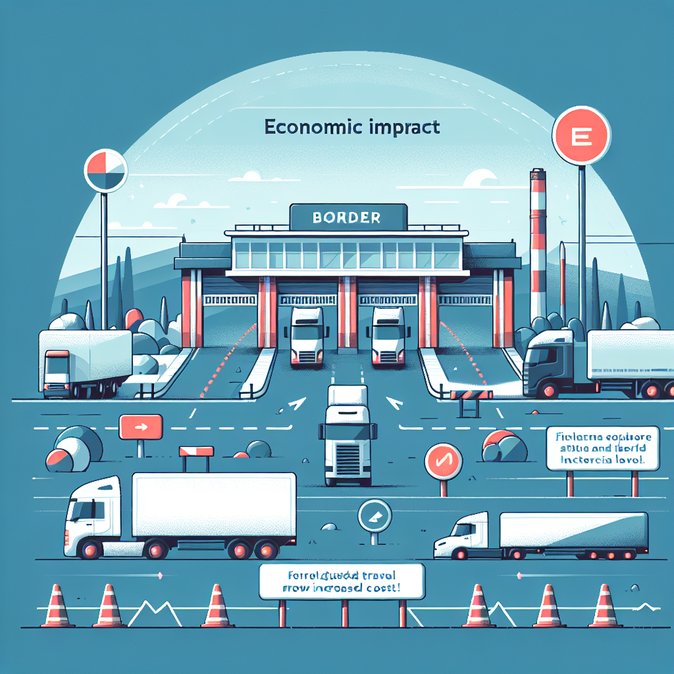
The fallout extends well beyond the immediate vicinity. Finland’s customs service recorded a 47 % drop in eastern-border freight volumes in 2025, forcing exporters of timber and paper to reroute via Baltic ports, adding up to €250 per container. The change is also impairing corporate mobility programmes; HR managers of multinationals with employees in St Petersburg previously relied on the Niirala and Vaalimaa crossings for weekend commuting, a practice now impossible without costly air links via Istanbul.
![Border business grinds on as Russia stay-shut frontier empties Finnish towns]()
In this shifting context, VisaHQ offers a practical lifeline. Its digital platform consolidates the latest entry rules, manages Finnish visa applications end-to-end, and provides live support for rerouting through airports or Baltic ferry terminals—services that save both time and money now that overland crossings are off the table. Travellers and mobility managers can learn more at https://www.visahq.com/finland/
Policy analysts note that Finland’s hard-line stance has become a litmus test for the EU’s ability to curb ‘instrumentalised migration’. Brussels is preparing updated Schengen guidelines that could allow member states to suspend asylum processing at specific land points for renewable three-month periods—essentially copying the Finnish model. Human-rights organisations, however, warn that prolonged closures undermine the right to seek asylum and disproportionately hit small businesses rather than state actors.
For global-mobility teams, the key takeaway is contingency planning. Employers with operations in both Finland and Russia should assume the land border will stay shut through 2026 and budget for air or sea alternatives. Short-term assignment costs are rising accordingly: a four-day Helsinki–St Petersburg trip that once required a €40 petrol budget now commands a €550 round-trip airfare plus extra visa support.
Helsinki closed the frontier in December 2023 after accusing Moscow of orchestrating a sudden influx of 1,300 undocumented migrants—an alleged ‘hybrid attack’ that the Kremlin denies. Under the 2024 Border Security Act, the Interior Ministry has renewed the closure every 30 days, and ministers have signalled that the measure will remain "for as long as necessary". Although the decision was framed as a security imperative, local officials interviewed by AFP say the deepest scars are economic: haulage firms have relocated, cafés have laid off staff, and property values in the border municipalities of Tohmajärvi and Imatra have fallen by double digits.
The fallout extends well beyond the immediate vicinity. Finland’s customs service recorded a 47 % drop in eastern-border freight volumes in 2025, forcing exporters of timber and paper to reroute via Baltic ports, adding up to €250 per container. The change is also impairing corporate mobility programmes; HR managers of multinationals with employees in St Petersburg previously relied on the Niirala and Vaalimaa crossings for weekend commuting, a practice now impossible without costly air links via Istanbul.
In this shifting context, VisaHQ offers a practical lifeline. Its digital platform consolidates the latest entry rules, manages Finnish visa applications end-to-end, and provides live support for rerouting through airports or Baltic ferry terminals—services that save both time and money now that overland crossings are off the table. Travellers and mobility managers can learn more at https://www.visahq.com/finland/
Policy analysts note that Finland’s hard-line stance has become a litmus test for the EU’s ability to curb ‘instrumentalised migration’. Brussels is preparing updated Schengen guidelines that could allow member states to suspend asylum processing at specific land points for renewable three-month periods—essentially copying the Finnish model. Human-rights organisations, however, warn that prolonged closures undermine the right to seek asylum and disproportionately hit small businesses rather than state actors.
For global-mobility teams, the key takeaway is contingency planning. Employers with operations in both Finland and Russia should assume the land border will stay shut through 2026 and budget for air or sea alternatives. Short-term assignment costs are rising accordingly: a four-day Helsinki–St Petersburg trip that once required a €40 petrol budget now commands a €550 round-trip airfare plus extra visa support.