The European Union has quietly pushed back the mandatory live launch of its long-awaited biometric Entry/Exit System (EES) from June to “no earlier than” September 2026. The decision, confirmed to Euro Weekly News on 24 February, follows alarming test results that showed border-control processing times rising beyond four hours at certain peak periods. Although Spain’s airports drove the headline, the delay affects all 27 Schengen members, including Belgium’s principal gateways in Brussels, Charleroi, Liège and Antwerp.
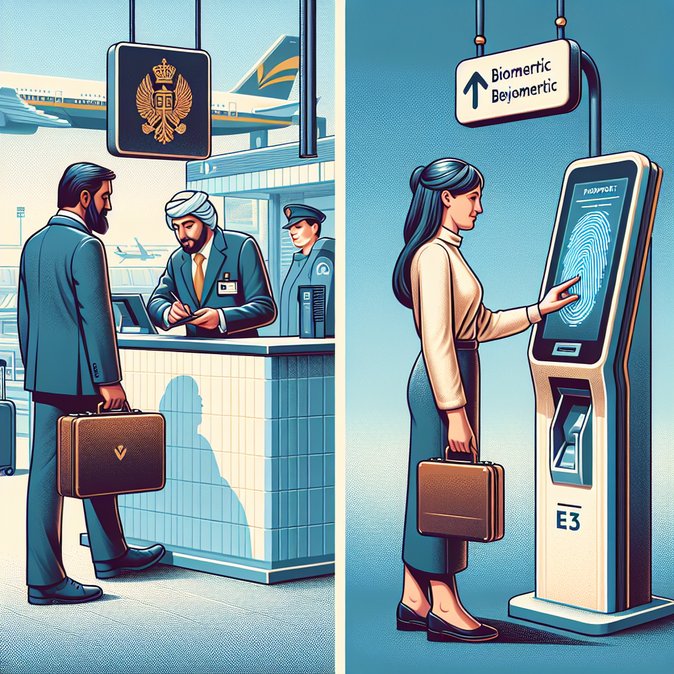
EES will replace the familiar passport stamp with a digital record combining fingerprints, facial images and a time-stamped entry or exit. For Belgian authorities, the postponement offers breathing space to finish installing 120 automated kiosks at Brussels Airport and to finalise data-sharing protocols with the Federal Police and the Immigration Office (DVZ/IBZ). Procurement contracts for software integration were running behind schedule after a supplier challenge in late 2025; officials now say the extra months will allow “robust stress testing” ahead of the holiday rush in 2027.
From a corporate-mobility standpoint, the delay means business travellers from visa-waiver countries (including the UK and United States) will continue under current Schengen rules—passport scan plus manual stamp—through next summer. Companies had begun issuing guidance to travellers on the need to arrive earlier for biometric enrolment; that advice can now be softened, though executives should still build in extra time as airports trial the system intermittently.
![EU Postpones Biometric Entry/Exit System to September 2026 – Belgian Airports Shift Preparations]()
For travellers and HR managers wanting proactive guidance during this transitional phase, VisaHQ can streamline the process. The platform continuously monitors Schengen policy shifts and provides tailored support for Belgian visas, ETIAS authorisations and the forthcoming EES enrolment. Its portal (https://www.visahq.com/belgium/) lets users pre-check documentation, track day-count limits and set renewal reminders—handy safeguards while official timelines remain fluid.
The knock-back also cascades to the EU’s ETIAS travel-authorisation scheme, which relies on EES data. ETIAS is now unlikely to become compulsory before 2027, giving Belgian travel-tech providers a longer runway to integrate the API into booking flows. Nevertheless, HR teams should keep accurate day-count records, as EES will automatically flag 90/180-day overstays once live.
Belgium’s Immigration Minister, Anneleen Van Bossuyt, welcomed the revised timeline, stressing that “security cannot come at the expense of operability.” She confirmed that a public-information campaign—initially slated for April—will be rescheduled to early 2027, aligned with final system go-live. (Source: Euro Weekly News, 24 Feb 2026)
EES will replace the familiar passport stamp with a digital record combining fingerprints, facial images and a time-stamped entry or exit. For Belgian authorities, the postponement offers breathing space to finish installing 120 automated kiosks at Brussels Airport and to finalise data-sharing protocols with the Federal Police and the Immigration Office (DVZ/IBZ). Procurement contracts for software integration were running behind schedule after a supplier challenge in late 2025; officials now say the extra months will allow “robust stress testing” ahead of the holiday rush in 2027.
From a corporate-mobility standpoint, the delay means business travellers from visa-waiver countries (including the UK and United States) will continue under current Schengen rules—passport scan plus manual stamp—through next summer. Companies had begun issuing guidance to travellers on the need to arrive earlier for biometric enrolment; that advice can now be softened, though executives should still build in extra time as airports trial the system intermittently.

For travellers and HR managers wanting proactive guidance during this transitional phase, VisaHQ can streamline the process. The platform continuously monitors Schengen policy shifts and provides tailored support for Belgian visas, ETIAS authorisations and the forthcoming EES enrolment. Its portal (https://www.visahq.com/belgium/) lets users pre-check documentation, track day-count limits and set renewal reminders—handy safeguards while official timelines remain fluid.
The knock-back also cascades to the EU’s ETIAS travel-authorisation scheme, which relies on EES data. ETIAS is now unlikely to become compulsory before 2027, giving Belgian travel-tech providers a longer runway to integrate the API into booking flows. Nevertheless, HR teams should keep accurate day-count records, as EES will automatically flag 90/180-day overstays once live.
Belgium’s Immigration Minister, Anneleen Van Bossuyt, welcomed the revised timeline, stressing that “security cannot come at the expense of operability.” She confirmed that a public-information campaign—initially slated for April—will be rescheduled to early 2027, aligned with final system go-live. (Source: Euro Weekly News, 24 Feb 2026)