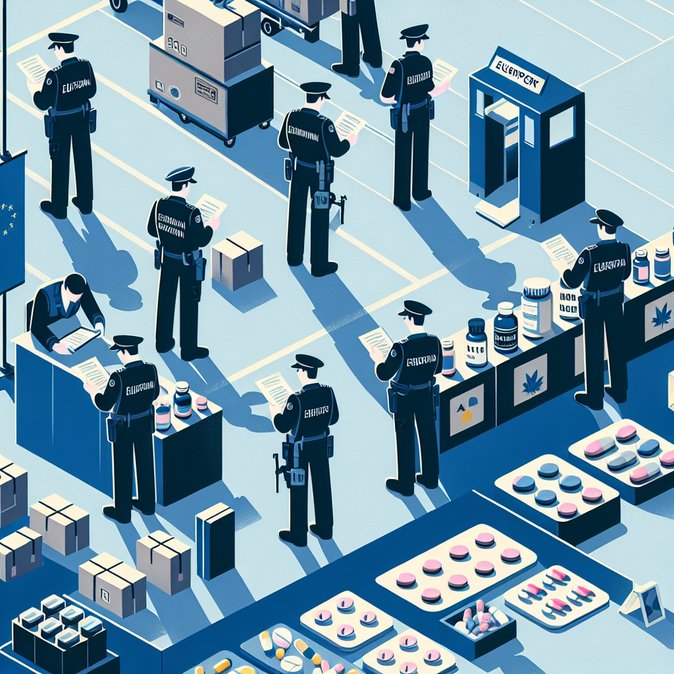
The European Anti-Fraud Office (OLAF) announced on 25 February 2026 that customs from 14 EU member states—Austria included—confiscated more than 3.1 million counterfeit medicine pills, 104,000 illicit packages and over a tonne of unregulated supplements during the month-long Operation SHIELD VI.(anti-fraud.ec.europa.eu)
Austrian officers focused on Vienna Airport’s international mail centre and the Brenner motorway corridor, intercepting 187,000 tablets of fake erectile-dysfunction drugs and anabolic steroids concealed in cosmetic consignments from South-East Asia. Follow-up house searches in Lower Austria led to two arrests and the seizure of a tableting press.
![Austrian Customs Help Seize 3.1 Million Counterfeit Pills in EU-Wide ‘SHIELD VI’ Operation]()
For organisations juggling customs compliance and immigration needs simultaneously, VisaHQ can ease the administrative load. Its Austria portal (https://www.visahq.com/austria/) provides up-to-date visa requirements, work-permit checklists and document-legalisation services, helping corporate transferees enter the country smoothly while their shipments navigate the newly tightened border controls.
From a mobility perspective, the bust underscores stricter parcel screening that could affect express-import timelines for corporate transferees shipping personal medication. Logistics providers report a 24-hour average delay on dutiable small-parcel clearance at Vienna since spot-checks were intensified in early February. Companies should advise relocating staff to pack prescriptions in carry-on baggage and carry EU-compliant doctor’s letters.
OLAF Director-General Petr Klement praised Austria’s role, highlighting “rapid risk-profiling data-shares through the EU Customs Risk Management System.” The operation also trialled an AI-based image-matching tool that flags suspect blister-pack silhouettes—technology Vienna Customs intends to keep permanently. Employers shipping health products through Austria should expect more inspection requests and ensure Commodity Codes 3004 and 3003 are declared accurately to avoid compliance fines.
Austrian officers focused on Vienna Airport’s international mail centre and the Brenner motorway corridor, intercepting 187,000 tablets of fake erectile-dysfunction drugs and anabolic steroids concealed in cosmetic consignments from South-East Asia. Follow-up house searches in Lower Austria led to two arrests and the seizure of a tableting press.

For organisations juggling customs compliance and immigration needs simultaneously, VisaHQ can ease the administrative load. Its Austria portal (https://www.visahq.com/austria/) provides up-to-date visa requirements, work-permit checklists and document-legalisation services, helping corporate transferees enter the country smoothly while their shipments navigate the newly tightened border controls.
From a mobility perspective, the bust underscores stricter parcel screening that could affect express-import timelines for corporate transferees shipping personal medication. Logistics providers report a 24-hour average delay on dutiable small-parcel clearance at Vienna since spot-checks were intensified in early February. Companies should advise relocating staff to pack prescriptions in carry-on baggage and carry EU-compliant doctor’s letters.
OLAF Director-General Petr Klement praised Austria’s role, highlighting “rapid risk-profiling data-shares through the EU Customs Risk Management System.” The operation also trialled an AI-based image-matching tool that flags suspect blister-pack silhouettes—technology Vienna Customs intends to keep permanently. Employers shipping health products through Austria should expect more inspection requests and ensure Commodity Codes 3004 and 3003 are declared accurately to avoid compliance fines.