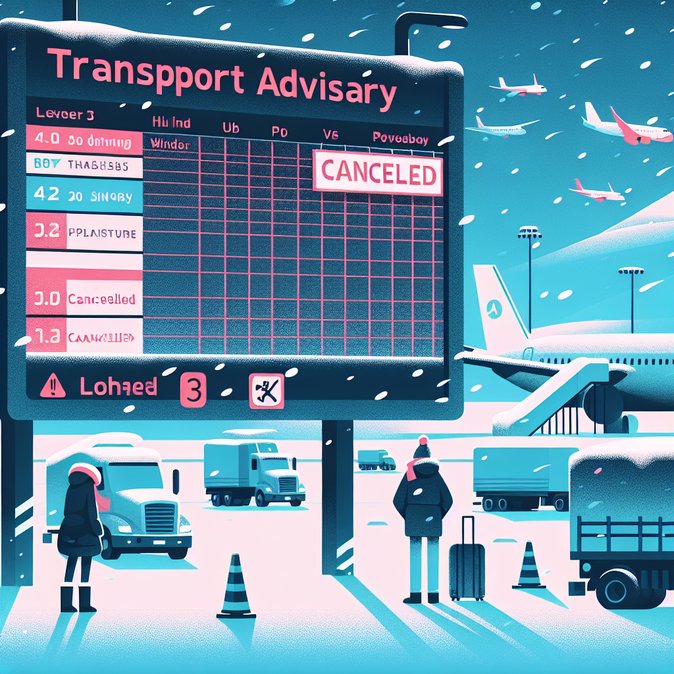
Environment Canada’s latest winter system swept through Ontario overnight, prompting Toronto Pearson International Airport (YYZ) to cancel dozens of departures to Atlantic Canada and the northeastern United States on February 24. Travel-risk firm NHE Travel issued a Level 3 incident bulletin, warning corporate travellers to check flight status before heading to the airport and to anticipate cascading delays.
While Pearson remained open, ground-handling backlogs and de-icing queues reduced runway throughput, and several airlines pre-emptively scrubbed rotations to avoid aircraft and crew displacement. The Greater Toronto Airports Authority advised that re-accommodation options were limited due to high load factors during the mid-winter break.
For mobility managers the disruption highlights the value of dynamic travel policies that permit employees to book flexible fares and leverage airline mobile apps for same-day changes. Companies with time-sensitive assignee moves—such as cross-border commuters on NAFTA (CUSMA) work permits—should prepare for missed immigration appointments and be ready to request rescheduling letters.
![Winter Storm Forces Flight Cancellations and ‘Level 3’ Advisory at Toronto Pearson]()
If these weather-driven changes require fresh travel documentation, VisaHQ can step in quickly. Through its Canadian portal (https://www.visahq.com/canada/), the service streamlines visa and eTA applications, helps secure emergency work-permit papers, and provides real-time status updates—valuable tools for travellers and mobility teams scrambling to adapt to shifting flight schedules.
Supply-chain executives also face knock-on effects: belly-hold cargo bound for Halifax and Boston is being rerouted via Montreal, potentially adding 24–48 hours to delivery windows. Travellers connecting onward to Europe tonight should allow extra layover time or consider re-booking via western hubs.
The storm is expected to taper by late afternoon, but Pearson warns that full schedule recovery could take until the morning of February 25. Employers should maintain duty-of-care tracking until travellers reach final destinations.
While Pearson remained open, ground-handling backlogs and de-icing queues reduced runway throughput, and several airlines pre-emptively scrubbed rotations to avoid aircraft and crew displacement. The Greater Toronto Airports Authority advised that re-accommodation options were limited due to high load factors during the mid-winter break.
For mobility managers the disruption highlights the value of dynamic travel policies that permit employees to book flexible fares and leverage airline mobile apps for same-day changes. Companies with time-sensitive assignee moves—such as cross-border commuters on NAFTA (CUSMA) work permits—should prepare for missed immigration appointments and be ready to request rescheduling letters.

If these weather-driven changes require fresh travel documentation, VisaHQ can step in quickly. Through its Canadian portal (https://www.visahq.com/canada/), the service streamlines visa and eTA applications, helps secure emergency work-permit papers, and provides real-time status updates—valuable tools for travellers and mobility teams scrambling to adapt to shifting flight schedules.
Supply-chain executives also face knock-on effects: belly-hold cargo bound for Halifax and Boston is being rerouted via Montreal, potentially adding 24–48 hours to delivery windows. Travellers connecting onward to Europe tonight should allow extra layover time or consider re-booking via western hubs.
The storm is expected to taper by late afternoon, but Pearson warns that full schedule recovery could take until the morning of February 25. Employers should maintain duty-of-care tracking until travellers reach final destinations.