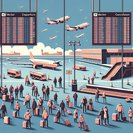
Belgium is bracing for another day of nationwide industrial action on 12 March 2026. The three largest Belgian trade-union federations (FGTB/ABVV, CSC/ACV and CGSLB/ACLVB) have filed a 24-hour strike notice that will hit public transport, security screening, baggage handling and air-traffic-control functions at Brussels Airport (BRU). The airport’s chief executive, Arnaud Feist, has already warned that “a near-total shutdown of departures is the most realistic scenario.”
In response, Cathay Pacific became the first non-EU carrier to publish a special ticketing guideline on 24 February, waiving re-booking and re-routing fees for all tickets issued on or before that date for travel to or from Brussels on 12 March. Customers may change their flight dates free of charge until 31 March 2026, provided the same booking class is available; fare differences still apply if a higher class is chosen. Refund penalties, however, remain in place, and no-show passengers are excluded from the waiver. Other long-haul airlines—including Air Canada, Emirates and United—are expected to announce similar flexibility policies in the coming days.
For corporate mobility managers the key risk is **sudden network congestion**. Seats on flights surrounding the strike date are already filling quickly, and alternative hubs—Amsterdam, Paris-CDG and Frankfurt—will feel the spill-over. Travellers who must reach Belgium on 12 March should consider rail options via Eurostar and Thalys, although those trains are also vulnerable if rail unions join the action. Companies with time-sensitive assignments (e.g. project kick-offs, audit teams) should move travel forward or shift to virtual participation.
![Airlines Issue Flexible Rebooking as Brussels Airport Faces 12 March Strike]()
Should re-routing oblige travellers to cross a different Schengen border or extend their stay beyond original plans, VisaHQ can smooth the paperwork. Its digital platform (https://www.visahq.com/belgium/) offers rapid visa processing, document validation and live status tracking—handy tools when last-minute schedule changes leave little room for error.
Arriving flights may still land, but ground-handling slow-downs are likely to stretch immigration queues and baggage delivery. Employers with foreign assignees should prepare contingency housing near the airport and remind travellers to carry proof of Schengen entitlements in case of re-routing to a neighbouring country. Immigration appointments at the Brussels commune offices on 13–14 March could require rescheduling, as staff shortages often persist the day after a general strike.
Belgium saw a similarly disruptive walk-out in November 2025 that cancelled more than 600 flights and caused an estimated €28 million in airline compensation claims. Lessons learnt then—early schedule thinning, proactive waivers, and real-time staff redeployment—will again determine how painful 12 March becomes for business travellers. Multinational companies with regional headquarters in Brussels are already activating travel-risk protocols and advising employees to avoid same-day connections through BRU. Expect additional airline waivers, but book sooner rather than later: historical data show economy-class fares rise 20-35 % in the two-week window before a major Belgium strike.
In response, Cathay Pacific became the first non-EU carrier to publish a special ticketing guideline on 24 February, waiving re-booking and re-routing fees for all tickets issued on or before that date for travel to or from Brussels on 12 March. Customers may change their flight dates free of charge until 31 March 2026, provided the same booking class is available; fare differences still apply if a higher class is chosen. Refund penalties, however, remain in place, and no-show passengers are excluded from the waiver. Other long-haul airlines—including Air Canada, Emirates and United—are expected to announce similar flexibility policies in the coming days.
For corporate mobility managers the key risk is **sudden network congestion**. Seats on flights surrounding the strike date are already filling quickly, and alternative hubs—Amsterdam, Paris-CDG and Frankfurt—will feel the spill-over. Travellers who must reach Belgium on 12 March should consider rail options via Eurostar and Thalys, although those trains are also vulnerable if rail unions join the action. Companies with time-sensitive assignments (e.g. project kick-offs, audit teams) should move travel forward or shift to virtual participation.

Should re-routing oblige travellers to cross a different Schengen border or extend their stay beyond original plans, VisaHQ can smooth the paperwork. Its digital platform (https://www.visahq.com/belgium/) offers rapid visa processing, document validation and live status tracking—handy tools when last-minute schedule changes leave little room for error.
Arriving flights may still land, but ground-handling slow-downs are likely to stretch immigration queues and baggage delivery. Employers with foreign assignees should prepare contingency housing near the airport and remind travellers to carry proof of Schengen entitlements in case of re-routing to a neighbouring country. Immigration appointments at the Brussels commune offices on 13–14 March could require rescheduling, as staff shortages often persist the day after a general strike.
Belgium saw a similarly disruptive walk-out in November 2025 that cancelled more than 600 flights and caused an estimated €28 million in airline compensation claims. Lessons learnt then—early schedule thinning, proactive waivers, and real-time staff redeployment—will again determine how painful 12 March becomes for business travellers. Multinational companies with regional headquarters in Brussels are already activating travel-risk protocols and advising employees to avoid same-day connections through BRU. Expect additional airline waivers, but book sooner rather than later: historical data show economy-class fares rise 20-35 % in the two-week window before a major Belgium strike.