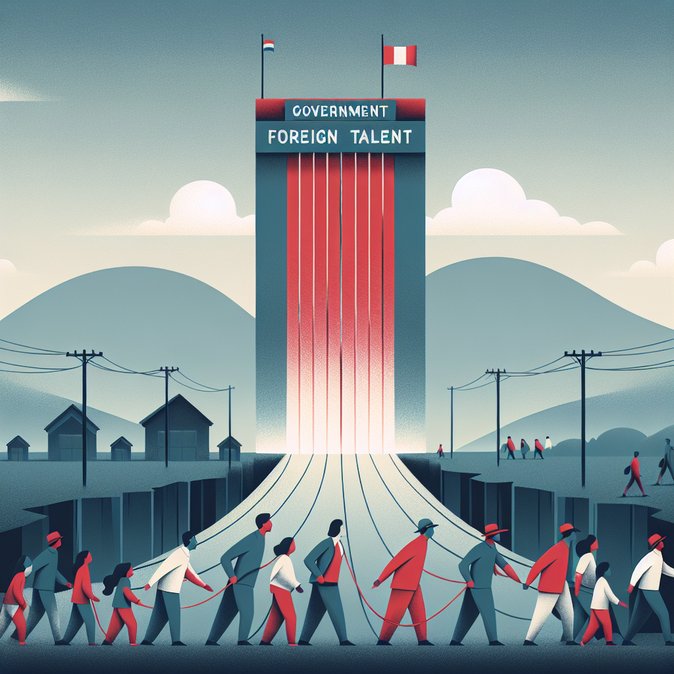
At a press briefing in Vienna on 24 February, the transport and services union vida and migration researcher Dr Judith Kohlenberger criticised the government’s draft skilled-labour strategy, arguing that the flagship Red-White-Red Card (RWR-Card) still ties residence status too closely to a single employer.
Key concerns
• Dependency: Losing a job can mean losing the right to stay, discouraging workers from reporting abuses.
• Wage pressure: Minimum-salary thresholds rose on 1 January, but some collective agreements have not kept pace, potentially undercutting EU Blue Card holders.
• Integration gaps: Little funding is earmarked for language training, affordable housing or family reunification, factors the speakers say are vital for retention.
Why this matters
Austria needs up to 70,000 additional skilled workers a year to offset demographic decline, yet 지난해 only 17,200 RWR-Cards were issued. Employers in IT, healthcare and engineering already report project delays because international hires cannot be onboarded fast enough. If newcomers feel insecure, they may head to Germany or the Netherlands after the statutory 24-month lock-in, negating Austria’s recruitment effort.
![Unions warn Austria’s Red-White-Red Card risks creating ‘second-class’ migrant workforce]()
For organisations that need practical, case-by-case assistance with Austria’s complex permit procedures, VisaHQ can take over the administrative heavy lifting. The platform guides applicants through each form, checks supporting documents and liaises with consulates for Red-White-Red or EU Blue Cards—saving HR teams time and reducing the risk of refusal. Details are available at https://www.visahq.com/austria/
Practical take-aways for HR
• Review contractual termination clauses and add a grace period allowing RWR-Card holders to job-hunt without immediately triggering reporting obligations to the authorities.
• Budget extra for salary top-ups where collective-agreement minima lag behind the new €3,465 gross threshold.
• Offer free German courses to speed integration and improve retention.
Next steps
Vida will present detailed policy recommendations at a public hearing on 25 February and plans to lobby Parliament’s Labour Committee ahead of the spring legislative session.
Key concerns
• Dependency: Losing a job can mean losing the right to stay, discouraging workers from reporting abuses.
• Wage pressure: Minimum-salary thresholds rose on 1 January, but some collective agreements have not kept pace, potentially undercutting EU Blue Card holders.
• Integration gaps: Little funding is earmarked for language training, affordable housing or family reunification, factors the speakers say are vital for retention.
Why this matters
Austria needs up to 70,000 additional skilled workers a year to offset demographic decline, yet 지난해 only 17,200 RWR-Cards were issued. Employers in IT, healthcare and engineering already report project delays because international hires cannot be onboarded fast enough. If newcomers feel insecure, they may head to Germany or the Netherlands after the statutory 24-month lock-in, negating Austria’s recruitment effort.

For organisations that need practical, case-by-case assistance with Austria’s complex permit procedures, VisaHQ can take over the administrative heavy lifting. The platform guides applicants through each form, checks supporting documents and liaises with consulates for Red-White-Red or EU Blue Cards—saving HR teams time and reducing the risk of refusal. Details are available at https://www.visahq.com/austria/
Practical take-aways for HR
• Review contractual termination clauses and add a grace period allowing RWR-Card holders to job-hunt without immediately triggering reporting obligations to the authorities.
• Budget extra for salary top-ups where collective-agreement minima lag behind the new €3,465 gross threshold.
• Offer free German courses to speed integration and improve retention.
Next steps
Vida will present detailed policy recommendations at a public hearing on 25 February and plans to lobby Parliament’s Labour Committee ahead of the spring legislative session.