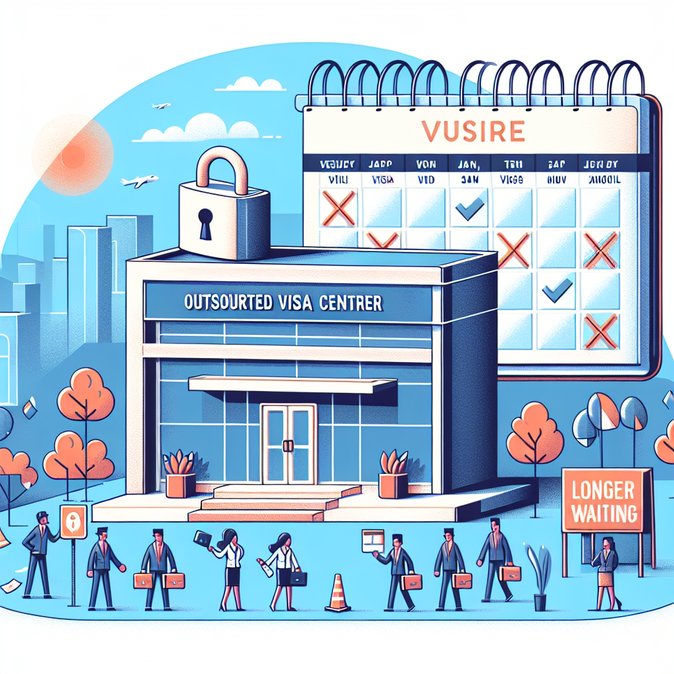
A one-day warning strike by state-sector employees on 15 January rippled across Berlin and neighbouring Brandenburg, closing or restricting services in citizens’ offices, municipal authorities and several university admissions desks. Among the hardest hit were the capital’s Foreigners’ Authorities (LEA) in Friedrich-Krause-Ufer and Keplerstraße, where walk-in counters for residence-permit extensions and Blue-Card issuances were shuttered without prior notice.
The industrial action forms part of the wider Tarifgemeinschaft deutscher Länder (TdL) pay dispute, in which the Verdi and GEW unions are demanding a 7 per cent wage increase or at least €300 more per month for lower salary bands. Roughly 5,000 workers marched to the Rotes Rathaus, disrupting traffic and causing applicants to miss biometric appointments that are booked months in advance.
Business-immigration advisers told clients to expect cascading delays: cases that could not be filed on 15 January will push back already scarce appointments, while electronic filing via the Consular Services Portal still requires an in-person biometric step. Several multinational firms have advised assignees whose permits expire before mid-February to carry the receipt of an online extension request and proof of the strike when travelling within Schengen.
![Berlin–Brandenburg public-sector strike slows visa renewals and residence processing]()
Amid these disruptions, VisaHQ can help travellers and HR teams navigate the uncertainty by pre-screening documents online, tracking appointment availability and arranging expedited follow-ups once the authorities reopen. Its dedicated Germany portal (https://www.visahq.com/germany/) offers real-time status alerts and alternative filing options, reducing the risk of overstays and business-trip cancellations.
Brandenburg reported more muted effects, but police administrative units handling work-permit endorsements operated with skeleton staffing. The second round of wage talks resumes today in Potsdam; if no agreement is reached, unions threaten longer strikes that could coincide with the spring intake of international students.
For employers, the episode is a reminder to build strike clauses into mobility timelines and to monitor local labour disputes, which—unlike federal immigration rules—can paralyse processing overnight.
The industrial action forms part of the wider Tarifgemeinschaft deutscher Länder (TdL) pay dispute, in which the Verdi and GEW unions are demanding a 7 per cent wage increase or at least €300 more per month for lower salary bands. Roughly 5,000 workers marched to the Rotes Rathaus, disrupting traffic and causing applicants to miss biometric appointments that are booked months in advance.
Business-immigration advisers told clients to expect cascading delays: cases that could not be filed on 15 January will push back already scarce appointments, while electronic filing via the Consular Services Portal still requires an in-person biometric step. Several multinational firms have advised assignees whose permits expire before mid-February to carry the receipt of an online extension request and proof of the strike when travelling within Schengen.

Amid these disruptions, VisaHQ can help travellers and HR teams navigate the uncertainty by pre-screening documents online, tracking appointment availability and arranging expedited follow-ups once the authorities reopen. Its dedicated Germany portal (https://www.visahq.com/germany/) offers real-time status alerts and alternative filing options, reducing the risk of overstays and business-trip cancellations.
Brandenburg reported more muted effects, but police administrative units handling work-permit endorsements operated with skeleton staffing. The second round of wage talks resumes today in Potsdam; if no agreement is reached, unions threaten longer strikes that could coincide with the spring intake of international students.
For employers, the episode is a reminder to build strike clauses into mobility timelines and to monitor local labour disputes, which—unlike federal immigration rules—can paralyse processing overnight.