Brussels Airport Company published its year-end traffic report on 14 January, and the headline figure carries an explicit warning for 2026 planners: seven national trade-union actions during 2025 forced the cancellation of 2,400 flights and cost the hub an estimated 275,000 passengers. In revenue terms, executives peg the loss at €175 million.
The strikes—aimed at federal socio-economic policies rather than the airport itself—hit ground-handling, security and air-traffic-control rosters, triggering rolling shutdowns across Zaventem. Although total passenger numbers still grew 3.3 % year-on-year to 24.4 million, volumes remain 2 million below the 2019 record. Cargo fared better, rising 8.5 % to 795,000 tonnes as freighter operators proved more resilient to labour disruption.
Management highlighted operational silver linings: average load factors climbed to an all-time high of 145 passengers per flight, and three new airlines—Cathay Pacific, Air Senegal and Smartwings—launched services. Nevertheless, CEO Arnaud Feist warned that “recurring social unrest and cyber incidents” threaten Belgium’s ambition to cement itself as a northern-European hub. A September cyber-attack alone diverted or cancelled 44 flights.
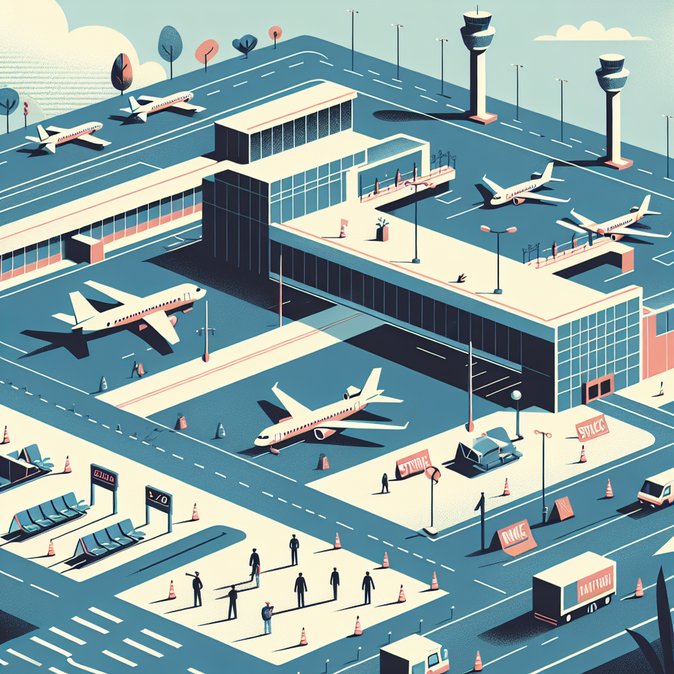
![Strikes wiped out 275,000 passengers at Brussels Airport in 2025, management reveals]()
For global-mobility teams the figures quantify a familiar pain point. Each walkout forces costly re-routing, accommodation and visa re-booking—particularly for short-notice assignee moves. Companies should build ‘strike clauses’ into Belgian travel policies, maintain live contact lists for unions’ 48-hour notices and pre-contract alternate ground handlers where possible.
At this stage, companies should also remember that last-minute itinerary changes often trigger new or revised travel-document requirements. VisaHQ’s Belgium portal (https://www.visahq.com/belgium/) lets managers and travellers check real-time visa rules, submit expedited applications and track multiple cases from one dashboard—providing a crucial buffer when strikes or cyber incidents upend flight schedules.
Looking ahead, unions have not ruled out further actions over wage-indexation and staffing levels. With Belgium’s general election slated for May 2026, political rhetoric could escalate, raising the probability of fresh disruptions. Employers with time-sensitive movements through Zaventem should therefore hedge capacity and monitor NOTAMs closely.
The strikes—aimed at federal socio-economic policies rather than the airport itself—hit ground-handling, security and air-traffic-control rosters, triggering rolling shutdowns across Zaventem. Although total passenger numbers still grew 3.3 % year-on-year to 24.4 million, volumes remain 2 million below the 2019 record. Cargo fared better, rising 8.5 % to 795,000 tonnes as freighter operators proved more resilient to labour disruption.
Management highlighted operational silver linings: average load factors climbed to an all-time high of 145 passengers per flight, and three new airlines—Cathay Pacific, Air Senegal and Smartwings—launched services. Nevertheless, CEO Arnaud Feist warned that “recurring social unrest and cyber incidents” threaten Belgium’s ambition to cement itself as a northern-European hub. A September cyber-attack alone diverted or cancelled 44 flights.

For global-mobility teams the figures quantify a familiar pain point. Each walkout forces costly re-routing, accommodation and visa re-booking—particularly for short-notice assignee moves. Companies should build ‘strike clauses’ into Belgian travel policies, maintain live contact lists for unions’ 48-hour notices and pre-contract alternate ground handlers where possible.
At this stage, companies should also remember that last-minute itinerary changes often trigger new or revised travel-document requirements. VisaHQ’s Belgium portal (https://www.visahq.com/belgium/) lets managers and travellers check real-time visa rules, submit expedited applications and track multiple cases from one dashboard—providing a crucial buffer when strikes or cyber incidents upend flight schedules.
Looking ahead, unions have not ruled out further actions over wage-indexation and staffing levels. With Belgium’s general election slated for May 2026, political rhetoric could escalate, raising the probability of fresh disruptions. Employers with time-sensitive movements through Zaventem should therefore hedge capacity and monitor NOTAMs closely.