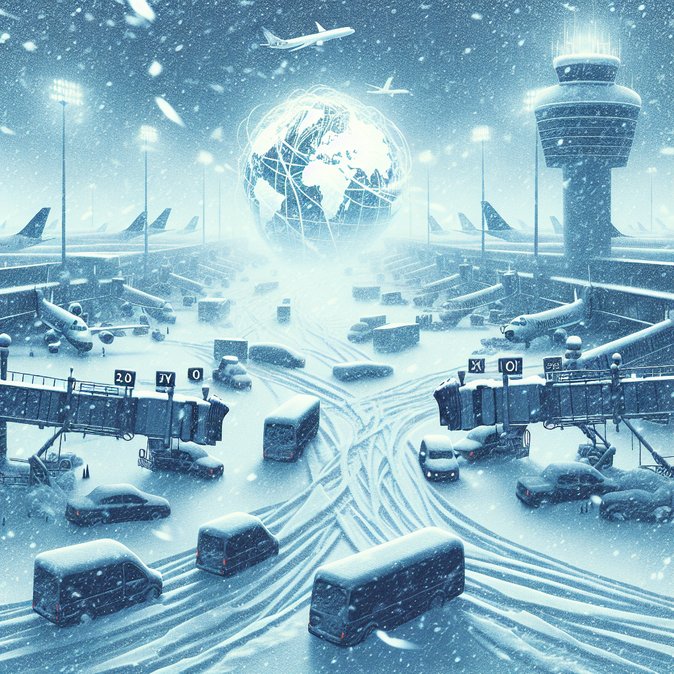
A powerful Arctic front that swept across the German state of Hesse overnight on 11–12 January dumped up to 15 cm of snow on Frankfurt-Main Airport (FRA), Europe’s fourth-busiest intercontinental hub. By noon on Monday, 12 January, operator Fraport confirmed that 102 of 1,052 scheduled movements had been cancelled, with dozens more delayed as ploughs, de-icing rigs and ground crews struggled to keep two runways open. Lufthansa, Singapore Airlines and United warned corporate travel managers that onward connections could be pushed back by as much as 36 hours, stranding assignees and time-critical cargo in hub-busting ripple effects across their global networks.
Business-travel heavyweights feel the pain most acutely. Frankfurt handles the bulk of Germany’s long-haul traffic and serves as the primary connection point for Asian and American itineraries. Automotive, tech and life-science multinationals headquartered in Germany’s financial capital scrambled to activate remote-work contingency plans, while logistics giants DHL and DB Schenker moved high-value medical and automotive parts onto road and rail to keep supply chains moving. Deutsche Bahn, meanwhile, diverted ICE high-speed services to secondary routes and warned of residual delays for at least 48 hours as crews cleared frozen overhead lines.
The disruption offers a timely stress-test of Germany’s broader mobility infrastructure just months before the airport’s new de-icing hangar and long-delayed Terminal 3 are due to open in April. Aviation analysts note that the hangar should double wide-body de-icing capacity, but until then corporates are being advised to build 24-hour buffers into itineraries, urge travellers to check airline apps proactively and lean on video-conferencing where physical presence is not mission-critical.
![Heavy Snow at Frankfurt Airport Cancels 100+ Flights, Disrupts Global Itineraries]()
For travelers worried about how these delays might eat into their Schengen allowance or complicate future visa applications, VisaHQ can help. The platform’s Germany portal (https://www.visahq.com/germany/) lets users calculate remaining days under the 90/180-day rule, monitor real-time entry requirements and even obtain replacement visas if unexpected overstays occur—providing a useful safety net while winter weather plays havoc with schedules.
Insurance and immigration advisers are also fielding calls. Missed connections can trigger inadvertent overstays of the Schengen 90/180-day rule; mobility managers are updating travel-tracking software and reminding staff to keep boarding passes and delay letters in case proof is needed during future visa applications. Fraport says normal operations should resume once temperatures rise above freezing late Tuesday, but aircraft and crews will finish Monday in the wrong places—meaning rolling gaps in schedules will linger through mid-week.
Longer term, the episode reinforces calls for coordinated winter-weather playbooks among airlines, rail operators and immigration authorities. Stakeholders argue that real-time data-sharing between Fraport, Bundespolizei and Deutsche Bahn would allow smoother passenger re-routing, while employers want clearer guidance on how storm-related delays interact with the forthcoming EU Entry/Exit System (EES) records that will automatically flag overstays after April 2026.
Business-travel heavyweights feel the pain most acutely. Frankfurt handles the bulk of Germany’s long-haul traffic and serves as the primary connection point for Asian and American itineraries. Automotive, tech and life-science multinationals headquartered in Germany’s financial capital scrambled to activate remote-work contingency plans, while logistics giants DHL and DB Schenker moved high-value medical and automotive parts onto road and rail to keep supply chains moving. Deutsche Bahn, meanwhile, diverted ICE high-speed services to secondary routes and warned of residual delays for at least 48 hours as crews cleared frozen overhead lines.
The disruption offers a timely stress-test of Germany’s broader mobility infrastructure just months before the airport’s new de-icing hangar and long-delayed Terminal 3 are due to open in April. Aviation analysts note that the hangar should double wide-body de-icing capacity, but until then corporates are being advised to build 24-hour buffers into itineraries, urge travellers to check airline apps proactively and lean on video-conferencing where physical presence is not mission-critical.
For travelers worried about how these delays might eat into their Schengen allowance or complicate future visa applications, VisaHQ can help. The platform’s Germany portal (https://www.visahq.com/germany/) lets users calculate remaining days under the 90/180-day rule, monitor real-time entry requirements and even obtain replacement visas if unexpected overstays occur—providing a useful safety net while winter weather plays havoc with schedules.
Insurance and immigration advisers are also fielding calls. Missed connections can trigger inadvertent overstays of the Schengen 90/180-day rule; mobility managers are updating travel-tracking software and reminding staff to keep boarding passes and delay letters in case proof is needed during future visa applications. Fraport says normal operations should resume once temperatures rise above freezing late Tuesday, but aircraft and crews will finish Monday in the wrong places—meaning rolling gaps in schedules will linger through mid-week.
Longer term, the episode reinforces calls for coordinated winter-weather playbooks among airlines, rail operators and immigration authorities. Stakeholders argue that real-time data-sharing between Fraport, Bundespolizei and Deutsche Bahn would allow smoother passenger re-routing, while employers want clearer guidance on how storm-related delays interact with the forthcoming EU Entry/Exit System (EES) records that will automatically flag overstays after April 2026.