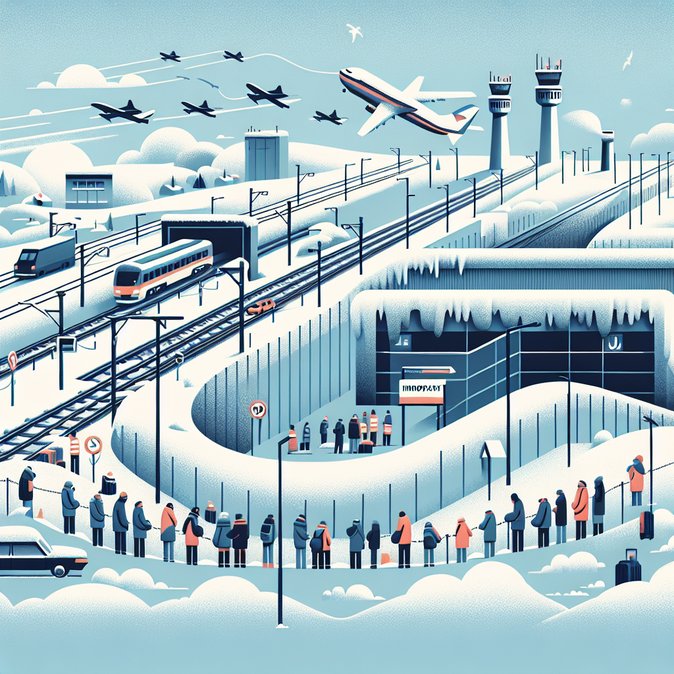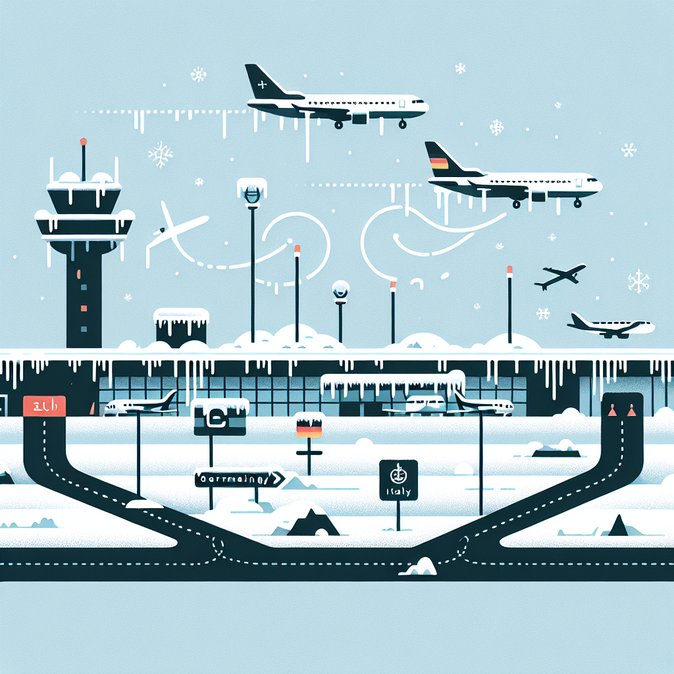
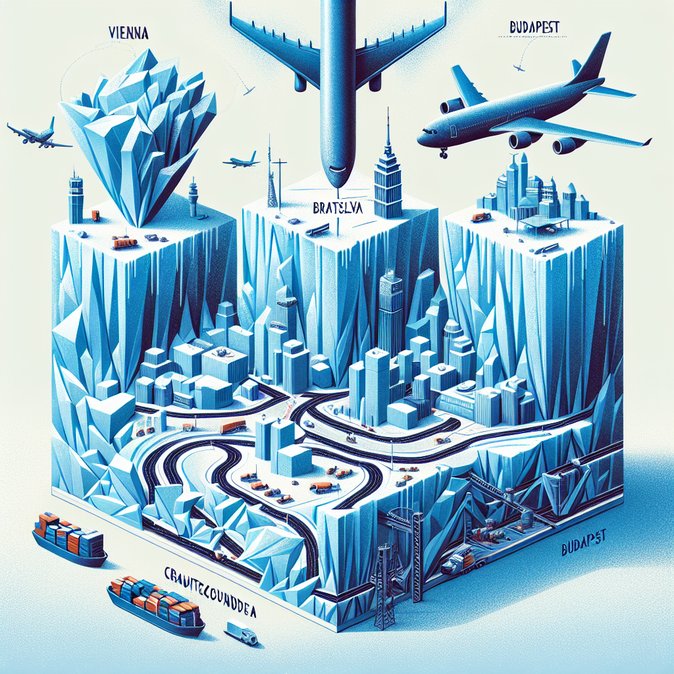
An Arctic air mass colliding with a warm western front produced widespread freezing rain that swept from Austria into the Czech Republic, Slovakia and Hungary on 13 January. According to the Czech Hydrometeorological Institute, super-cooled droplets froze on contact, rapidly degrading runway friction at four capital-city airports. Vienna International Airport imposed a full closure until late morning; Bratislava and Budapest followed suit, while Prague Airport trimmed its movement rate to a handful of flights per hour.
Air-traffic control logs show at least 60 diversions to Munich, Frankfurt, Cologne and Venice as carriers sought longer runways and more de-icing capacity. The knock-on effects hit time-critical cargo: express shipments headed for Czech semiconductor plants were trucked overnight from southern Germany, extending supply-chain lead times by up to eight hours. Border-control agencies at diverted airports activated contingency staffing to process unexpected Schengen entries, illustrating how weather events can ripple through immigration operations far beyond the affected country.
![Central-European ice storm snarls regional air corridor, clips Prague hub]()
Travel managers caught up in such turbulence can simplify the immigration piece by pre-checking visa and entry-rule scenarios with VisaHQ. The platform’s dedicated Czech Republic page (https://www.visahq.com/czech-republic/) provides instant guidance on Schengen requirements, Foreign Police registration and passport validity, and its concierge team can fast-track any emergency documentation if travellers are rerouted to unfamiliar airports.
Rail and road networks suffered too. Austria’s ÖBB halted several cross-border Railjet services, while the Czech D8 motorway to Germany closed after jack-knifed lorries blocked an icy viaduct near Ústí nad Labem. Logistics analysts estimate direct economic losses in the “low double-digit millions of euros,” but warn that cumulative impacts—missed production slots, crew repositioning, and hotel over-stays—could be far higher.
For mobility managers, the event underscores the need for integrated travel-risk dashboards that blend weather data, flight status and immigration-rule triggers. Czech-bound assignees arriving via unscheduled airports must still respect the 24-hour registration rule with the Foreign Police—something easily overlooked amid weather chaos. Companies are advised to audit diverted travellers’ entry stamps and arrange timely online notifications to avoid inadvertent fines.
Air-traffic control logs show at least 60 diversions to Munich, Frankfurt, Cologne and Venice as carriers sought longer runways and more de-icing capacity. The knock-on effects hit time-critical cargo: express shipments headed for Czech semiconductor plants were trucked overnight from southern Germany, extending supply-chain lead times by up to eight hours. Border-control agencies at diverted airports activated contingency staffing to process unexpected Schengen entries, illustrating how weather events can ripple through immigration operations far beyond the affected country.
Travel managers caught up in such turbulence can simplify the immigration piece by pre-checking visa and entry-rule scenarios with VisaHQ. The platform’s dedicated Czech Republic page (https://www.visahq.com/czech-republic/) provides instant guidance on Schengen requirements, Foreign Police registration and passport validity, and its concierge team can fast-track any emergency documentation if travellers are rerouted to unfamiliar airports.
Rail and road networks suffered too. Austria’s ÖBB halted several cross-border Railjet services, while the Czech D8 motorway to Germany closed after jack-knifed lorries blocked an icy viaduct near Ústí nad Labem. Logistics analysts estimate direct economic losses in the “low double-digit millions of euros,” but warn that cumulative impacts—missed production slots, crew repositioning, and hotel over-stays—could be far higher.
For mobility managers, the event underscores the need for integrated travel-risk dashboards that blend weather data, flight status and immigration-rule triggers. Czech-bound assignees arriving via unscheduled airports must still respect the 24-hour registration rule with the Foreign Police—something easily overlooked amid weather chaos. Companies are advised to audit diverted travellers’ entry stamps and arrange timely online notifications to avoid inadvertent fines.