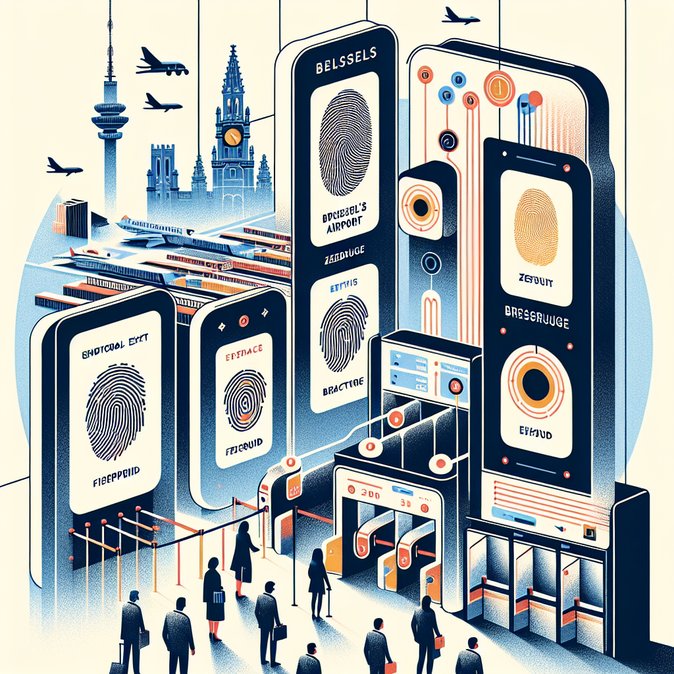
Belgium has been ordered by the European Commission to raise the operational share of its new biometric Entry/Exit System (EES) to 50 % of external border points as of 10 January, triggering an industry warning about longer processing times. While Brussels Airport installed 61 self-service kiosks during 2025 trials, the mandate now captures Zeebrugge ferry port and the Eurostar juxtaposed control at Brussels-Midi, both of which must switch from pilot to live use within days.
Under EES, non-EU short-stay travellers—including British nationals—must provide four fingerprints and a facial image the first time they cross, then verify biometrics at each subsequent entry or exit. ABTA and Belgian tour operators say first-time enrolments can take up to three minutes, roughly tripling current document-check averages.
![EU biometric Entry/Exit System goes live at more Belgian crossings, prompting queue warnings]()
For anyone who would rather not navigate these new biometric rules alone, VisaHQ offers step-by-step assistance with Belgian entry procedures, visa applications and upcoming ETIAS authorisations. Its dedicated portal at https://www.visahq.com/belgium/ consolidates the latest requirements, provides live support for individual travellers or corporate groups, and can even coordinate courier services to keep itineraries on track.
Federal Police have redeployed officers from secondary desks to marshal EES lanes, and Brussels Airport is urging passengers to arrive earlier until queues stabilise. Seaport and ferry operators fear dawn-hour bottlenecks as lorry drivers also fall under the scheme.
Multinationals moving assignees into Belgium should lengthen meet-and-greet windows and remind newcomers that EES registration does not replace residence-permit formalities with local communes. Authorities aim for 100 % EES coverage by April 2026, after which ETIAS travel authorisations will become the next compliance hurdle for visa-exempt visitors.
Under EES, non-EU short-stay travellers—including British nationals—must provide four fingerprints and a facial image the first time they cross, then verify biometrics at each subsequent entry or exit. ABTA and Belgian tour operators say first-time enrolments can take up to three minutes, roughly tripling current document-check averages.
For anyone who would rather not navigate these new biometric rules alone, VisaHQ offers step-by-step assistance with Belgian entry procedures, visa applications and upcoming ETIAS authorisations. Its dedicated portal at https://www.visahq.com/belgium/ consolidates the latest requirements, provides live support for individual travellers or corporate groups, and can even coordinate courier services to keep itineraries on track.
Federal Police have redeployed officers from secondary desks to marshal EES lanes, and Brussels Airport is urging passengers to arrive earlier until queues stabilise. Seaport and ferry operators fear dawn-hour bottlenecks as lorry drivers also fall under the scheme.
Multinationals moving assignees into Belgium should lengthen meet-and-greet windows and remind newcomers that EES registration does not replace residence-permit formalities with local communes. Authorities aim for 100 % EES coverage by April 2026, after which ETIAS travel authorisations will become the next compliance hurdle for visa-exempt visitors.