
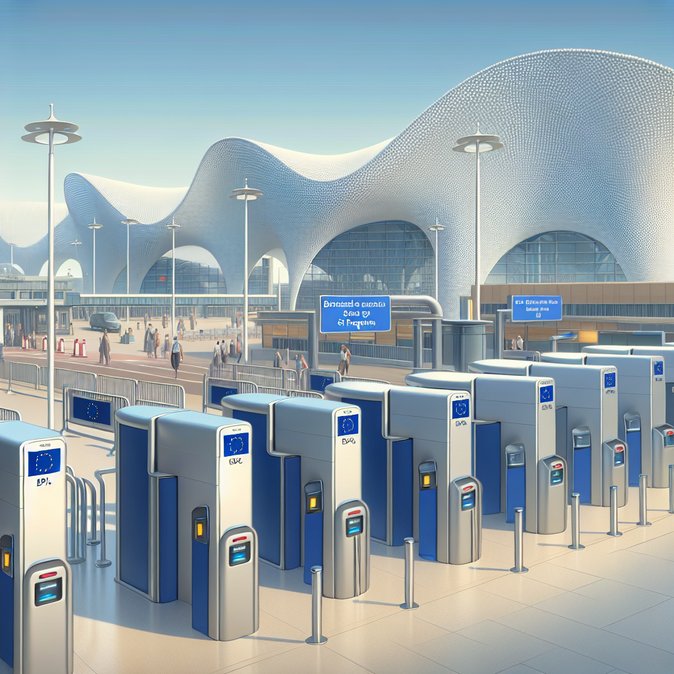
Just three months after its soft launch, the EU’s new biometric Entry/Exit System (EES) expanded to roughly half of Schengen frontier posts on 10 January 2026. UK outlet UKNIP reported on 11 January that travel trade body ABTA expects longer lines at juxtaposed French controls in Dover, Folkestone and at London St Pancras as British passengers submit fingerprints and facial images on first entry. France’s border police (PAF) confirm they have installed nearly 200 kiosks but caution that a single registration may take up to two minutes, six times longer than today’s passport stamp.
The dual-running period—manual stamps plus EES—will last until at least 9 April 2026, effectively doubling formalities. For business travellers the greatest pain point will be early-morning shuttle trains and Monday-morning flights out of Paris, Lyon and Toulouse where many connecting passengers originate in the UK or other visa-exempt countries. French airports operator ADP is redeploying staff from duty-free shops to manage the “January surge”, while Eurostar has warned corporate clients to arrive 45 minutes earlier than contractually agreed for group check-ins.
![EU Entry/Exit System Roll-Out Triggers Queue Warnings for French Border Crossings]()
Amid this shifting landscape, VisaHQ can ease the pressure on both travellers and mobility teams. Through its France portal (https://www.visahq.com/france/), the company pre-screens passengers, arranges biometric appointments when required, and pushes live alerts on kiosk wait times and regulatory changes—helping businesses keep itineraries on track despite EES teething pains.
Global employers moving talent through France should update travel policies immediately: advise staff to enrol in the EES on their very next trip to minimise repeat queues, and build a 30- to 45-minute buffer into rail-air connections. Relocation programmes that include home-finding visits must allow extra time at borders and consider off-peak arrival slots.
Finally, data-privacy teams should note that biometric records are retained for three years (or until passport expiry) and accessible to French and EU law-enforcement agencies. HR should reassure employees that the data are encrypted and cannot be used for tax-residency checks, but they do form part of Schengen overstaying audits—an important compliance consideration for frequent travellers rotating in and out of France.
The dual-running period—manual stamps plus EES—will last until at least 9 April 2026, effectively doubling formalities. For business travellers the greatest pain point will be early-morning shuttle trains and Monday-morning flights out of Paris, Lyon and Toulouse where many connecting passengers originate in the UK or other visa-exempt countries. French airports operator ADP is redeploying staff from duty-free shops to manage the “January surge”, while Eurostar has warned corporate clients to arrive 45 minutes earlier than contractually agreed for group check-ins.
Amid this shifting landscape, VisaHQ can ease the pressure on both travellers and mobility teams. Through its France portal (https://www.visahq.com/france/), the company pre-screens passengers, arranges biometric appointments when required, and pushes live alerts on kiosk wait times and regulatory changes—helping businesses keep itineraries on track despite EES teething pains.
Global employers moving talent through France should update travel policies immediately: advise staff to enrol in the EES on their very next trip to minimise repeat queues, and build a 30- to 45-minute buffer into rail-air connections. Relocation programmes that include home-finding visits must allow extra time at borders and consider off-peak arrival slots.
Finally, data-privacy teams should note that biometric records are retained for three years (or until passport expiry) and accessible to French and EU law-enforcement agencies. HR should reassure employees that the data are encrypted and cannot be used for tax-residency checks, but they do form part of Schengen overstaying audits—an important compliance consideration for frequent travellers rotating in and out of France.