Only two days after hammering the rail network, winter storm “Elli” turned its fury on northern Germany’s airports. Real-time figures from the Federal Transport Ministry show that by noon on Saturday, 10 January 2026, Hamburg (HAM) had logged 84 delays and 29 outright cancellations. Düsseldorf (DUS) recorded 107 delays, while Berlin-Brandenburg (BER) struggled with 119 delayed departures and arrivals.
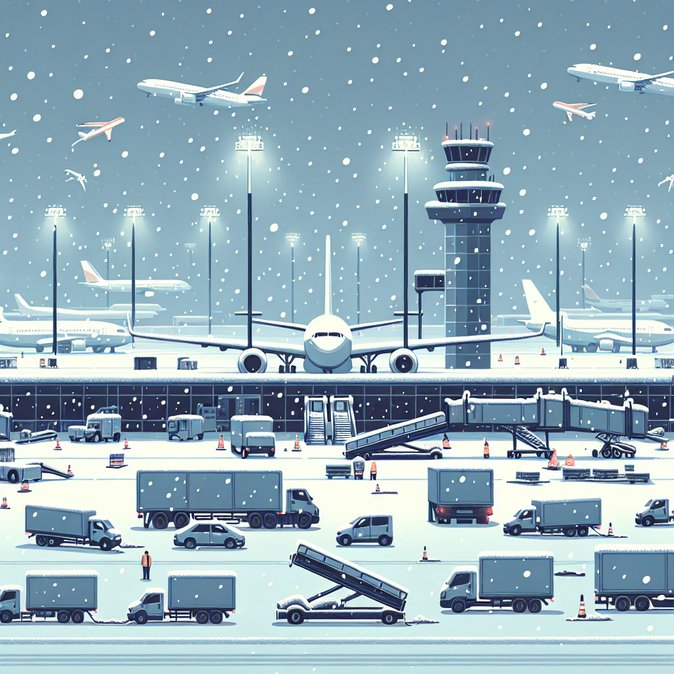
Continuous snowfall and cross-winds forced ground-handling crews into a game of catch-up: by the time a wave of aircraft had been de-iced, wings were icing up again. Repeated runway-friction tests triggered spot closures of shorter cross-wind strips, further squeezing capacity. Lufthansa issued fee-free rebooking waivers on domestic sectors and urged connecting passengers to build at least three hours into itineraries to clear security and border control. International carriers British Airways, KLM and easyJet axed rotations, leaving transit passengers bound for the U.S. and Asia searching for alternatives.
Amid the rerouting scramble, travelers caught out by expiring Schengen visas can streamline renewals and fresh applications through VisaHQ, which offers step-by-step guidance, real-time status tracking and optional courier pickup of documents. The platform’s Germany portal (https://www.visahq.com/germany/) lists up-to-date entry rules for dozens of nationalities, giving mobility managers a quick way to keep crews compliant while the weather plays havoc with flight plans.
![Storm Elli Snarls Northern German Airports: 45 Cancellations and 310 Delays at HAM, DUS and BER]()
Cargo flows were hit just as hard. Freight forwarders diverted Kenyan perishables and Indian pharmaceuticals via Frankfurt, adding a full day to sensitive supply chains. Corporate relocation firms reported that household-goods shipments destined for the ports of Hamburg and Bremerhaven were stuck on snow-clogged autobahns, delaying deliveries to newly arrived assignees.
Travel-management companies advise that anyone flying into or out of northern Germany this week reconfirm local rail or chauffeur links, as short-notice platform changes at rail hubs remain common. Employers moving time-critical equipment have been told to invoke ‘force-majeure’ clauses in logistics contracts; most carriers will not guarantee next-day delivery while weather alerts remain in force.
Meteorologists expect temperatures to nudge above freezing late Monday, but airlines warn that crew-duty limits and aircraft repositioning will leave roster gaps well into mid-week. For global-mobility teams orchestrating group moves or rotation crews, the lesson is clear: Germany’s winter can still derail even the best-laid schedules.
Continuous snowfall and cross-winds forced ground-handling crews into a game of catch-up: by the time a wave of aircraft had been de-iced, wings were icing up again. Repeated runway-friction tests triggered spot closures of shorter cross-wind strips, further squeezing capacity. Lufthansa issued fee-free rebooking waivers on domestic sectors and urged connecting passengers to build at least three hours into itineraries to clear security and border control. International carriers British Airways, KLM and easyJet axed rotations, leaving transit passengers bound for the U.S. and Asia searching for alternatives.
Amid the rerouting scramble, travelers caught out by expiring Schengen visas can streamline renewals and fresh applications through VisaHQ, which offers step-by-step guidance, real-time status tracking and optional courier pickup of documents. The platform’s Germany portal (https://www.visahq.com/germany/) lists up-to-date entry rules for dozens of nationalities, giving mobility managers a quick way to keep crews compliant while the weather plays havoc with flight plans.

Cargo flows were hit just as hard. Freight forwarders diverted Kenyan perishables and Indian pharmaceuticals via Frankfurt, adding a full day to sensitive supply chains. Corporate relocation firms reported that household-goods shipments destined for the ports of Hamburg and Bremerhaven were stuck on snow-clogged autobahns, delaying deliveries to newly arrived assignees.
Travel-management companies advise that anyone flying into or out of northern Germany this week reconfirm local rail or chauffeur links, as short-notice platform changes at rail hubs remain common. Employers moving time-critical equipment have been told to invoke ‘force-majeure’ clauses in logistics contracts; most carriers will not guarantee next-day delivery while weather alerts remain in force.
Meteorologists expect temperatures to nudge above freezing late Monday, but airlines warn that crew-duty limits and aircraft repositioning will leave roster gaps well into mid-week. For global-mobility teams orchestrating group moves or rotation crews, the lesson is clear: Germany’s winter can still derail even the best-laid schedules.