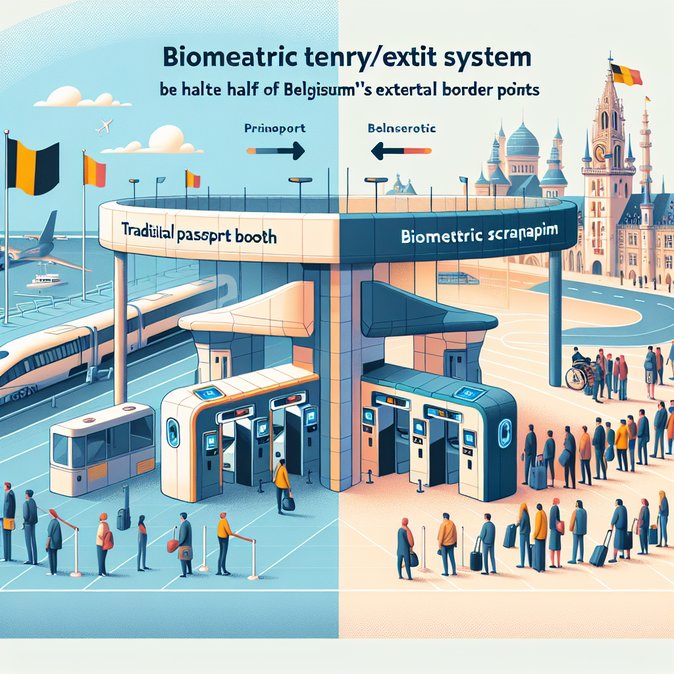
Travel industry bodies sounded the alarm on 11 January after the EU ordered member states to activate its new biometric Entry/Exit System (EES) at 50 percent of border crossings by 10 January. Although Belgium installed 61 self-service kiosks at Brussels Airport last autumn, the expanded mandate means seaports such as Zeebrugge and land crossings at Eurostar’s Bruxelles-Midi juxtaposed zone must now switch from pilot to live use. British and other non-EU travellers will face fingerprint and facial-image capture on first arrival, then biometric verification at every crossing. (uknip.co.uk)
ABTA and Belgian tour operators predict queues will lengthen until Easter, when passport stamping is finally discontinued. Brussels Airport expects peak-time wait-times to double if travellers arrive unprepared. The Federal Police have redeployed officers from secondary desks to marshal EES lanes, but unions warn staffing levels remain “marginal”.
For help navigating the changing border procedures, travellers and mobility managers can turn to VisaHQ’s Belgium hub (https://www.visahq.com/belgium/). The platform tracks the EES roll-out in real time and offers step-by-step guidance on Schengen visa rules, biometric registration, and supporting paperwork—streamlining preparation so passengers hit the kiosks with everything in order.
![EU Entry/Exit System Roll-out Triggers Border-Queue Warning for Belgian Gateways]()
Companies relocating staff should factor in longer welcome-service lead times and advise newcomers to hold passports open at the photo page and remove masks or hats well before the kiosk. Frequent flyers can complete registration in 90 seconds under ideal conditions, but first-time users may take up to three minutes.
Cargo drivers entering via Zeebrugge ferry terminal—classed as short-stay visitors—must also enrol, raising fears of early-morning bottlenecks on the E40. Customs brokers recommend staggering arrival slots and using the port authority’s pre-check app once released.
Belgium aims for 100 percent compliance by April 2026. Between now and then, dual systems will operate side-by-side, complicating border-queue forecasting. Mobility managers should monitor weekly KPI reports from airport ground handlers and maintain flexible airport transfer windows.
ABTA and Belgian tour operators predict queues will lengthen until Easter, when passport stamping is finally discontinued. Brussels Airport expects peak-time wait-times to double if travellers arrive unprepared. The Federal Police have redeployed officers from secondary desks to marshal EES lanes, but unions warn staffing levels remain “marginal”.
For help navigating the changing border procedures, travellers and mobility managers can turn to VisaHQ’s Belgium hub (https://www.visahq.com/belgium/). The platform tracks the EES roll-out in real time and offers step-by-step guidance on Schengen visa rules, biometric registration, and supporting paperwork—streamlining preparation so passengers hit the kiosks with everything in order.

Companies relocating staff should factor in longer welcome-service lead times and advise newcomers to hold passports open at the photo page and remove masks or hats well before the kiosk. Frequent flyers can complete registration in 90 seconds under ideal conditions, but first-time users may take up to three minutes.
Cargo drivers entering via Zeebrugge ferry terminal—classed as short-stay visitors—must also enrol, raising fears of early-morning bottlenecks on the E40. Customs brokers recommend staggering arrival slots and using the port authority’s pre-check app once released.
Belgium aims for 100 percent compliance by April 2026. Between now and then, dual systems will operate side-by-side, complicating border-queue forecasting. Mobility managers should monitor weekly KPI reports from airport ground handlers and maintain flexible airport transfer windows.