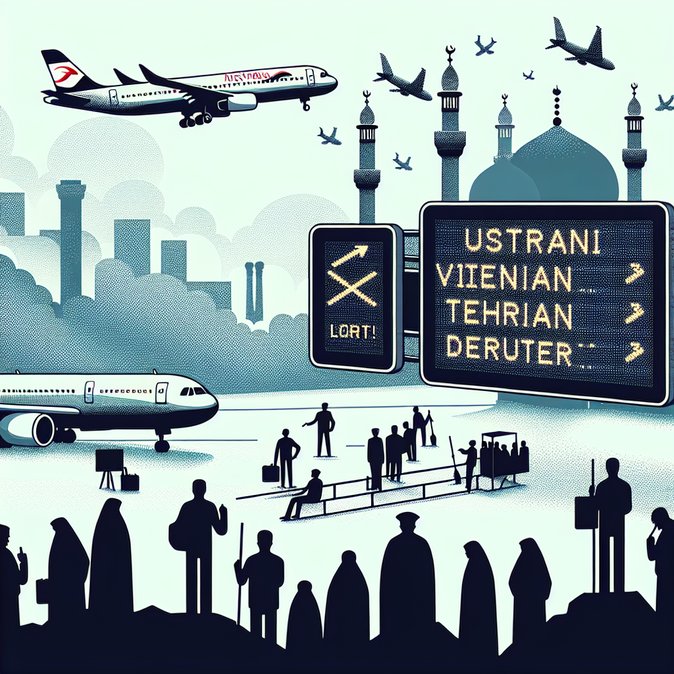
Austrian Airlines (AUA) has prolonged its suspension of flights between Vienna and Tehran until at least 21 January 2026 amid continuing mass protests and civil unrest in Iran. The carrier had originally halted the service on 10 January for a 48-hour security review but announced late on 12 January that operations will remain paused for another nine days while risk assessments continue. (vol.at)
Crew planning and flight-dispatch units were instructed to remove Tehran rotations from rosters, and affected passengers are being re-routed via Doha, Istanbul or Frankfurt, or offered refunds free of charge.
In this context, visa logistics have become equally complex. VisaHQ’s Austria portal (https://www.visahq.com/austria/) offers corporate travellers a single window for securing Iranian visas, as well as transit documentation for hubs such as Doha, Istanbul or Frankfurt. The platform’s real-time updates and courier services can cut processing times and help mobility teams keep projects on schedule despite the paused Vienna–Tehran link.
![Austrian Airlines Extends Tehran Flight Suspension to 21 January]()
The suspension highlights the fragility of east-west air corridors for Austrian business travellers. Vienna serves as a key gateway for Central-European companies with operations in Iran’s energy, engineering and pharmaceutical sectors. Mobility managers now face longer total travel times and higher ticket prices as passengers must transit through third-country hubs.
Insurance brokers meanwhile remind employers that EU sanctions and war-risk exclusions may limit cover if staff decide to reach Iran through alternative carriers. HR teams are advised to review duty-of-care protocols, ensure satellite-phone availability for essential trips and consider delaying non-critical site visits until service resumption is confirmed.
Should conditions improve, Austrian Airlines says it could redeploy an Airbus A320 family aircraft “within 48 hours,” but analysts note that any decision will hinge on airport-security guarantees and overflight permissions from neighbouring states. For now, mobility planners should assume no direct Vienna–Tehran connection until after 21 January at the earliest.
Crew planning and flight-dispatch units were instructed to remove Tehran rotations from rosters, and affected passengers are being re-routed via Doha, Istanbul or Frankfurt, or offered refunds free of charge.
In this context, visa logistics have become equally complex. VisaHQ’s Austria portal (https://www.visahq.com/austria/) offers corporate travellers a single window for securing Iranian visas, as well as transit documentation for hubs such as Doha, Istanbul or Frankfurt. The platform’s real-time updates and courier services can cut processing times and help mobility teams keep projects on schedule despite the paused Vienna–Tehran link.

The suspension highlights the fragility of east-west air corridors for Austrian business travellers. Vienna serves as a key gateway for Central-European companies with operations in Iran’s energy, engineering and pharmaceutical sectors. Mobility managers now face longer total travel times and higher ticket prices as passengers must transit through third-country hubs.
Insurance brokers meanwhile remind employers that EU sanctions and war-risk exclusions may limit cover if staff decide to reach Iran through alternative carriers. HR teams are advised to review duty-of-care protocols, ensure satellite-phone availability for essential trips and consider delaying non-critical site visits until service resumption is confirmed.
Should conditions improve, Austrian Airlines says it could redeploy an Airbus A320 family aircraft “within 48 hours,” but analysts note that any decision will hinge on airport-security guarantees and overflight permissions from neighbouring states. For now, mobility planners should assume no direct Vienna–Tehran connection until after 21 January at the earliest.