
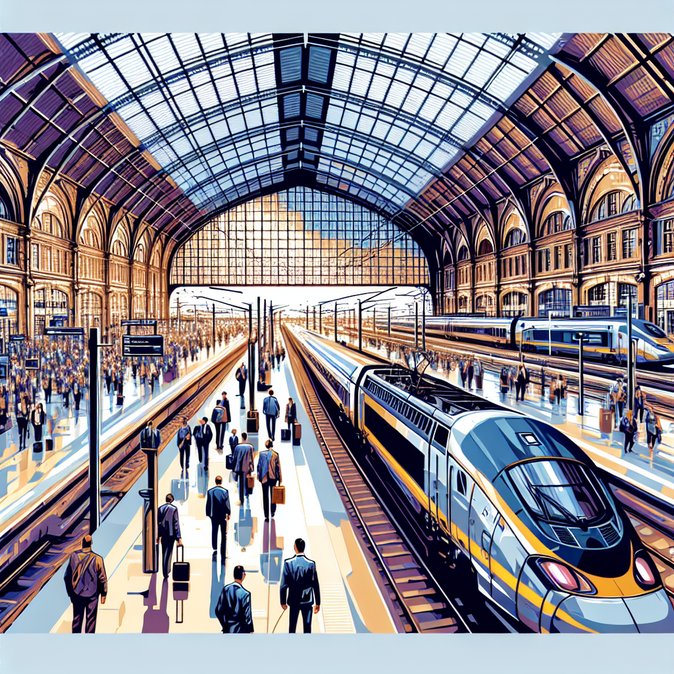
Eurostar’s morning service update on Sunday, 11 January 2026, advised passengers travelling between Paris, London, Brussels and Amsterdam to expect ‘significant delays and selected train cancellations’ after a cascade of technical and staffing problems at Paris Gare du Nord and on the wider cross-Channel network.
The operator’s live-traffic page, updated at 10:54 CET, listed multiple incidents: trains cancelled between 5 January and 8 February for operational reasons, engineering works reducing capacity on the Dutch and German legs, and—most pressingly for business travellers today—real-time hold-ups at Gare du Nord caused by an overnight signalling fault. Trains are being re-routed through slower tracks, lengthening journey times by 45–90 minutes and forcing Eurostar to thin out its peak-hour timetable.
Should passengers need to reroute via air or non-Schengen rail corridors, VisaHQ can streamline any additional paperwork. Its France portal (https://www.visahq.com/france/) lets travellers and corporate travel teams verify visa or ETIAS requirements in seconds and submit applications online with real-time tracking—saving precious time while Eurostar works to restore normal service.
![Eurostar warns of delays and cancellations as technical issues hit Paris Gare du Nord (11 January 2026)]()
For corporates relying on the high-speed link to shuttle staff between Paris and the City of London, the disruption lands at the worst possible moment—the first Sunday night of the post-holiday business season. Mobility managers have been urged to re-book travellers on later departures, switch to flights, or arrange remote attendance at Monday-morning meetings. Per Eurostar policy, customers delayed more than 60 minutes may claim vouchers or refunds, but compensation does not extend to ancillary costs such as hotel re-booking or missed connections on Thalys and domestic French services.
Eurostar says technicians are working with SNCF Réseau to restore full capacity before the Monday rush. Nonetheless, the company is keeping its ‘amber’ alert in place for 12 hours and warning that follow-on delays are likely because trains and crews will be out of position. Firms with time-critical shipments—particularly pharmaceutical samples that normally travel in the unaccompanied-luggage hold—are being advised to use road or air freight until the backlog clears.
Today’s episode underscores the fragility of Europe’s rail corridors amid winter weather and infrastructure upgrades. Mobility teams are reminded to build buffer time into itineraries, check Eurostar’s live-tracker before departure and carry passports even on intra-Schengen hops, as border-police spot checks remain possible when schedules unravel.
The operator’s live-traffic page, updated at 10:54 CET, listed multiple incidents: trains cancelled between 5 January and 8 February for operational reasons, engineering works reducing capacity on the Dutch and German legs, and—most pressingly for business travellers today—real-time hold-ups at Gare du Nord caused by an overnight signalling fault. Trains are being re-routed through slower tracks, lengthening journey times by 45–90 minutes and forcing Eurostar to thin out its peak-hour timetable.
Should passengers need to reroute via air or non-Schengen rail corridors, VisaHQ can streamline any additional paperwork. Its France portal (https://www.visahq.com/france/) lets travellers and corporate travel teams verify visa or ETIAS requirements in seconds and submit applications online with real-time tracking—saving precious time while Eurostar works to restore normal service.
For corporates relying on the high-speed link to shuttle staff between Paris and the City of London, the disruption lands at the worst possible moment—the first Sunday night of the post-holiday business season. Mobility managers have been urged to re-book travellers on later departures, switch to flights, or arrange remote attendance at Monday-morning meetings. Per Eurostar policy, customers delayed more than 60 minutes may claim vouchers or refunds, but compensation does not extend to ancillary costs such as hotel re-booking or missed connections on Thalys and domestic French services.
Eurostar says technicians are working with SNCF Réseau to restore full capacity before the Monday rush. Nonetheless, the company is keeping its ‘amber’ alert in place for 12 hours and warning that follow-on delays are likely because trains and crews will be out of position. Firms with time-critical shipments—particularly pharmaceutical samples that normally travel in the unaccompanied-luggage hold—are being advised to use road or air freight until the backlog clears.
Today’s episode underscores the fragility of Europe’s rail corridors amid winter weather and infrastructure upgrades. Mobility teams are reminded to build buffer time into itineraries, check Eurostar’s live-tracker before departure and carry passports even on intra-Schengen hops, as border-police spot checks remain possible when schedules unravel.