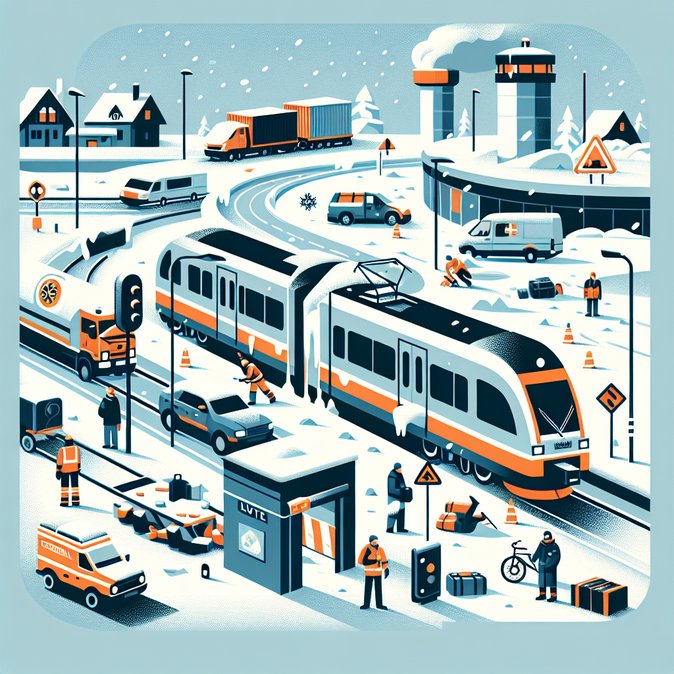
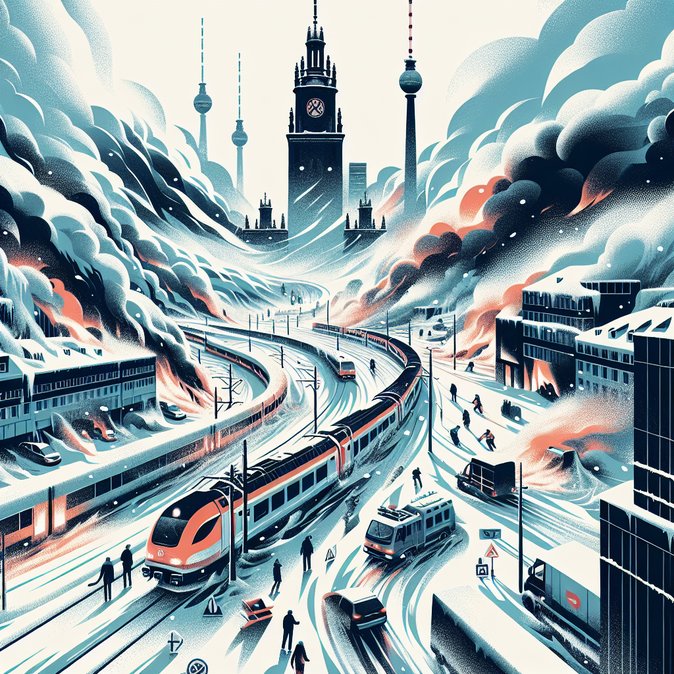
A brutal winter storm dubbed “Elli” plunged northern Germany into transport chaos late Friday, leading Deutsche Bahn to suspend all long-distance trains north of Hanover and leaving large swaths of Lower Saxony and Schleswig-Holstein inaccessible by rail. The shutdown came after snow drifts up to one metre deep and sheets of black ice rendered tracks unsafe. The unprecedented decision, taken at 18:00 on 9 January 2026, remained in force through Sunday morning.
The German Weather Service warned that temperatures could plummet to –20 °C overnight, complicating rescue and maintenance efforts. Three weather-related fatalities were confirmed in Bavaria after motorists lost control on iced-over Autobahn sections, prompting calls for stricter lorry chain regulations. Federal Transport Minister Patrick Schnieder called the situation “very serious” and activated THW civil-protection units to clear priority freight corridors.
For international visitors suddenly grounded by the shutdown, VisaHQ’s platform (https://www.visahq.com/germany/) can help secure urgent Schengen visa extensions or transit permits, guiding travelers through German immigration formalities even when consulates reduce hours during severe weather. The service’s digital application tools and courier support can prevent further disruption to travel plans while rail and air links recover.
![Long-Distance Trains Halted; Three Dead as Storm Elli Paralyzes Northern Germany]()
Deutsche Bahn arranged stationary “hotel trains” with heating and catering for stranded passengers in Hanover and Bremen. However, the closures disrupted not only passenger travel but also high-value freight, including automotive components bound for Volkswagen’s Wolfsburg plant and perishable North Sea seafood headed for Asian markets.
International ripple effects were felt as ÖBB and DSB canceled cross-border services from Austria and Denmark. Freight rail across the Alps and into the Netherlands slowed to a crawl, raising concerns among supply-chain managers who had already shifted some cargo from Red Sea maritime routes to rail due to piracy worries.
With more snowfall forecast, corporates are advised to trigger remote-work contingencies for staff who cannot reach offices and to review insurance coverage for temperature-sensitive shipments caught in transit.
The German Weather Service warned that temperatures could plummet to –20 °C overnight, complicating rescue and maintenance efforts. Three weather-related fatalities were confirmed in Bavaria after motorists lost control on iced-over Autobahn sections, prompting calls for stricter lorry chain regulations. Federal Transport Minister Patrick Schnieder called the situation “very serious” and activated THW civil-protection units to clear priority freight corridors.
For international visitors suddenly grounded by the shutdown, VisaHQ’s platform (https://www.visahq.com/germany/) can help secure urgent Schengen visa extensions or transit permits, guiding travelers through German immigration formalities even when consulates reduce hours during severe weather. The service’s digital application tools and courier support can prevent further disruption to travel plans while rail and air links recover.
Deutsche Bahn arranged stationary “hotel trains” with heating and catering for stranded passengers in Hanover and Bremen. However, the closures disrupted not only passenger travel but also high-value freight, including automotive components bound for Volkswagen’s Wolfsburg plant and perishable North Sea seafood headed for Asian markets.
International ripple effects were felt as ÖBB and DSB canceled cross-border services from Austria and Denmark. Freight rail across the Alps and into the Netherlands slowed to a crawl, raising concerns among supply-chain managers who had already shifted some cargo from Red Sea maritime routes to rail due to piracy worries.
With more snowfall forecast, corporates are advised to trigger remote-work contingencies for staff who cannot reach offices and to review insurance coverage for temperature-sensitive shipments caught in transit.