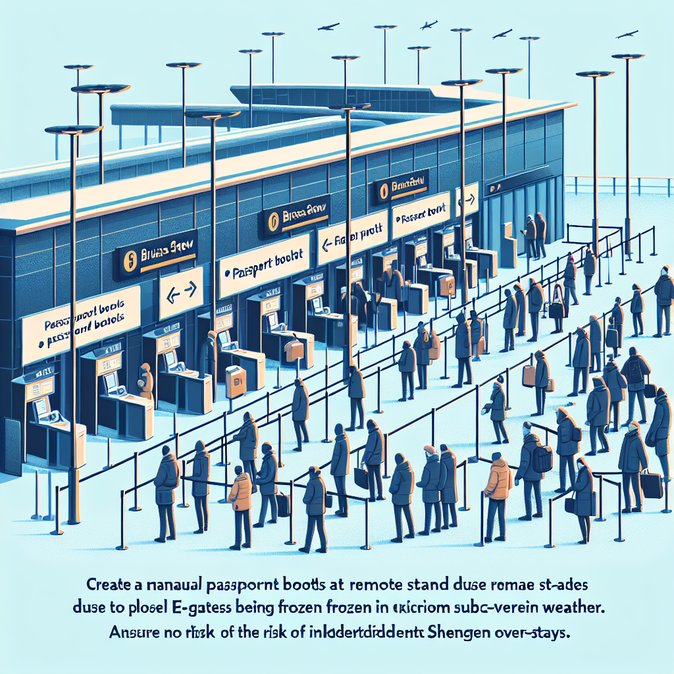
Belgium’s main international gateway moved into full winter-operations mode late on 9 January after an overnight snow front dumped up to 6 cm of powder across central Belgium. In consultation with airlines and ground-handling partners, Brussels Airport pre-emptively cancelled 40 flights—20 arrivals and 20 departures—to keep taxiways clear for priority movements. De-icing trucks rolled out from 04:00 and sweeping convoys worked non-stop to maintain runway friction while the Royal Meteorological Institute issued a code-orange alert. (visahq.com)
For travellers and mobility managers the timing could hardly be worse: the second week of January is traditionally one of the busiest relocation periods as assignees return from year-end holidays or start new postings. Airlines warned of average delays of 30–45 minutes throughout the day, and several issued change-fee waivers for tickets dated before 7 January provided re-booking occurs by 15 January. (visahq.com)
The operational disruption quickly spilled into immigration compliance. Re-booked passengers routed via Paris, Frankfurt or Amsterdam found themselves re-entering the Schengen Area multiple times, forcing recalculation of 90/180-day stay limits. Mobility managers reported cases where diverted assignees risked overstaying because renewed entry stamps were not aligned with their digital Schengen records. (visahq.com)
![Heavy snow forces Brussels Airport to cancel 40 flights and trigger code-orange winter plan]()
During such high-stress reroutings, VisaHQ can ease the load. Our Belgium portal (https://www.visahq.com/belgium/) lets travellers and HR teams calculate Schengen allowances instantly, file last-minute extension requests and arrange courier pick-up for passport renewals, helping maintain compliance even when snowstorms rewrite the itinerary.
Cargo belly space lost on the cancelled passenger flights was shifted to Liège and Frankfurt, tightening capacity just as post-holiday e-commerce volumes peaked. Companies with time-critical shipments or relocating staff were urged to activate contingency travel-risk plans and to brief travellers on longer check-in times, potential accommodation shortages and the possibility of additional Schengen checks on arrival. (visahq.com)
Looking ahead, meteorologists expect freezing fog overnight, meaning further runway tests and sporadic cancellations remain possible. HR teams should build generous buffers into travel schedules, pre-file visa-extension requests where necessary and ensure that municipal registration appointments are rescheduled promptly for delayed newcomers. (visahq.com)
For travellers and mobility managers the timing could hardly be worse: the second week of January is traditionally one of the busiest relocation periods as assignees return from year-end holidays or start new postings. Airlines warned of average delays of 30–45 minutes throughout the day, and several issued change-fee waivers for tickets dated before 7 January provided re-booking occurs by 15 January. (visahq.com)
The operational disruption quickly spilled into immigration compliance. Re-booked passengers routed via Paris, Frankfurt or Amsterdam found themselves re-entering the Schengen Area multiple times, forcing recalculation of 90/180-day stay limits. Mobility managers reported cases where diverted assignees risked overstaying because renewed entry stamps were not aligned with their digital Schengen records. (visahq.com)

During such high-stress reroutings, VisaHQ can ease the load. Our Belgium portal (https://www.visahq.com/belgium/) lets travellers and HR teams calculate Schengen allowances instantly, file last-minute extension requests and arrange courier pick-up for passport renewals, helping maintain compliance even when snowstorms rewrite the itinerary.
Cargo belly space lost on the cancelled passenger flights was shifted to Liège and Frankfurt, tightening capacity just as post-holiday e-commerce volumes peaked. Companies with time-critical shipments or relocating staff were urged to activate contingency travel-risk plans and to brief travellers on longer check-in times, potential accommodation shortages and the possibility of additional Schengen checks on arrival. (visahq.com)
Looking ahead, meteorologists expect freezing fog overnight, meaning further runway tests and sporadic cancellations remain possible. HR teams should build generous buffers into travel schedules, pre-file visa-extension requests where necessary and ensure that municipal registration appointments are rescheduled promptly for delayed newcomers. (visahq.com)