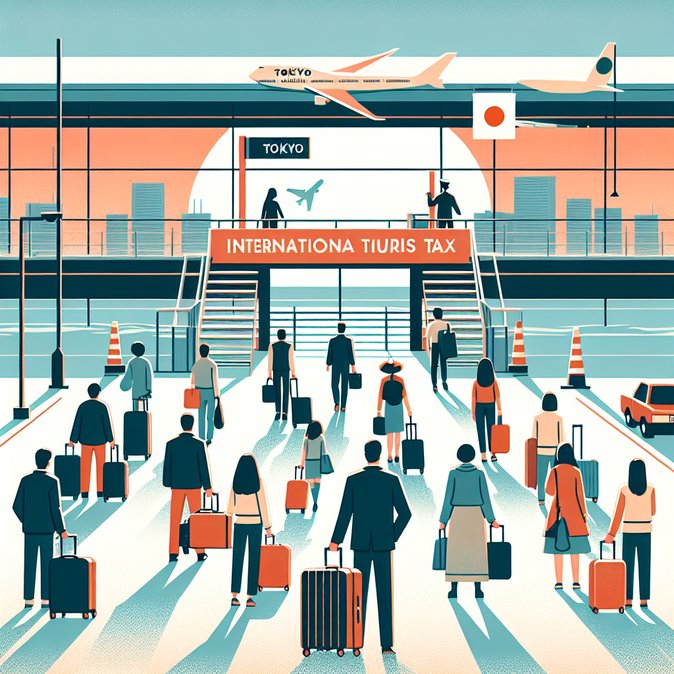
Japan’s Ministry of Finance confirmed on 9 January that the country will raise its International Tourist Tax from ¥1,000 to ¥3,000 per passenger starting in July 2026. The levy is automatically embedded in airline and ferry tickets for anyone—foreign or Japanese—leaving the country by air or sea. Transit passengers who depart within 24 hours will remain exempt.
For Hong Kong, the change matters: Japan reclaimed its spot as the SAR’s top outbound leisure market in 2025, with 1.3 million Hongkongers visiting after pandemic restrictions eased. A family of four will pay an extra HK$156 in taxes on a round-trip holiday, and premium-yield business flyers face the same surcharge. Although the increase is more than 18 months away, travel-management companies warn that long-term project budgets and assignment cost projections should be adjusted now to reflect the higher exit fee.
Tokyo framed the hike as a tool to combat over-tourism and fund crowd-management technology at hotspots such as Kyoto’s Gion district and Mount Fuji’s Yoshida trail. Part of the additional revenue may be recycled into lower passport-issuance fees for Japanese residents, but foreign visitors will absorb the full cost.
![Japan to triple international departure tax—Hong Kong travellers face higher costs from 2026]()
Airlines operating between Hong Kong and Japan—Cathay Pacific, Hong Kong Airlines and HK Express—are expected to amend ticketing systems well before the cut-over date. Corporate travel buyers should watch contract clauses on ‘government-imposed charges’, which allow carriers to pass the tax through after a fare has been negotiated.
Travellers who want a single platform to monitor Japan’s forthcoming JESTA requirements—or any other visa and travel authorisation worldwide—can lean on VisaHQ. The Hong Kong portal (https://www.visahq.com/hong-kong/) tracks regulatory updates in real time and offers end-to-end application assistance, helping both corporate mobility teams and leisure jet-setters avoid surprise paperwork and added costs.
In parallel, Japan plans to launch a paid Electronic Travel Authorisation (JESTA) for visa-exempt nationals, including Hongkongers, by 2028. Combined with the higher departure tax, total ancillary charges could reach ¥5,000-6,000 per traveller, further underscoring the need for updated cost-of-travel calculations in mobility policies.
For Hong Kong, the change matters: Japan reclaimed its spot as the SAR’s top outbound leisure market in 2025, with 1.3 million Hongkongers visiting after pandemic restrictions eased. A family of four will pay an extra HK$156 in taxes on a round-trip holiday, and premium-yield business flyers face the same surcharge. Although the increase is more than 18 months away, travel-management companies warn that long-term project budgets and assignment cost projections should be adjusted now to reflect the higher exit fee.
Tokyo framed the hike as a tool to combat over-tourism and fund crowd-management technology at hotspots such as Kyoto’s Gion district and Mount Fuji’s Yoshida trail. Part of the additional revenue may be recycled into lower passport-issuance fees for Japanese residents, but foreign visitors will absorb the full cost.

Airlines operating between Hong Kong and Japan—Cathay Pacific, Hong Kong Airlines and HK Express—are expected to amend ticketing systems well before the cut-over date. Corporate travel buyers should watch contract clauses on ‘government-imposed charges’, which allow carriers to pass the tax through after a fare has been negotiated.
Travellers who want a single platform to monitor Japan’s forthcoming JESTA requirements—or any other visa and travel authorisation worldwide—can lean on VisaHQ. The Hong Kong portal (https://www.visahq.com/hong-kong/) tracks regulatory updates in real time and offers end-to-end application assistance, helping both corporate mobility teams and leisure jet-setters avoid surprise paperwork and added costs.
In parallel, Japan plans to launch a paid Electronic Travel Authorisation (JESTA) for visa-exempt nationals, including Hongkongers, by 2028. Combined with the higher departure tax, total ancillary charges could reach ¥5,000-6,000 per traveller, further underscoring the need for updated cost-of-travel calculations in mobility policies.