Travel and Tour World’s newly-released 50 Best Airports in the World for 2026 report places Hong Kong International Airport (HKIA) at number 30, recognising the territory’s main gateway for its rapid deployment of biometrics, artificial-intelligence operations control and end-to-end baggage automation.
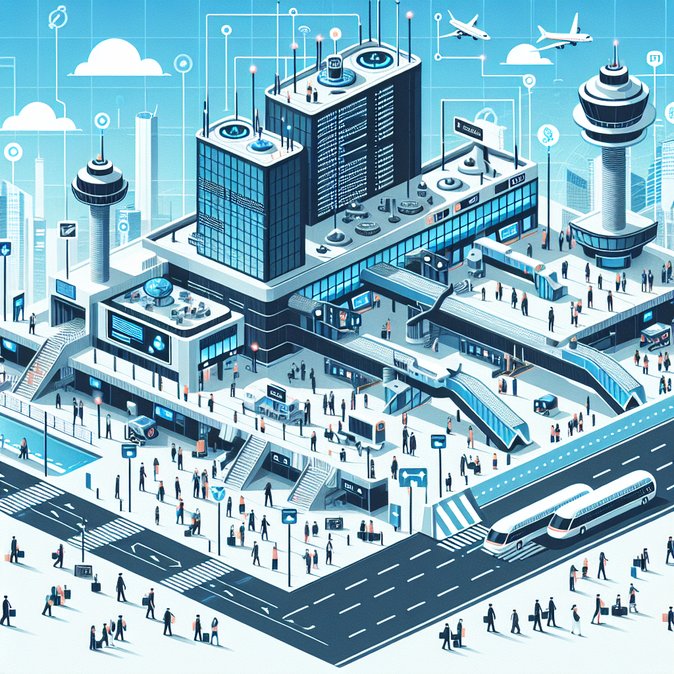
TTW notes that the airport’s ‘smartisation’ programme—overseen by Airport Authority Hong Kong—has moved beyond isolated pilots to full-scale integration. Facial-recognition e-gates now process both departing and arriving passengers, while an AI-driven Airport Operations Control Centre crunches real-time data from security, airfield movements and passenger flow sensors to predict bottlenecks up to two hours in advance. HKIA has also installed autonomous tugs and an RFID-enabled baggage handling system that cuts mis-sortation rates below 0.02 per cent.
Whether you’re a frequent flyer, a mobility manager moving talent, or an employer dispatching project teams, VisaHQ can remove the paperwork friction by securing the visas and travel authorisations required for transiting or entering Hong Kong—often entirely online. The company’s digital dashboard tracks every employee’s status in real time, integrates with HR platforms, and flags upcoming expirations, letting you focus on the trip rather than the red tape. Explore the service at https://www.visahq.com/hong-kong/
![Hong Kong International Airport ranked among world’s top smart hubs in TTW 2026 index]()
For employers running assignment traffic through Hong Kong, the ranking is more than a vanity metric. Faster kerb-to-gate times—average security-processing is down to eight minutes—and fewer missed connections translate directly into lower duty-of-care risk and productivity savings. Logistics firms have likewise welcomed the airport’s digital-twin platform, which lets them reserve ramp equipment in real-time and model cargo-pier congestion before flights arrive.
The accolade arrives as HKIA finishes commissioning its Three-Runway System and prepares to open a 200-metre Sky Bridge linking Terminal 1 to the North Satellite Concourse. Airport Authority executives say the technology blueprint will next pivot to sustainability: predictive building-management software and airside electric-vehicle fleets are expected to trim carbon intensity 10 per cent by 2028.
Hong Kong’s inclusion keeps the city in the conversation with regional rivals—Singapore Changi took second place and Seoul Incheon tenth—helping talent-mobility managers justify routing long-haul teams through the SAR instead of other Asian hubs. Companies should update travel policies to reference HKIA’s biometric gates, which now accept the same facial template as the city’s “Face Easy” immigration channels, removing the need for separate enrolment.
TTW notes that the airport’s ‘smartisation’ programme—overseen by Airport Authority Hong Kong—has moved beyond isolated pilots to full-scale integration. Facial-recognition e-gates now process both departing and arriving passengers, while an AI-driven Airport Operations Control Centre crunches real-time data from security, airfield movements and passenger flow sensors to predict bottlenecks up to two hours in advance. HKIA has also installed autonomous tugs and an RFID-enabled baggage handling system that cuts mis-sortation rates below 0.02 per cent.
Whether you’re a frequent flyer, a mobility manager moving talent, or an employer dispatching project teams, VisaHQ can remove the paperwork friction by securing the visas and travel authorisations required for transiting or entering Hong Kong—often entirely online. The company’s digital dashboard tracks every employee’s status in real time, integrates with HR platforms, and flags upcoming expirations, letting you focus on the trip rather than the red tape. Explore the service at https://www.visahq.com/hong-kong/

For employers running assignment traffic through Hong Kong, the ranking is more than a vanity metric. Faster kerb-to-gate times—average security-processing is down to eight minutes—and fewer missed connections translate directly into lower duty-of-care risk and productivity savings. Logistics firms have likewise welcomed the airport’s digital-twin platform, which lets them reserve ramp equipment in real-time and model cargo-pier congestion before flights arrive.
The accolade arrives as HKIA finishes commissioning its Three-Runway System and prepares to open a 200-metre Sky Bridge linking Terminal 1 to the North Satellite Concourse. Airport Authority executives say the technology blueprint will next pivot to sustainability: predictive building-management software and airside electric-vehicle fleets are expected to trim carbon intensity 10 per cent by 2028.
Hong Kong’s inclusion keeps the city in the conversation with regional rivals—Singapore Changi took second place and Seoul Incheon tenth—helping talent-mobility managers justify routing long-haul teams through the SAR instead of other Asian hubs. Companies should update travel policies to reference HKIA’s biometric gates, which now accept the same facial template as the city’s “Face Easy” immigration channels, removing the need for separate enrolment.