Finland has officially raised the bar for foreign nationals seeking a permanent residence permit. On 8 January 2026, amendments to the Aliens Act entered into force, and the Finnish Immigration Service (Migri) published full English-language guidance on 9 January.
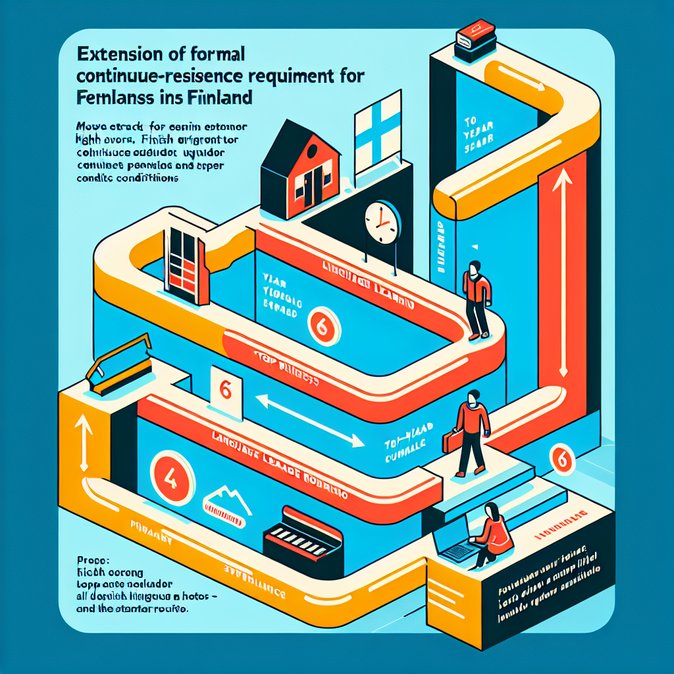
The most visible change is the extension of the standard continuous-residence requirement from four to six years. While applicants may still qualify after four years, they must now clear at least one ambitious ‘fast-track’ hurdle—such as earning €40,000 a year, holding a Finnish-recognised higher-education degree coupled with developing language skills, or demonstrating high-level Finnish or Swedish proficiency plus three years of work history.
In addition, every applicant—regardless of income or education—must prove “satisfactory” command of Finnish or Swedish and submit evidence of at least two years of gainful employment in Finland. Migri stresses that time spent outside Finland or periods on unemployment or social assistance may break the required continuity, potentially forcing applicants to restart the clock.
![Finland Tightens Path to Permanent Residence: Six-Year Rule & Language, Work Criteria Now Apply]()
For individuals feeling overwhelmed by the new requirements, VisaHQ can provide hands-on assistance. Through its Finland portal (https://www.visahq.com/finland/), the service offers document pre-checks, appointment booking and status tracking, helping applicants organise language certificates, employment records and other evidence well before they file.
The government argues the tougher rules will accelerate integration and boost labour-market participation. Business groups acknowledge the integration goals but warn that a longer, more demanding route to permanence could make Finland less attractive to international talent in sectors already battling labour shortages. Global mobility managers are therefore revisiting assignment lengths, budgeting for extra language training, and coaching transferees to collect employment certificates and payslips well in advance of filing.
Practically, foreigners who reached the old four-year milestone in late-2025 face an immediate decision: apply under the new fast-track clauses or extend their temporary permits and wait two more years. Migri anticipates a short-term surge in inquiries and urges applicants to use the Enter Finland portal, where the updated forms and fee schedule (€380 online / €600 paper) are now live.
The most visible change is the extension of the standard continuous-residence requirement from four to six years. While applicants may still qualify after four years, they must now clear at least one ambitious ‘fast-track’ hurdle—such as earning €40,000 a year, holding a Finnish-recognised higher-education degree coupled with developing language skills, or demonstrating high-level Finnish or Swedish proficiency plus three years of work history.
In addition, every applicant—regardless of income or education—must prove “satisfactory” command of Finnish or Swedish and submit evidence of at least two years of gainful employment in Finland. Migri stresses that time spent outside Finland or periods on unemployment or social assistance may break the required continuity, potentially forcing applicants to restart the clock.

For individuals feeling overwhelmed by the new requirements, VisaHQ can provide hands-on assistance. Through its Finland portal (https://www.visahq.com/finland/), the service offers document pre-checks, appointment booking and status tracking, helping applicants organise language certificates, employment records and other evidence well before they file.
The government argues the tougher rules will accelerate integration and boost labour-market participation. Business groups acknowledge the integration goals but warn that a longer, more demanding route to permanence could make Finland less attractive to international talent in sectors already battling labour shortages. Global mobility managers are therefore revisiting assignment lengths, budgeting for extra language training, and coaching transferees to collect employment certificates and payslips well in advance of filing.
Practically, foreigners who reached the old four-year milestone in late-2025 face an immediate decision: apply under the new fast-track clauses or extend their temporary permits and wait two more years. Migri anticipates a short-term surge in inquiries and urges applicants to use the Enter Finland portal, where the updated forms and fee schedule (€380 online / €600 paper) are now live.