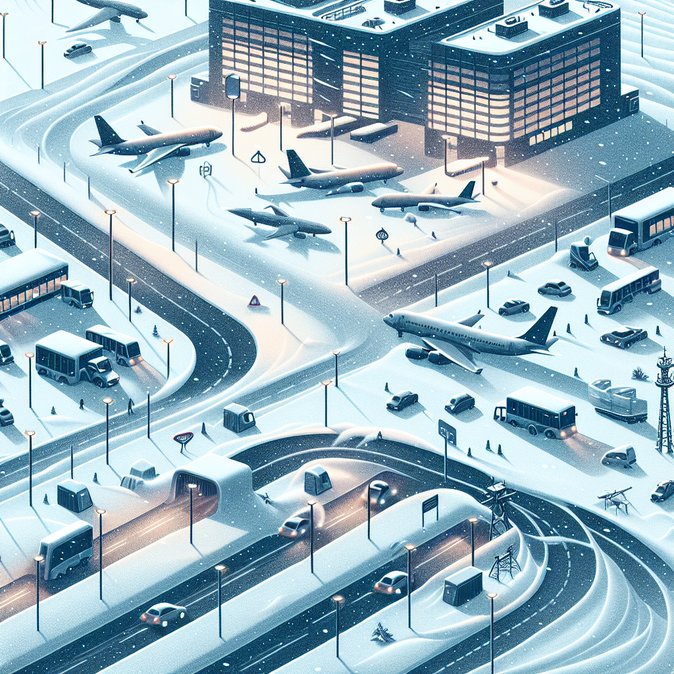
Storm Goretti dumped a fresh band of snow over western Bohemia overnight, spreading eastward into Prague during the early hours of 10 January. By 08:00 the capital’s Václav Havel Airport had cancelled seventeen departures—including key business routes to Warsaw, Paris and Frankfurt—and delayed several others as runway crews battled drifting snow. Airport management urged passengers to arrive early and monitor live boards for gate changes. (expats.cz)
Road and rail networks also struggled. Trucks jack-knifed on the D5 and D6 motorways, briefly closing both arteries and stranding commuters heading to German client sites. Tram lines 4 and 22 in Prague were forced onto diversionary routes after ice clogged points, and regional bus operators reported delays of up to 60 minutes. Mountain Rescue Services raised avalanche warnings in the Krkonoše range, prompting corporations to suspend non-essential travel to ski-area plants.
For international travelers suddenly facing rerouted itineraries—or fresh Schengen crossings to skirt grounded flights—VisaHQ can help smooth the paperwork. The service’s online portal (https://www.visahq.com/czech-republic/) fast-tracks Czech and multi-entry Schengen visa applications, provides real-time status tracking, and arranges courier return of passports, ensuring business teams stay compliant even when the weather doesn’t cooperate.
![Heavy snowfall forces flight cancellations and slows business travel across Czechia]()
Meteorologists expect flurries to continue through Saturday afternoon before temperatures drop to −8 °C overnight, preserving black-ice hazards for the Monday commute. Airlines have waived change fees for passengers booked through 11 January, while most rail operators will honour tickets on later services. Logistics firms are rerouting time-critical loads via Slovakia and Poland to keep supply chains moving.
Business-travel managers should: • add at least three hours’ buffer on itineraries involving Prague Airport; • advise travellers to carry printed invitation letters in case road detours route them through German border-check zones; • confirm that rental-car providers supply winter tyres and snow chains. Companies with January kick-off meetings may want to shift high-profile sessions online to avoid productivity losses.
Although Czechia’s road authority deployed 1800 snowploughs overnight, authorities concede that full clearance of secondary roads could take another 24 hours. Travellers are urged to follow the Transport Ministry’s @DopravniInfo channel for live updates.
Road and rail networks also struggled. Trucks jack-knifed on the D5 and D6 motorways, briefly closing both arteries and stranding commuters heading to German client sites. Tram lines 4 and 22 in Prague were forced onto diversionary routes after ice clogged points, and regional bus operators reported delays of up to 60 minutes. Mountain Rescue Services raised avalanche warnings in the Krkonoše range, prompting corporations to suspend non-essential travel to ski-area plants.
For international travelers suddenly facing rerouted itineraries—or fresh Schengen crossings to skirt grounded flights—VisaHQ can help smooth the paperwork. The service’s online portal (https://www.visahq.com/czech-republic/) fast-tracks Czech and multi-entry Schengen visa applications, provides real-time status tracking, and arranges courier return of passports, ensuring business teams stay compliant even when the weather doesn’t cooperate.

Meteorologists expect flurries to continue through Saturday afternoon before temperatures drop to −8 °C overnight, preserving black-ice hazards for the Monday commute. Airlines have waived change fees for passengers booked through 11 January, while most rail operators will honour tickets on later services. Logistics firms are rerouting time-critical loads via Slovakia and Poland to keep supply chains moving.
Business-travel managers should: • add at least three hours’ buffer on itineraries involving Prague Airport; • advise travellers to carry printed invitation letters in case road detours route them through German border-check zones; • confirm that rental-car providers supply winter tyres and snow chains. Companies with January kick-off meetings may want to shift high-profile sessions online to avoid productivity losses.
Although Czechia’s road authority deployed 1800 snowploughs overnight, authorities concede that full clearance of secondary roads could take another 24 hours. Travellers are urged to follow the Transport Ministry’s @DopravniInfo channel for live updates.