Liège Airport greeted the new year with upbeat figures that confirm its position as Belgium’s go-to freight gateway when Brussels Airport is constrained. The Walloon cargo specialist handled 1.324 million tonnes in 2025, up 14 % on the previous year and the second-best performance in the airport’s history. Senior management attribute the jump to an unashamed “Freighters First” policy that gives all-cargo operators priority slots, parking stands and night-time movements over passenger airlines. Fifty-six carriers now serve Liège—up from 40 in 2023—including newcomers from India, the United States, Mexico and Taiwan. (visahq.com)
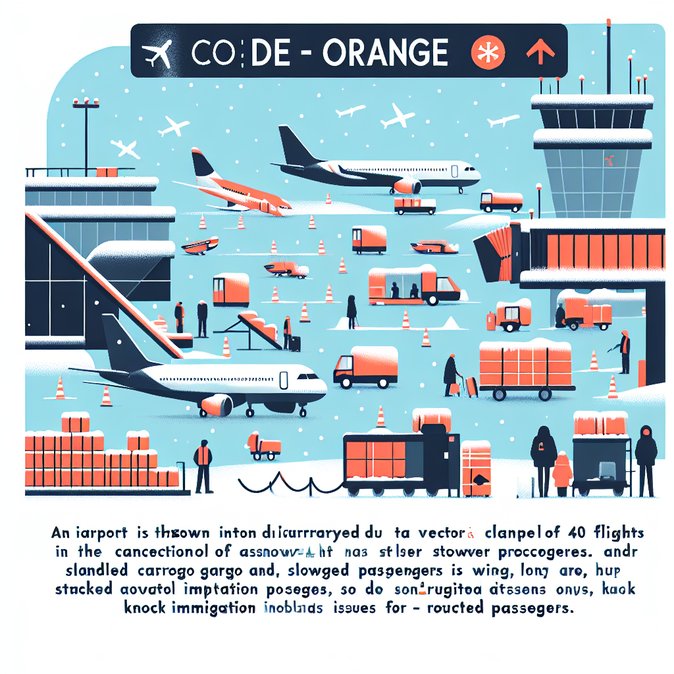
From a global-mobility perspective the statistics matter because Liège is increasingly the pressure-release valve whenever a snowstorm, strike or slot shortage paralyses Brussels Airport. Multinational companies use the hub to route time-critical industrial parts, pharmaceutical cold-chain consignments and even on-board-courier traffic that supports just-in-time production lines dotted along Belgium’s E40-E42 logistics corridor. December alone saw tonnage rise 16 % year-on-year, underscoring Liège’s importance to post-holiday e-commerce fulfilment. (visahq.com)
![Liège Airport’s 14 % cargo surge cements its role as Belgium’s back-up mobility hub]()
Before routing expatriate shipments or time-critical courier staff through Liège, mobility teams should verify that accompanying personnel have the correct entry documentation. VisaHQ’s Belgium portal (https://www.visahq.com/belgium/) streamlines visa and work-permit applications for more than 200 nationalities, enabling companies to coordinate flight bookings, customs paperwork and immigration formalities from a single dashboard.
The diversification of Liège’s customer base has also reduced concentration risk. The biggest airline now represents only 13 % of total volumes, compared with 20 % two years ago, giving shippers and relocation providers greater schedule resilience. New long-haul destinations—Mumbai, Chicago, Mexico City and Taipei—allow Belgian exporters and inbound assignees to bypass over-congested European hubs, cutting transit times for unaccompanied personal effects and project cargo. (visahq.com)
For corporate mobility managers the message is two-fold. First, Belgium’s freight infrastructure is scaling fast, supporting complex assignment logistics such as split shipments and door-to-door cold-chain moves. Second, cost models may need updating later this year when a new EU tax on low-value e-commerce parcels takes effect on 1 July 2026—a measure that airport leadership warns could dampen volume growth. HR teams should therefore monitor slot-allocation trends at Liège, where the share of night operations has already fallen from 59 % in 2020 to 34.5 % in 2025 in response to community-noise concerns. (visahq.com)
From a global-mobility perspective the statistics matter because Liège is increasingly the pressure-release valve whenever a snowstorm, strike or slot shortage paralyses Brussels Airport. Multinational companies use the hub to route time-critical industrial parts, pharmaceutical cold-chain consignments and even on-board-courier traffic that supports just-in-time production lines dotted along Belgium’s E40-E42 logistics corridor. December alone saw tonnage rise 16 % year-on-year, underscoring Liège’s importance to post-holiday e-commerce fulfilment. (visahq.com)

Before routing expatriate shipments or time-critical courier staff through Liège, mobility teams should verify that accompanying personnel have the correct entry documentation. VisaHQ’s Belgium portal (https://www.visahq.com/belgium/) streamlines visa and work-permit applications for more than 200 nationalities, enabling companies to coordinate flight bookings, customs paperwork and immigration formalities from a single dashboard.
The diversification of Liège’s customer base has also reduced concentration risk. The biggest airline now represents only 13 % of total volumes, compared with 20 % two years ago, giving shippers and relocation providers greater schedule resilience. New long-haul destinations—Mumbai, Chicago, Mexico City and Taipei—allow Belgian exporters and inbound assignees to bypass over-congested European hubs, cutting transit times for unaccompanied personal effects and project cargo. (visahq.com)
For corporate mobility managers the message is two-fold. First, Belgium’s freight infrastructure is scaling fast, supporting complex assignment logistics such as split shipments and door-to-door cold-chain moves. Second, cost models may need updating later this year when a new EU tax on low-value e-commerce parcels takes effect on 1 July 2026—a measure that airport leadership warns could dampen volume growth. HR teams should therefore monitor slot-allocation trends at Liège, where the share of night operations has already fallen from 59 % in 2020 to 34.5 % in 2025 in response to community-noise concerns. (visahq.com)