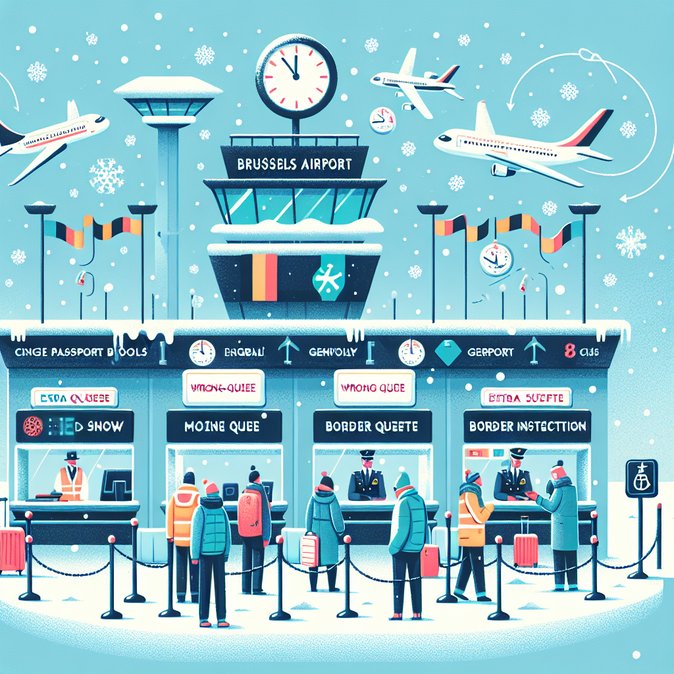
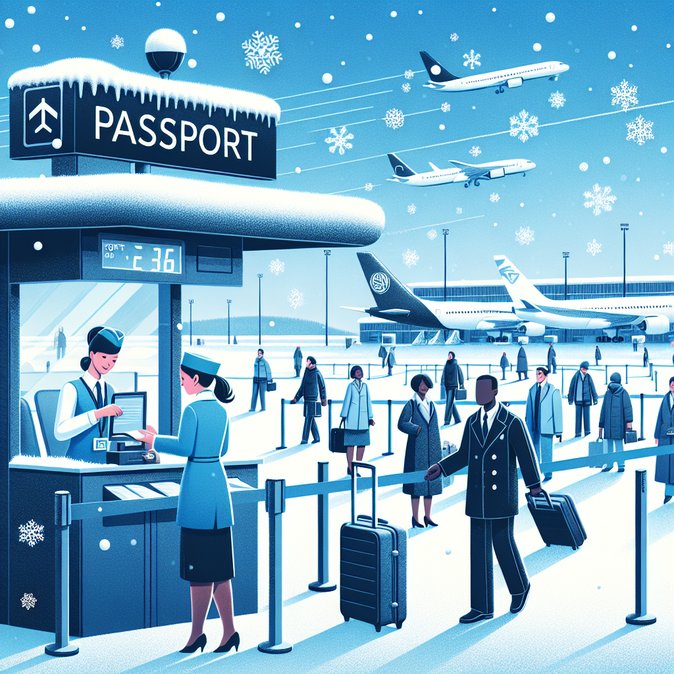
In a second winter-weather bulletin within 24 hours, Brussels Airport Company activated its internal ‘Code Snow’ protocol late on 6 January after meteorologists predicted up to five centimetres of new accumulation. Twelve extra snow-plough teams were placed on standby, but the bigger headache for mobility planners is inside the terminal: the Federal Police installed mobile passport booths at remote stands to cover the risk that automated e-gates may freeze or lose biometric accuracy in sub-zero conditions.
Airport operations managers told carriers to build 30–45 minutes of de-icing time into every turnaround, especially for wide-body departures to North America and Asia. That pushes boarding gates for tight intra-Schengen connections into the danger zone where passengers can be funnelled into the wrong immigration channel, requiring a full border inspection and manual stamping to correct the error.
For multinational employers, the practical implication is clearer than ever: build winter buffers into Belgian travel policies and brief travelling staff to double-check gate signage. A misplaced queue can invalidate a boarding pass and expose travellers to potential over-stay calculations under the 90/180-day Schengen rule.
![‘Code Snow’ at Brussels Airport Triggers Ad-Hoc Passport Booths and Longer Queues]()
Amid these colder-weather complications, VisaHQ can take one concern off travellers’ plates. Through its Belgium portal (https://www.visahq.com/belgium/), the service verifies entry requirements, tracks cumulative Schengen days, and expedites visa or passport renewals—helping companies avoid costly delays when a snow-day mix-up pushes passengers into manual immigration lanes.
The ad-hoc passport booths are a reminder that contingency planning extends beyond airside tarmac. Belgian police unions threatened strike action in 2025 over what they saw as the routine misuse of Article 9 of the Schengen Borders Code; while that dispute is officially resolved, today’s deployment shows how quickly resources can be redeployed to manual checking. Travel-risk managers should therefore expect sporadic ID sweeps in the coming days, particularly for flights with a high proportion of third-country nationals.
Looking ahead, the airport says it will review the performance of the mobile booths to decide whether temporary infrastructure should become a staple of its winter-operations playbook. If adopted permanently, corporate mobility teams may need to update “minimum connection time” (MCT) assumptions for Brussels in their online booking tools.
Airport operations managers told carriers to build 30–45 minutes of de-icing time into every turnaround, especially for wide-body departures to North America and Asia. That pushes boarding gates for tight intra-Schengen connections into the danger zone where passengers can be funnelled into the wrong immigration channel, requiring a full border inspection and manual stamping to correct the error.
For multinational employers, the practical implication is clearer than ever: build winter buffers into Belgian travel policies and brief travelling staff to double-check gate signage. A misplaced queue can invalidate a boarding pass and expose travellers to potential over-stay calculations under the 90/180-day Schengen rule.
Amid these colder-weather complications, VisaHQ can take one concern off travellers’ plates. Through its Belgium portal (https://www.visahq.com/belgium/), the service verifies entry requirements, tracks cumulative Schengen days, and expedites visa or passport renewals—helping companies avoid costly delays when a snow-day mix-up pushes passengers into manual immigration lanes.
The ad-hoc passport booths are a reminder that contingency planning extends beyond airside tarmac. Belgian police unions threatened strike action in 2025 over what they saw as the routine misuse of Article 9 of the Schengen Borders Code; while that dispute is officially resolved, today’s deployment shows how quickly resources can be redeployed to manual checking. Travel-risk managers should therefore expect sporadic ID sweeps in the coming days, particularly for flights with a high proportion of third-country nationals.
Looking ahead, the airport says it will review the performance of the mobile booths to decide whether temporary infrastructure should become a staple of its winter-operations playbook. If adopted permanently, corporate mobility teams may need to update “minimum connection time” (MCT) assumptions for Brussels in their online booking tools.