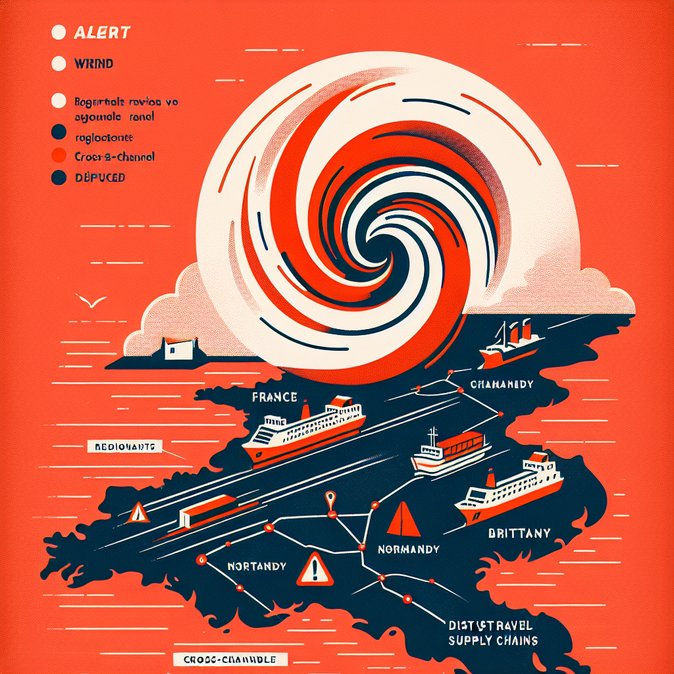
Barely 48 hours after heavy snow snarled travel, corporate mobility teams faced a new weather threat as Storm Goretti swept into Brittany and Normandy on January 8. Météo-France placed the Manche département on its highest red alert for winds of up to 140 km/h and issued orange warnings for 32 other départements stretching as far inland as Paris. By mid-afternoon, regional TER services in Normandy were suspended, Brittany Ferries rerouted crossings, and courier firms pre-emptively warned of parcel backlogs.
SNCF confirmed that all trains in the Manche stopped at 19:00, with broader Normandy services shutting from 22:00. On Friday morning, no TERs will run in Hauts-de-France until at least 14:00, and Seine-Maritime may extend cancellations if overnight gusts topple power lines. Eurostar and TGV high-speed services remain operational but are running at reduced speeds, increasing the likelihood of missed connections for onward domestic travellers.
Cross-Channel mobility is also affected. Brittany Ferries amended sailing times on the Caen-Portsmouth and St-Malo routes; ferry operators warn that further delays may cascade into the weekend as crews await port clearance. Logistics companies have activated contingency hubs south of the storm track, and La Poste has advised e-commerce retailers to expect at least a 24-hour delay on Northern France deliveries.
![Storm Goretti Triggers Red Alert: Trains Halted and Ferries Delayed Across Northern France]()
In the midst of such unpredictable travel conditions, VisaHQ can provide invaluable support by fast-tracking any last-minute visa or travel-document adjustments and supplying real-time entry-requirement updates for France and neighboring countries. Corporate mobility managers can direct assignees to https://www.visahq.com/france/ to verify whether storm-driven itinerary changes affect their visa validity or documentation needs, reducing administrative headaches while the focus remains on safety.
Employees in the affected zones should limit travel, secure accommodation if stranded, and keep power-bank chargers handy as grid outages are likely. Mobility policy owners should circulate emergency contacts, confirm whether ‘force majeure’ applies for delayed assignments, and remind expatriates about the French government’s FR-Alert mobile notifications, which push real-time safety guidance in both French and English.
The broader lesson: France’s winters are now delivering compound risks—snow, ice and Atlantic storms in rapid succession. Organisations should review their country-risk matrices and ensure that travel approval workflows incorporate meteorological warnings, not just strike calendars, when planning site visits or relocating assignees.
SNCF confirmed that all trains in the Manche stopped at 19:00, with broader Normandy services shutting from 22:00. On Friday morning, no TERs will run in Hauts-de-France until at least 14:00, and Seine-Maritime may extend cancellations if overnight gusts topple power lines. Eurostar and TGV high-speed services remain operational but are running at reduced speeds, increasing the likelihood of missed connections for onward domestic travellers.
Cross-Channel mobility is also affected. Brittany Ferries amended sailing times on the Caen-Portsmouth and St-Malo routes; ferry operators warn that further delays may cascade into the weekend as crews await port clearance. Logistics companies have activated contingency hubs south of the storm track, and La Poste has advised e-commerce retailers to expect at least a 24-hour delay on Northern France deliveries.
In the midst of such unpredictable travel conditions, VisaHQ can provide invaluable support by fast-tracking any last-minute visa or travel-document adjustments and supplying real-time entry-requirement updates for France and neighboring countries. Corporate mobility managers can direct assignees to https://www.visahq.com/france/ to verify whether storm-driven itinerary changes affect their visa validity or documentation needs, reducing administrative headaches while the focus remains on safety.
Employees in the affected zones should limit travel, secure accommodation if stranded, and keep power-bank chargers handy as grid outages are likely. Mobility policy owners should circulate emergency contacts, confirm whether ‘force majeure’ applies for delayed assignments, and remind expatriates about the French government’s FR-Alert mobile notifications, which push real-time safety guidance in both French and English.
The broader lesson: France’s winters are now delivering compound risks—snow, ice and Atlantic storms in rapid succession. Organisations should review their country-risk matrices and ensure that travel approval workflows incorporate meteorological warnings, not just strike calendars, when planning site visits or relocating assignees.