Paragraph 1 – The incident.
Berlin’s southwest finally lit up on 7 January after technicians re-energised feeder lines destroyed in a 3 January arson attack on a cable bridge beside the Lichterfelde combined-heat-and-power plant. Up to 45,000 households, 2,200 businesses and critical mobility infrastructure—including parts of the S-Bahn, traffic lights and airport fuel pumps—were hit. Authorities blame a far-left “Volcano” group; federal prosecutors have taken over the terrorism investigation.
Paragraph 2 – Immediate travel disruption.
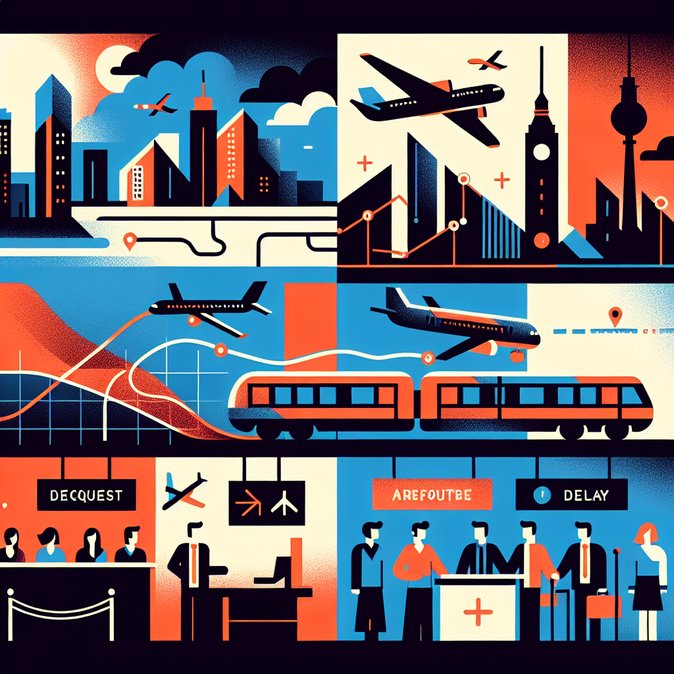
Deutsche Bahn suspended the S1 and S7 city-rail lines for 48 hours, while long-distance ICE services were rerouted via Magdeburg. At Berlin-Brandenburg Airport (BER) baggage belts and hydrant pumps ran on generators, forcing airlines to cap payloads and offer free re-booking. Hotels around Potsdamer Platz reported a 25 percent occupancy spike as stranded travellers sought heating.
Paragraph 3 – Business-mobility lessons.
The blackout was a live stress test for corporate travel teams. Companies discovered that visa appointments, residence-permit card collections and Anmeldung registrations were impossible without power. Berlin’s immigration office (LEA) has now promised to fast-track missed appointments and waive late-registration fines, but only for applicants who can prove they were affected by the outage.
![Berlin Restores Power After Four-Day Blackout, Exposes Mobility Vulnerabilities]()
To bridge such gaps during future outages, VisaHQ can act as a digital contingency. Through its dedicated Germany portal (https://www.visahq.com/germany/), travellers and mobility managers can verify up-to-date visa and residence-permit requirements, secure appointments in alternative jurisdictions, and organise courier submission of documents, ensuring immigration workflows keep moving even when local offices go dark.
Paragraph 4 – Risk-mitigation going forward.
Berlin’s mayor Kai Wegner urged a federal “critical-infrastructure shield” for substations serving airports and rail hubs. Business associations recommend mapping energy single-points-of-failure along travel corridors, adding alternative routing clauses to mobility policies, and ensuring visa/permit applications can move forward offline or via courier when local e-systems crash.
Paragraph 5 – Broader context.
Physical-security events are now squarely within the remit of global-mobility management. Companies should pair travel-risk monitoring with immigration-case tracking, maintain emergency accommodation contracts, and brief expatriates on Germany’s Cell Broadcast alert system.
Berlin’s southwest finally lit up on 7 January after technicians re-energised feeder lines destroyed in a 3 January arson attack on a cable bridge beside the Lichterfelde combined-heat-and-power plant. Up to 45,000 households, 2,200 businesses and critical mobility infrastructure—including parts of the S-Bahn, traffic lights and airport fuel pumps—were hit. Authorities blame a far-left “Volcano” group; federal prosecutors have taken over the terrorism investigation.
Paragraph 2 – Immediate travel disruption.
Deutsche Bahn suspended the S1 and S7 city-rail lines for 48 hours, while long-distance ICE services were rerouted via Magdeburg. At Berlin-Brandenburg Airport (BER) baggage belts and hydrant pumps ran on generators, forcing airlines to cap payloads and offer free re-booking. Hotels around Potsdamer Platz reported a 25 percent occupancy spike as stranded travellers sought heating.
Paragraph 3 – Business-mobility lessons.
The blackout was a live stress test for corporate travel teams. Companies discovered that visa appointments, residence-permit card collections and Anmeldung registrations were impossible without power. Berlin’s immigration office (LEA) has now promised to fast-track missed appointments and waive late-registration fines, but only for applicants who can prove they were affected by the outage.

To bridge such gaps during future outages, VisaHQ can act as a digital contingency. Through its dedicated Germany portal (https://www.visahq.com/germany/), travellers and mobility managers can verify up-to-date visa and residence-permit requirements, secure appointments in alternative jurisdictions, and organise courier submission of documents, ensuring immigration workflows keep moving even when local offices go dark.
Paragraph 4 – Risk-mitigation going forward.
Berlin’s mayor Kai Wegner urged a federal “critical-infrastructure shield” for substations serving airports and rail hubs. Business associations recommend mapping energy single-points-of-failure along travel corridors, adding alternative routing clauses to mobility policies, and ensuring visa/permit applications can move forward offline or via courier when local e-systems crash.
Paragraph 5 – Broader context.
Physical-security events are now squarely within the remit of global-mobility management. Companies should pair travel-risk monitoring with immigration-case tracking, maintain emergency accommodation contracts, and brief expatriates on Germany’s Cell Broadcast alert system.