Cyprus officially assumed the rotating Presidency of the Council of the European Union on 7 January 2026, opening a six-month term that is expected to draw an unprecedented volume of foreign dignitaries, civil-service teams and lobbyists to the island. Wednesday’s launch in Nicosia was attended by Ukrainian President Volodymyr Zelenskiy, European Commission President Ursula von der Leyen and European Council President António Costa, alongside leaders from Lebanon, Iraq and the Gulf Cooperation Council.
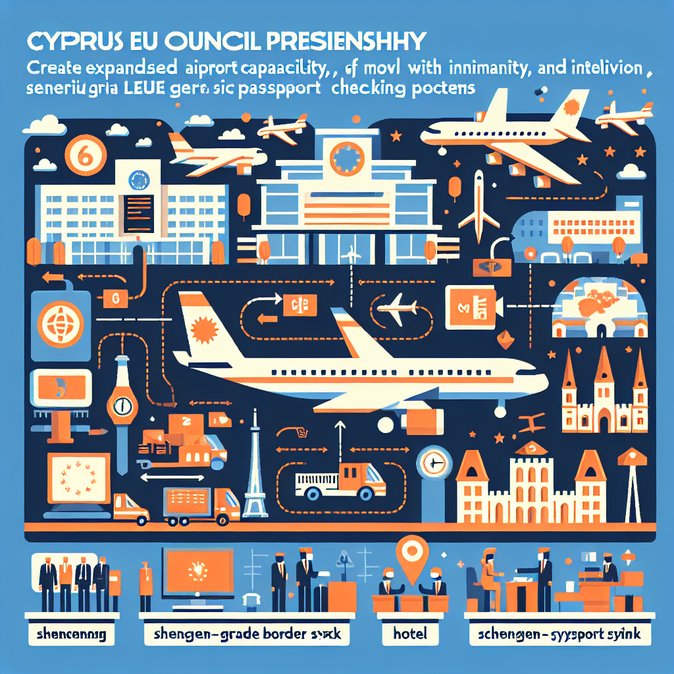
From a global-mobility perspective, the presidency immediately shifts Cyprus from a peripheral holiday destination to a temporary hub of EU decision-making. Government planners estimate that more than 28,000 delegates will visit for some 260 ministerial meetings and technical conferences. To cope, Larnaca International Airport has opened two dedicated EU-Presidency lanes, while Aegean Airlines has ramped up its new Larnaca–Brussels service from five to seven frequencies per week. Hermes Airports expects peak-day passenger numbers to rise 18 percent versus January 2025 and has hired 120 additional security screeners.
Delegations unsure of their specific entry requirements can streamline preparations by using VisaHQ’s online visa service. The company’s Cyprus portal (https://www.visahq.com/cyprus/) offers real-time guidance on visa policies, document uploads and courier options, helping EU and non-EU travelers alike navigate the high-volume presidency period without administrative headaches.
![Cyprus Takes EU Council Helm as Presidency Kicks Off, Bringing Surge in Diplomatic Travel]()
The presidency will also test Cyprus’ digital readiness ahead of its planned 2026 entry into the Schengen Area. Officials confirmed that all visiting delegates will be registered in the EU’s Entry/Exit System upon arrival—a dry-run for the database’s island-wide rollout next April. Hoteliers in Nicosia and Limassol report 95 percent occupancy for the first quarter, prompting the government to fast-track licensing for 420 short-term rental units.
Business-travel managers should note tighter booking windows and higher fares on key European routes; a spot-check by the Cypriot Travel Agents Association shows average return prices to Brussels up 37 percent since mid-December. Companies sending staff to Cyprus are advised to secure accommodation at least four weeks in advance and to monitor temporary traffic restrictions around Nicosia’s conference venues.
Beyond logistics, the presidency gives Cyprus a platform to shape EU migration and visa policy. President Nikos Christodoulides has pledged to “keep Schengen enlargement on the table” and to champion streamlined visa regimes with Middle-Eastern neighbours—moves that could permanently enhance the island’s connectivity long after the ceremonial spotlight fades.
From a global-mobility perspective, the presidency immediately shifts Cyprus from a peripheral holiday destination to a temporary hub of EU decision-making. Government planners estimate that more than 28,000 delegates will visit for some 260 ministerial meetings and technical conferences. To cope, Larnaca International Airport has opened two dedicated EU-Presidency lanes, while Aegean Airlines has ramped up its new Larnaca–Brussels service from five to seven frequencies per week. Hermes Airports expects peak-day passenger numbers to rise 18 percent versus January 2025 and has hired 120 additional security screeners.
Delegations unsure of their specific entry requirements can streamline preparations by using VisaHQ’s online visa service. The company’s Cyprus portal (https://www.visahq.com/cyprus/) offers real-time guidance on visa policies, document uploads and courier options, helping EU and non-EU travelers alike navigate the high-volume presidency period without administrative headaches.

The presidency will also test Cyprus’ digital readiness ahead of its planned 2026 entry into the Schengen Area. Officials confirmed that all visiting delegates will be registered in the EU’s Entry/Exit System upon arrival—a dry-run for the database’s island-wide rollout next April. Hoteliers in Nicosia and Limassol report 95 percent occupancy for the first quarter, prompting the government to fast-track licensing for 420 short-term rental units.
Business-travel managers should note tighter booking windows and higher fares on key European routes; a spot-check by the Cypriot Travel Agents Association shows average return prices to Brussels up 37 percent since mid-December. Companies sending staff to Cyprus are advised to secure accommodation at least four weeks in advance and to monitor temporary traffic restrictions around Nicosia’s conference venues.
Beyond logistics, the presidency gives Cyprus a platform to shape EU migration and visa policy. President Nikos Christodoulides has pledged to “keep Schengen enlargement on the table” and to champion streamlined visa regimes with Middle-Eastern neighbours—moves that could permanently enhance the island’s connectivity long after the ceremonial spotlight fades.