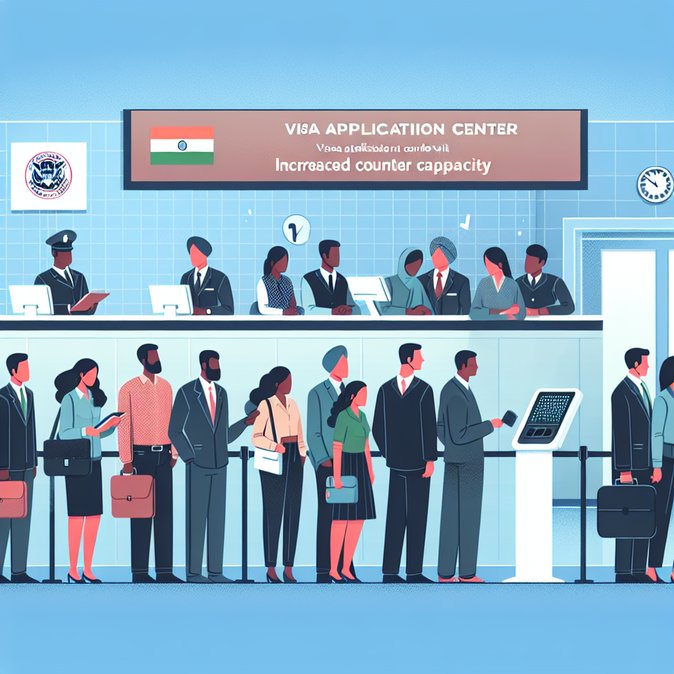
Austria-bound travellers in Western India will now need to visit a new location when filing Schengen‐visa applications. VFS Global confirmed on 8 January that its Austria Visa Application Centre in Mumbai has relocated to a purpose-built office near the Bandra Kurla Complex business district. The move, which quietly took effect on 2 January, triples counter capacity from six to eighteen and adds biometric booths that can be re-configured for the EU’s forthcoming Entry/Exit System (EES). (m.economictimes.com)
For global-mobility managers the change is more than cosmetic. Austria remains one of the fastest-growing intra-company transfer destinations for Indian engineers in automotive, chip manufacturing and IT services. A larger centre should reduce appointment bottlenecks that, in late-2025, forced some assignees to route paperwork through Delhi or Chennai at extra cost. The new site is also co-located with visa centres for Germany and the Netherlands, making it easier for companies that need multiple Schengen visas for rotational travellers.
![Austria Moves Mumbai Visa Application Centre to Larger Facility]()
Travellers and HR teams looking for extra support can also tap VisaHQ, whose Austria visa specialists (https://www.visahq.com/austria/) offer document pre-validation, appointment scheduling and courier submission options. The online platform consolidates real-time status updates for multiple applicants, giving corporates clearer visibility while reducing the number of site visits required.
Applicants with appointments booked before 2 January were automatically re-scheduled at the new address and received SMS notifications 48 hours in advance. VFS says walk-in premium slots remain limited: only travellers flying within five calendar days can purchase the service, and proof of travel is required. Corporates should therefore continue to book standard slots at least four weeks ahead until the post-move learning curve stabilises.
Operationally, the new office has onsite document-printing and photo-booth facilities, allowing travellers to correct paperwork errors on the spot. Early feedback from relocation firms indicates a 30-minute reduction in average visit time. However, security screening has been tightened; visitors must present the SMS bar-code as well as government ID to enter the building, so mobility teams should brief applicants to keep both documents handy.
For global-mobility managers the change is more than cosmetic. Austria remains one of the fastest-growing intra-company transfer destinations for Indian engineers in automotive, chip manufacturing and IT services. A larger centre should reduce appointment bottlenecks that, in late-2025, forced some assignees to route paperwork through Delhi or Chennai at extra cost. The new site is also co-located with visa centres for Germany and the Netherlands, making it easier for companies that need multiple Schengen visas for rotational travellers.

Travellers and HR teams looking for extra support can also tap VisaHQ, whose Austria visa specialists (https://www.visahq.com/austria/) offer document pre-validation, appointment scheduling and courier submission options. The online platform consolidates real-time status updates for multiple applicants, giving corporates clearer visibility while reducing the number of site visits required.
Applicants with appointments booked before 2 January were automatically re-scheduled at the new address and received SMS notifications 48 hours in advance. VFS says walk-in premium slots remain limited: only travellers flying within five calendar days can purchase the service, and proof of travel is required. Corporates should therefore continue to book standard slots at least four weeks ahead until the post-move learning curve stabilises.
Operationally, the new office has onsite document-printing and photo-booth facilities, allowing travellers to correct paperwork errors on the spot. Early feedback from relocation firms indicates a 30-minute reduction in average visit time. However, security screening has been tightened; visitors must present the SMS bar-code as well as government ID to enter the building, so mobility teams should brief applicants to keep both documents handy.