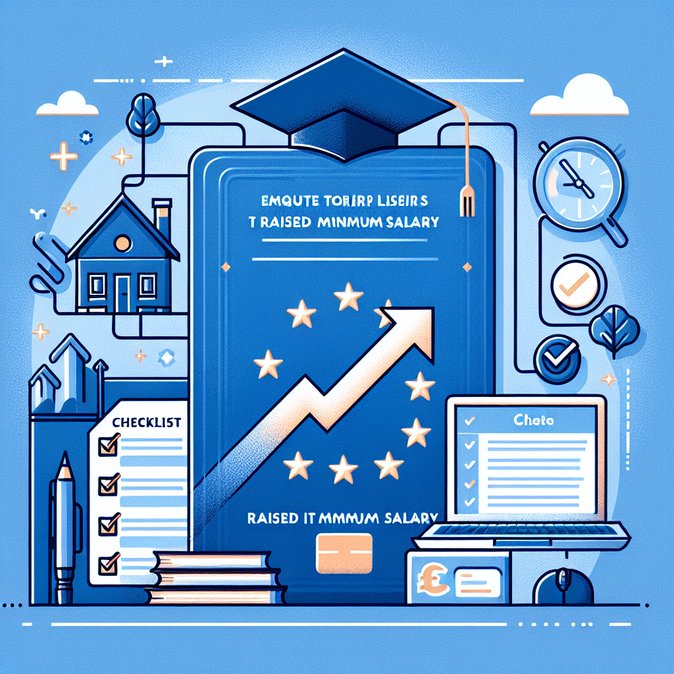
Germany’s fresh overhaul of the EU Blue Card entered the spotlight on 7 January 2026 when specialist portal AixFormation published the first comprehensive breakdown of this year’s changes. The headline: employers must now offer at least €50 700 (standard) or €45 630 (shortage occupations) to secure a Blue Card, reflecting 50 % and 45.3 % of the new pension-insurance ceiling. That is a jump of roughly 5 % on 2025 thresholds and will affect job offers signed after 1 January.(aixformation.de)
But the reform is not just about money. Graduates with less than three years’ experience, and IT specialists without a formal degree but with three years of verifiable practice, are now eligible—provided they meet the lower salary line for shortage roles. The list of shortage occupations has been widened to include nursing specialists, early-childhood educators and selected green-tech engineers, giving multinationals more flexibility to plug talent gaps.
Practically, mobility teams must recalibrate offer-letter templates, remuneration benchmarking and labour-market-testing files. Visa sections at German consulates will refuse applications that cite an outdated salary—even if the contract was issued in 2025 and the applicant has already booked a VFS appointment. HR should therefore issue contract addenda or pivot to Germany’s new Opportunity Card where salary thresholds are lower but job-search time on shore is longer.
![Germany Sharpens EU Blue Card Rules for 2026: Higher Salaries but Broader Talent Pool]()
For companies looking to navigate these tighter rules with minimal friction, VisaHQ’s Germany desk (https://www.visahq.com/germany/) can audit draft contracts, confirm they clear the new income bar and compile KldB-aligned application packs before submitting them to the consulate. Their end-to-end support—appointment booking, document translation and real-time status tracking—helps HR teams avoid costly resubmissions and keep onboarding timelines intact.
The Interior Ministry has also tightened document scrutiny: position titles must align with the national classification of occupations (KldB 2020), and engpass roles require supporting evidence such as job adverts and regional labour-agency confirmations. Employers who mis-code positions risk fines of up to €30 000 and a one-year exclusion from fast-track processing.
For assignees, the sweetener is mobility. Blue-Card holders can now work up to 90 days in another EU member state without a separate permit and can apply for an EU long-term residence permit after 21 months if they reach B1 German. Family members receive immediate labour-market access, a boon for dual-career couples considering relocation.
Taken together, the 2026 package keeps Germany competitive in the global talent race but raises the bar on HR compliance. Companies should audit all pending Blue-Card cases, brief recruiters on the new salary floor and budget for possible top-ups—especially in IT and engineering where offers often sit just below the new thresholds.
But the reform is not just about money. Graduates with less than three years’ experience, and IT specialists without a formal degree but with three years of verifiable practice, are now eligible—provided they meet the lower salary line for shortage roles. The list of shortage occupations has been widened to include nursing specialists, early-childhood educators and selected green-tech engineers, giving multinationals more flexibility to plug talent gaps.
Practically, mobility teams must recalibrate offer-letter templates, remuneration benchmarking and labour-market-testing files. Visa sections at German consulates will refuse applications that cite an outdated salary—even if the contract was issued in 2025 and the applicant has already booked a VFS appointment. HR should therefore issue contract addenda or pivot to Germany’s new Opportunity Card where salary thresholds are lower but job-search time on shore is longer.

For companies looking to navigate these tighter rules with minimal friction, VisaHQ’s Germany desk (https://www.visahq.com/germany/) can audit draft contracts, confirm they clear the new income bar and compile KldB-aligned application packs before submitting them to the consulate. Their end-to-end support—appointment booking, document translation and real-time status tracking—helps HR teams avoid costly resubmissions and keep onboarding timelines intact.
The Interior Ministry has also tightened document scrutiny: position titles must align with the national classification of occupations (KldB 2020), and engpass roles require supporting evidence such as job adverts and regional labour-agency confirmations. Employers who mis-code positions risk fines of up to €30 000 and a one-year exclusion from fast-track processing.
For assignees, the sweetener is mobility. Blue-Card holders can now work up to 90 days in another EU member state without a separate permit and can apply for an EU long-term residence permit after 21 months if they reach B1 German. Family members receive immediate labour-market access, a boon for dual-career couples considering relocation.
Taken together, the 2026 package keeps Germany competitive in the global talent race but raises the bar on HR compliance. Companies should audit all pending Blue-Card cases, brief recruiters on the new salary floor and budget for possible top-ups—especially in IT and engineering where offers often sit just below the new thresholds.