The Czech Republic has taken a decisive leap toward paper-free immigration administration. At midnight on 1 January 2026 the Interior Ministry activated the core modules of the new Act on the Stay of Foreigners, creating an end-to-end electronic workflow for every major permit and visa category.
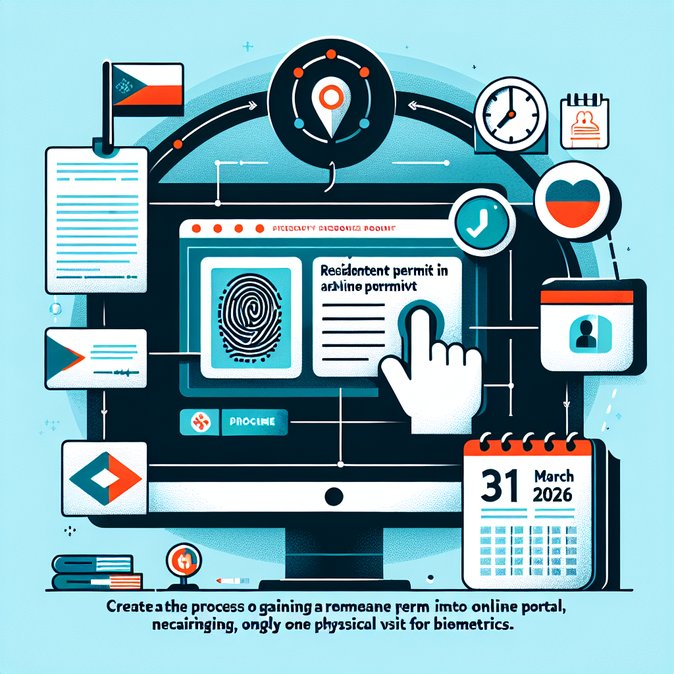
Foreign nationals can now set up a secure “Foreigner Account” that is linked to their Czech electronic identity (e-ID). Through the account they submit applications for employee cards, blue cards, family-reunification permits and long-term visas, upload labour contracts, pay fees and track case status in real time. Only one in-person appointment is still required to collect fingerprints and a biometric photo.
If you’d like expert assistance navigating these new digital procedures, VisaHQ offers step-by-step support for Czech visa and residence applications—handling online forms, verifying uploads and booking biometric slots. Explore their services at https://www.visahq.com/czech-republic/
![Czech Interior Ministry Switches on Fully-Digital Immigration Platform]()
For corporate mobility teams the upgrade removes weeks of guess-work. HR managers no longer wait for hard-copy letters: system notifications arrive instantly and built-in data validation has already cut document-rejection rates by 40 % during a December soft launch, according to ministry statistics.
The reform also consolidates more than 70 piecemeal amendments that had accumulated since Czechia joined the EU. Standardised deadlines (30 days for employee-card renewals, 60 days for first-time residence permits) are now hard-coded in the portal, giving companies a reliable project timeline.
Practical tip: employers should register their compliance officers for delegated access so they can monitor upcoming expiries. The ministry will issue the first batch of automated “renewal reminders” on 15 January. Applicants who started a paper application in 2025 have until 31 March to migrate their file online, otherwise they must restart the process.
Foreign nationals can now set up a secure “Foreigner Account” that is linked to their Czech electronic identity (e-ID). Through the account they submit applications for employee cards, blue cards, family-reunification permits and long-term visas, upload labour contracts, pay fees and track case status in real time. Only one in-person appointment is still required to collect fingerprints and a biometric photo.
If you’d like expert assistance navigating these new digital procedures, VisaHQ offers step-by-step support for Czech visa and residence applications—handling online forms, verifying uploads and booking biometric slots. Explore their services at https://www.visahq.com/czech-republic/

For corporate mobility teams the upgrade removes weeks of guess-work. HR managers no longer wait for hard-copy letters: system notifications arrive instantly and built-in data validation has already cut document-rejection rates by 40 % during a December soft launch, according to ministry statistics.
The reform also consolidates more than 70 piecemeal amendments that had accumulated since Czechia joined the EU. Standardised deadlines (30 days for employee-card renewals, 60 days for first-time residence permits) are now hard-coded in the portal, giving companies a reliable project timeline.
Practical tip: employers should register their compliance officers for delegated access so they can monitor upcoming expiries. The ministry will issue the first batch of automated “renewal reminders” on 15 January. Applicants who started a paper application in 2025 have until 31 March to migrate their file online, otherwise they must restart the process.