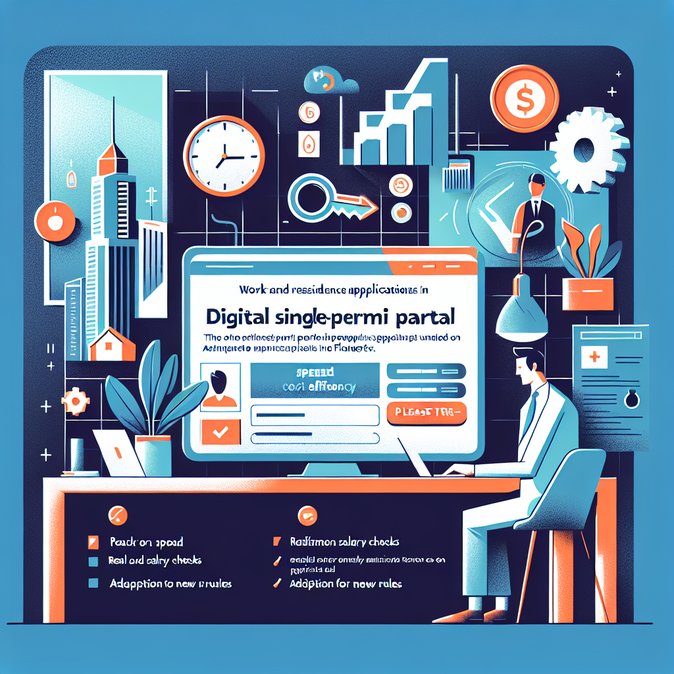
Belgium’s northern region marked a generational shift in the way companies hire and transfer foreign talent on 5 January 2026, when the Flemish Government switched on its completely redesigned online “Single-Permit” portal. The launch crowns a three-year legislative project that has rewritten the region’s economic-migration code and replaces the notorious patchwork of PDF forms, email drop-boxes and in-person courier runs that employers previously navigated.
From today, HR and global mobility teams can file fixed-term permits, intra-EU ICT assignments and—crucially—unlimited-duration Single Permits from a single dashboard. The portal plugs directly into the national social-security database, auto-validating salary thresholds in real time, and accepts Belgian electronic-identity (eID) signatures, eliminating duplicate data entry. It also embeds a “Mandate” workflow that lets relocation providers submit on behalf of clients without separate paper powers of attorney.
Behind the technology lies sweeping regulation that entered into force on 1 January. Among the headline changes are shorter labour-market tests for shortage occupations, clearer salary benchmark rules, and a new option for assignees who have held Single-Permits for five years to convert to indefinite-duration status entirely online—removing the need for annual paper renewals. The Flemish Department of Work and Social Economy estimates processing times will fall by 20–30 percent once staff complete training on the new back-end.
![Flanders goes live with end-to-end digital Single-Permit portal, capping 2026 immigration reform]()
Global mobility teams that need additional support with these new workflows can lean on VisaHQ’s Belgium platform, which bundles up-to-date work-permit guidance, document checklists and deadline trackers. By visiting https://www.visahq.com/belgium/ employers can pre-screen candidates, generate compliant invitation letters and even manage courier pickups for Brussels and Wallonia’s still-paper files, making it a useful complement to the Flemish region’s digital portal.
For multinationals the practical implications are immediate. Bulk filings for Q1 assignees can now be uploaded in minutes, cutting courier costs and allowing same-day confirmation of file completeness. Employers operating pan-Belgian projects should note, however, that the Brussels-Capital Region and Wallonia still require paper originals; the federal government is expected to nudge those regions toward the same IT backbone within 18 months. Until then, mobility managers will need parallel workflows.
Advisers warn that the learning curve should not be underestimated. Each user must log in with an eID or Itsme account, and new PDF upload standards reject blurry scans or missing metadata. “Build extra lead-time into January files,” one Big-Four immigration partner told clients. Nevertheless, stakeholders agree the move propels Belgium toward the EU’s goal of fully digital residence-permit processing by 2030.
From today, HR and global mobility teams can file fixed-term permits, intra-EU ICT assignments and—crucially—unlimited-duration Single Permits from a single dashboard. The portal plugs directly into the national social-security database, auto-validating salary thresholds in real time, and accepts Belgian electronic-identity (eID) signatures, eliminating duplicate data entry. It also embeds a “Mandate” workflow that lets relocation providers submit on behalf of clients without separate paper powers of attorney.
Behind the technology lies sweeping regulation that entered into force on 1 January. Among the headline changes are shorter labour-market tests for shortage occupations, clearer salary benchmark rules, and a new option for assignees who have held Single-Permits for five years to convert to indefinite-duration status entirely online—removing the need for annual paper renewals. The Flemish Department of Work and Social Economy estimates processing times will fall by 20–30 percent once staff complete training on the new back-end.
Global mobility teams that need additional support with these new workflows can lean on VisaHQ’s Belgium platform, which bundles up-to-date work-permit guidance, document checklists and deadline trackers. By visiting https://www.visahq.com/belgium/ employers can pre-screen candidates, generate compliant invitation letters and even manage courier pickups for Brussels and Wallonia’s still-paper files, making it a useful complement to the Flemish region’s digital portal.
For multinationals the practical implications are immediate. Bulk filings for Q1 assignees can now be uploaded in minutes, cutting courier costs and allowing same-day confirmation of file completeness. Employers operating pan-Belgian projects should note, however, that the Brussels-Capital Region and Wallonia still require paper originals; the federal government is expected to nudge those regions toward the same IT backbone within 18 months. Until then, mobility managers will need parallel workflows.
Advisers warn that the learning curve should not be underestimated. Each user must log in with an eID or Itsme account, and new PDF upload standards reject blurry scans or missing metadata. “Build extra lead-time into January files,” one Big-Four immigration partner told clients. Nevertheless, stakeholders agree the move propels Belgium toward the EU’s goal of fully digital residence-permit processing by 2030.
More From Belgium
View all
Amsterdam snow forces Bulgaria Air diversion to Brussels, underscoring need to pre-clear Belgian entry rules
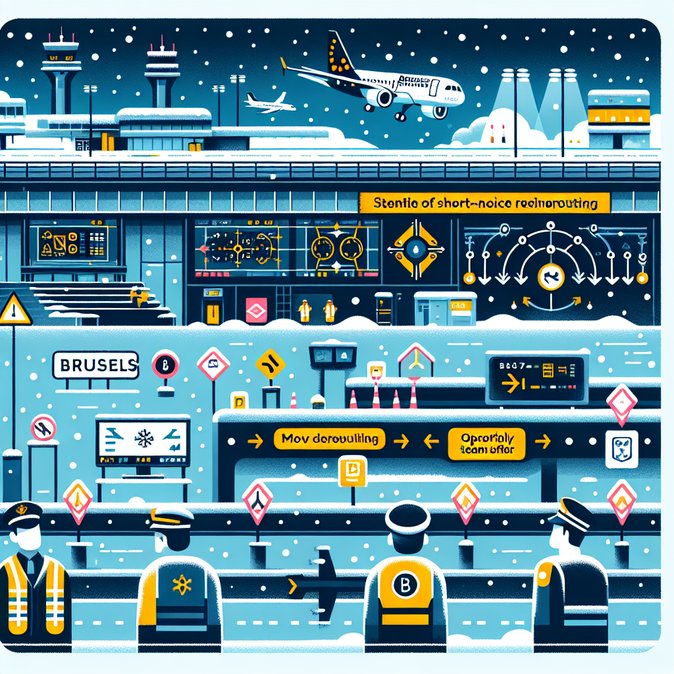
Brussels Airport issues snow alert, warns passengers of possible delays and stricter ID checks