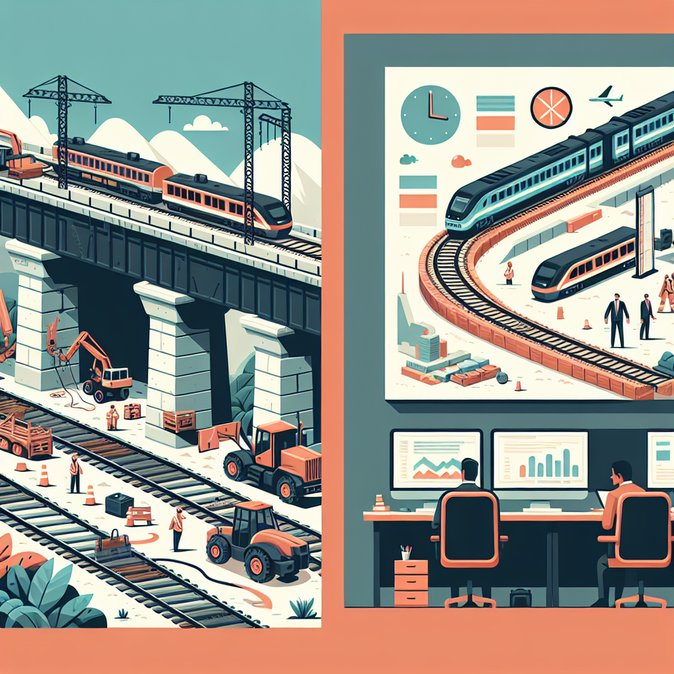
Austrian Federal Railways (ÖBB) confirmed on 6 January that the Weststrecke between Innsbruck Hauptbahnhof and Rum will be completely shut from Tuesday, 7 January until 29 January 2026 so engineers can replace the 120-year-old Rauchmühl bridge. The structure, which spans the River Inn just east of Innsbruck, has reached the end of its design life and can no longer safely accommodate high-speed Railjet services or heavy freight wagons.
During the 23-day blockade, all long-distance trains between Vienna and Tyrol will be diverted through the Inntal tunnel. ÖBB estimates an additional 30–50 minutes on Vienna–Innsbruck journeys and up to one hour on Vienna–Bregenz services. A two-hourly emergency timetable has been published and is already loaded into the ÖBB app and global distribution systems (GDS), ensuring travel-management companies can reissue tickets automatically.
If these diversions force travellers to prolong their stay in Austria, VisaHQ can streamline the necessary paperwork: through its dedicated portal (https://www.visahq.com/austria/) both individuals and corporate mobility managers can arrange Schengen visa extensions, business invitations or replacement Red-White-Red Cards entirely online, eliminating last-minute trips to district offices.
![ÖBB to Close Key Tyrol Mainline 7–29 January, Rerouting All Vienna–Innsbruck Trains]()
Local passengers will face rail-replacement buses (SEV) between Innsbruck, Rum and Hall in Tirol. ÖBB is urging commuters to factor in extended door-to-door times—especially foreign assignees and business travellers catching early-morning flights from Innsbruck Airport or cross-border connections at Kufstein.
Corporate mobility managers should double-check that employees arriving on Schengen visas have sufficient validity if their stay is unexpectedly extended. VisaHQ’s Austria portal lets HR teams and individual travellers renew Red-White-Red Cards or arrange visa extensions entirely online, avoiding last-minute trips to district authorities.
The Tyrol bridge renewal is part of a €1.9 billion nationwide modernisation programme scheduled through 2028. While the work is disruptive, ÖBB says it will remove a long-standing 70 km/h speed limit west of Innsbruck, shaving six minutes off Vienna–Zurich Railjet journeys once the line reopens.
During the 23-day blockade, all long-distance trains between Vienna and Tyrol will be diverted through the Inntal tunnel. ÖBB estimates an additional 30–50 minutes on Vienna–Innsbruck journeys and up to one hour on Vienna–Bregenz services. A two-hourly emergency timetable has been published and is already loaded into the ÖBB app and global distribution systems (GDS), ensuring travel-management companies can reissue tickets automatically.
If these diversions force travellers to prolong their stay in Austria, VisaHQ can streamline the necessary paperwork: through its dedicated portal (https://www.visahq.com/austria/) both individuals and corporate mobility managers can arrange Schengen visa extensions, business invitations or replacement Red-White-Red Cards entirely online, eliminating last-minute trips to district offices.

Local passengers will face rail-replacement buses (SEV) between Innsbruck, Rum and Hall in Tirol. ÖBB is urging commuters to factor in extended door-to-door times—especially foreign assignees and business travellers catching early-morning flights from Innsbruck Airport or cross-border connections at Kufstein.
Corporate mobility managers should double-check that employees arriving on Schengen visas have sufficient validity if their stay is unexpectedly extended. VisaHQ’s Austria portal lets HR teams and individual travellers renew Red-White-Red Cards or arrange visa extensions entirely online, avoiding last-minute trips to district authorities.
The Tyrol bridge renewal is part of a €1.9 billion nationwide modernisation programme scheduled through 2028. While the work is disruptive, ÖBB says it will remove a long-standing 70 km/h speed limit west of Innsbruck, shaving six minutes off Vienna–Zurich Railjet journeys once the line reopens.