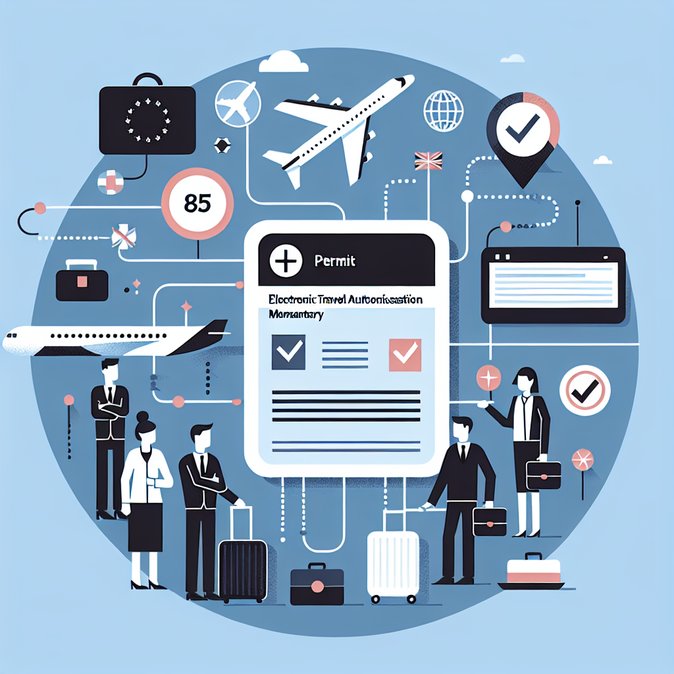
With fewer than eight weeks to go, the Home Office’s mantra—“no permission, no travel”—is gaining volume. From 25 February 2026, citizens of 85 visa-waiver countries must hold an Electronic Travel Authorisation (ETA) or e-Visa before boarding any plane, ferry or Eurostar service bound for the UK.
The ETA is not a visa but a digital pre-clearance valid for two years (or until passport expiry) and costs £16. Carriers will be legally obliged to check a traveller’s status in the same way they verify passports. Failure to do so could result in civil penalties, meaning airlines, ferry companies and rail operators are racing to integrate government APIs into their departure-control systems.
Since a soft-launch in 2023, more than 13 million approvals have been issued, yet industry groups warn that millions of occasional travellers remain unaware of the looming deadline. Travel trade body ABTA has urged employers to brief overseas clients and assignees now, stressing that a missed ETA will mean denied boarding, not an on-arrival workaround.
![‘No permission, no travel’: UK gives final warning before ETA enforcement in February 2026]()
At this juncture, businesses and individual travellers may find navigating the new ETA landscape daunting, but specialist visa agencies such as VisaHQ can streamline the process. Our UK platform (https://www.visahq.com/united-kingdom/) offers step-by-step guidance, document checks and real-time status tracking, ensuring applications are lodged correctly and on time—especially valuable for last-minute or high-volume travel programmes.
For Global Mobility teams, the ETA creates a new compliance checkpoint. Although British and Irish citizens are exempt, dual nationals travelling on a foreign passport must still secure authorisation. Short-term business visitors from the EU, US, Canada, Australia and Japan—previously able to book last-minute trips—will now need to build a three-day buffer into travel plans in case manual processing is triggered.
Practically, companies should update invitation letters and event websites to reference the new requirement, ensure travel-booking tools flag the ETA step for eligible nationalities and run spot-audits to confirm that frequent visitors have applied. Ignoring the rule could see key speakers or engineers stranded at point of departure, with consequential project delays and costs.
The ETA is not a visa but a digital pre-clearance valid for two years (or until passport expiry) and costs £16. Carriers will be legally obliged to check a traveller’s status in the same way they verify passports. Failure to do so could result in civil penalties, meaning airlines, ferry companies and rail operators are racing to integrate government APIs into their departure-control systems.
Since a soft-launch in 2023, more than 13 million approvals have been issued, yet industry groups warn that millions of occasional travellers remain unaware of the looming deadline. Travel trade body ABTA has urged employers to brief overseas clients and assignees now, stressing that a missed ETA will mean denied boarding, not an on-arrival workaround.

At this juncture, businesses and individual travellers may find navigating the new ETA landscape daunting, but specialist visa agencies such as VisaHQ can streamline the process. Our UK platform (https://www.visahq.com/united-kingdom/) offers step-by-step guidance, document checks and real-time status tracking, ensuring applications are lodged correctly and on time—especially valuable for last-minute or high-volume travel programmes.
For Global Mobility teams, the ETA creates a new compliance checkpoint. Although British and Irish citizens are exempt, dual nationals travelling on a foreign passport must still secure authorisation. Short-term business visitors from the EU, US, Canada, Australia and Japan—previously able to book last-minute trips—will now need to build a three-day buffer into travel plans in case manual processing is triggered.
Practically, companies should update invitation letters and event websites to reference the new requirement, ensure travel-booking tools flag the ETA step for eligible nationalities and run spot-audits to confirm that frequent visitors have applied. Ignoring the rule could see key speakers or engineers stranded at point of departure, with consequential project delays and costs.
More From United Kingdom
View all
Blizzard grounds flights, halts rail lines and snarls Eurostar as UK hit by winter’s first major travel test

Border Security Act powers kick in: officers begin seizing mobile phones from Channel arrivals