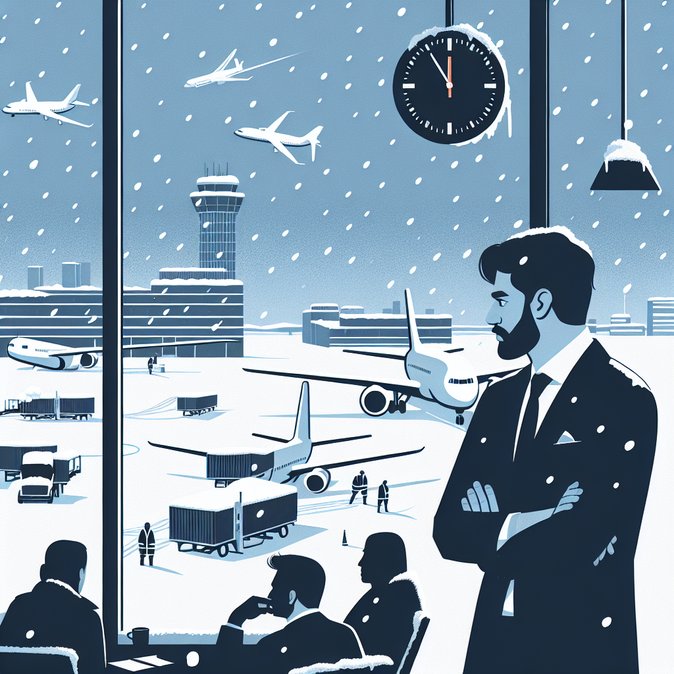
A sudden Atlantic storm swept across northern France on Monday, blanketing the capital in several centimetres of snow and pushing the Direction générale de l’aviation civile (DGAC) to activate its severe-weather plan. The regulator instructed all airlines operating at Paris-Charles-de-Gaulle, Orly and Le Bourget to trim their schedules by 15 % between midday and late evening. The cutback applies to both short-haul European rotations and long-haul departures, with Air France, easyJet and Delta among the carriers scrambling to re-protect passengers.
While France’s main hub airports remain technically open, de-icing bottlenecks and runway-clearing operations have lengthened turnaround times. Ground handlers report that every wide-body departure now requires an extra 20–30 minutes for spraying, eroding usable slots and compounding the wave of cancellations. Travellers transiting through Paris have been advised to pack additional buffer time or reroute via southern gateways such as Lyon or Nice where conditions are normal.
Travel disruptions are stressful enough without paperwork surprises. VisaHQ (https://www.visahq.com/france/) can fast-track visas, passport renewals and provide up-to-the-minute entry guidance for France and hundreds of other destinations, helping passengers, crew and corporate travel planners stay agile when weather or operational curbs upend flight schedules.
![Snowstorm Forces 15 % Flight Cut at Paris-CDG and Orly]()
For corporate mobility managers the timing is awkward: the first full business week of the year traditionally sees a spike in kick-off meetings and factory visits. Multinationals with pan-EU footprints may need to shift sessions online or ferry staff by rail—assuming services are running (separate snow-related speed restrictions are in force on several TGV lines). Logistics operators are also affected: high-value cargo that normally travels in the belly of passenger jets must be rebooked on freighters, driving up cost and lengthening door-to-door lead times.
The episode is another reminder that winter weather can still cripple Europe’s busiest air corridors despite investments in automated de-icing bays and heated high-speed turnouts. DGAC officials note that the future Entry/Exit System due to go fully live in April will add biometric checks for some third-country nationals; Monday’s delays offer a preview of how even minor disruptions could ripple once the new border protocol is layered on top.
For the moment, passengers holding tickets for 5–6 January are entitled to rebooking at no extra charge. Mobility teams are urged to monitor airline apps and airport social feeds rather than relying on automated duty-of-care alerts, which can lag behind real-time NOTAM updates.
While France’s main hub airports remain technically open, de-icing bottlenecks and runway-clearing operations have lengthened turnaround times. Ground handlers report that every wide-body departure now requires an extra 20–30 minutes for spraying, eroding usable slots and compounding the wave of cancellations. Travellers transiting through Paris have been advised to pack additional buffer time or reroute via southern gateways such as Lyon or Nice where conditions are normal.
Travel disruptions are stressful enough without paperwork surprises. VisaHQ (https://www.visahq.com/france/) can fast-track visas, passport renewals and provide up-to-the-minute entry guidance for France and hundreds of other destinations, helping passengers, crew and corporate travel planners stay agile when weather or operational curbs upend flight schedules.

For corporate mobility managers the timing is awkward: the first full business week of the year traditionally sees a spike in kick-off meetings and factory visits. Multinationals with pan-EU footprints may need to shift sessions online or ferry staff by rail—assuming services are running (separate snow-related speed restrictions are in force on several TGV lines). Logistics operators are also affected: high-value cargo that normally travels in the belly of passenger jets must be rebooked on freighters, driving up cost and lengthening door-to-door lead times.
The episode is another reminder that winter weather can still cripple Europe’s busiest air corridors despite investments in automated de-icing bays and heated high-speed turnouts. DGAC officials note that the future Entry/Exit System due to go fully live in April will add biometric checks for some third-country nationals; Monday’s delays offer a preview of how even minor disruptions could ripple once the new border protocol is layered on top.
For the moment, passengers holding tickets for 5–6 January are entitled to rebooking at no extra charge. Mobility teams are urged to monitor airline apps and airport social feeds rather than relying on automated duty-of-care alerts, which can lag behind real-time NOTAM updates.