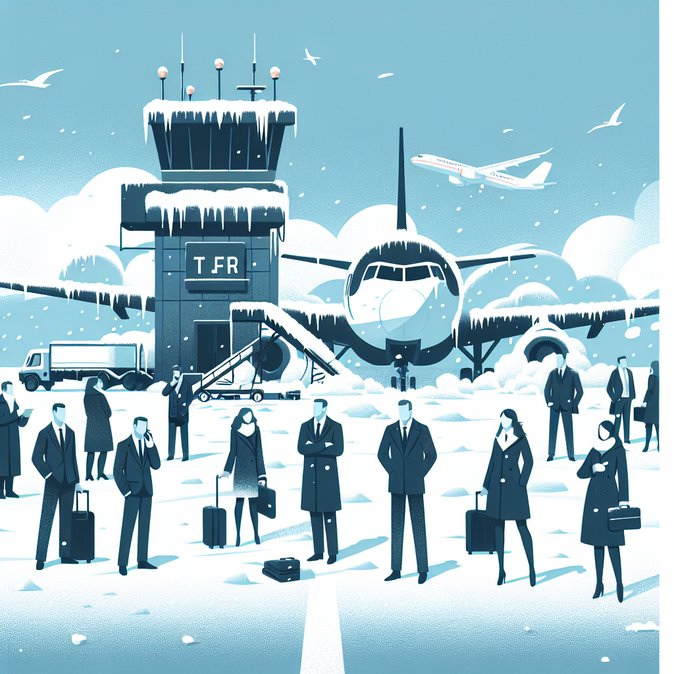
Finnair confirmed on Monday, 5 January 2026, that it has already scrubbed 300 flights scheduled for 9 and 13 December after the Finnish Air Line Pilots’ Association (SLL) served strike notices covering eight separate 24-hour walkouts between 4 and 18 December. Although the stoppages are still more than a month away, the carrier said early cancellations are essential to give business travellers time to re-route and to free scarce aircraft and crew resources for the busy Christmas peak. The strikes come after three months of stalled talks on a new collective agreement; the previous deal expired on 30 September.
Finnair’s contingency schedule shows 39,000 passengers—many booked on Helsinki-hubbed connections to Asia and North America—will be affected. The carrier is offering re-booking or refunds and is warning corporates to expect longer minimum-connect times at Helsinki-Vantaa as ground-handling and catering units prepare for sympathy action by other unions. Finland’s Ministry of Economic Affairs and Employment told companies that emergency labour legislation allowing temporary foreign wet-lease crews could be triggered if the dispute escalates, but union leaders called the idea “strike-breaking by another name.”
For companies and individual travellers worried that disrupted itineraries might push them into last-minute visa or residence-permit dilemmas, VisaHQ’s Finland desk can step in quickly. Through its online platform (https://www.visahq.com/finland/), the agency arranges express Schengen extensions, replacement e-visas and multi-entry options, while allowing mobility managers to track multiple applications in real time—helping organisations stay compliant even as flight schedules remain in flux.
![Finnair pilots announce multiple one-day strikes, forcing cancellation of 300 December flights]()
The labour row lands at a delicate moment for Finland’s travel sector. Helsinki Airport is already grappling with winter-weather capacity constraints on its de-icing pads, and Finnair’s long-haul fleet has yet to return to 2019 utilisation levels. Analysts at Nordea Markets estimate each day of pilot industrial action costs the airline €3-4 million in lost revenue and disruption expenses. Travel-management firms BCD and CWT said multinational clients in the forestry, tech and gaming industries have begun shifting December meetings from Helsinki to Stockholm or Tallinn to avoid uncertainty.
From a mobility-management perspective, employers should: 1) alert staff holding 8-14 December itineraries to monitor PNRs closely; 2) consider moving time-sensitive cargo from belly-hold to dedicated freighters; and 3) remind travellers that Helsinki rail links are viable alternatives for intra-Nordic hops during the strike days. The strikes also expose the importance of reviewing force-majeure clauses in assignment letters—if an assignee cannot depart Finland as planned, accommodation, per-diem and visa-overstay liabilities may arise.
Looking ahead, the National Conciliator has invited both sides to mediation on 8 January. A deal could still avert the walkouts, but Finnair warned that rostering buffers are “extremely thin” and any late settlement may not restore the original timetable. Business-traveller flexibility—and proactive communication from mobility teams—will therefore remain critical through the year-end peak.
Finnair’s contingency schedule shows 39,000 passengers—many booked on Helsinki-hubbed connections to Asia and North America—will be affected. The carrier is offering re-booking or refunds and is warning corporates to expect longer minimum-connect times at Helsinki-Vantaa as ground-handling and catering units prepare for sympathy action by other unions. Finland’s Ministry of Economic Affairs and Employment told companies that emergency labour legislation allowing temporary foreign wet-lease crews could be triggered if the dispute escalates, but union leaders called the idea “strike-breaking by another name.”
For companies and individual travellers worried that disrupted itineraries might push them into last-minute visa or residence-permit dilemmas, VisaHQ’s Finland desk can step in quickly. Through its online platform (https://www.visahq.com/finland/), the agency arranges express Schengen extensions, replacement e-visas and multi-entry options, while allowing mobility managers to track multiple applications in real time—helping organisations stay compliant even as flight schedules remain in flux.

The labour row lands at a delicate moment for Finland’s travel sector. Helsinki Airport is already grappling with winter-weather capacity constraints on its de-icing pads, and Finnair’s long-haul fleet has yet to return to 2019 utilisation levels. Analysts at Nordea Markets estimate each day of pilot industrial action costs the airline €3-4 million in lost revenue and disruption expenses. Travel-management firms BCD and CWT said multinational clients in the forestry, tech and gaming industries have begun shifting December meetings from Helsinki to Stockholm or Tallinn to avoid uncertainty.
From a mobility-management perspective, employers should: 1) alert staff holding 8-14 December itineraries to monitor PNRs closely; 2) consider moving time-sensitive cargo from belly-hold to dedicated freighters; and 3) remind travellers that Helsinki rail links are viable alternatives for intra-Nordic hops during the strike days. The strikes also expose the importance of reviewing force-majeure clauses in assignment letters—if an assignee cannot depart Finland as planned, accommodation, per-diem and visa-overstay liabilities may arise.
Looking ahead, the National Conciliator has invited both sides to mediation on 8 January. A deal could still avert the walkouts, but Finnair warned that rostering buffers are “extremely thin” and any late settlement may not restore the original timetable. Business-traveller flexibility—and proactive communication from mobility teams—will therefore remain critical through the year-end peak.