Germany’s Interior Ministry has quietly prolonged the “temporary” controls re-introduced last September on all nine land borders—including crossings from Czechia—until 15 March 2026. The notice appeared in the Federal Gazette on 29 December and was confirmed by Czech officials on New Year’s Day.
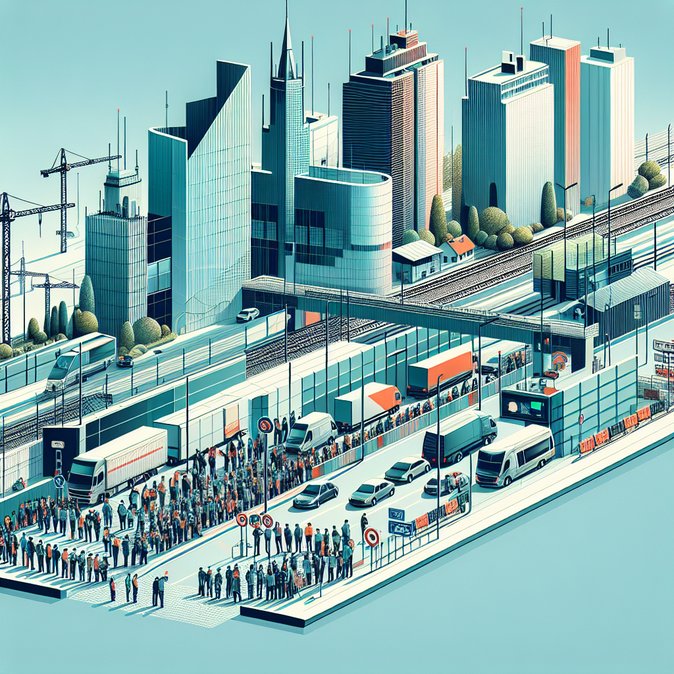
Under the measure, Bundespolizei officers may stop motorists, coach passengers and rail travellers at random to verify identity documents, travel plans or proof of funds. Although passports are not stamped, rail operators on the Prague–Berlin line report delays of up to 30 minutes when full carriages are screened, while freight forwarders cite kilometre-long tailbacks on the D5 and D8 corridors.
Travellers who are unsure which documents will satisfy the German border guards can quickly double-check requirements through VisaHQ’s Czech Republic portal (https://www.visahq.com/czech-republic/). The service offers real-time guidance on accepted IDs, visa and passport validity rules, and can even arrange courier collection for any extra paperwork that might be necessary, helping commuters and logistics firms avoid costly surprises.
![Germany Extends Border Checks with Czechia Until 15 March 2026]()
The extension pushes Germany to the six-month maximum allowed under Article 25 of the Schengen Borders Code without special authorisation from Brussels. Interior Minister Alexander Dobrindt says the checks have cut irregular entries by 35 percent, but logistics associations warn of mounting costs and schedule disruptions.
For the roughly 37 000 Czech cross-border commuters, travel times have become less predictable. Employers should advise staff to carry passports—not just ID cards—and add at least 45 minutes to itineraries. Holders of Czech residence cards should be reminded that plastic cards are accepted as proof of identity, but digital copies are not.
The European Commission is expected to revisit internal-border controls in February, yet analysts see little chance of a rollback before German regional elections in March.
Under the measure, Bundespolizei officers may stop motorists, coach passengers and rail travellers at random to verify identity documents, travel plans or proof of funds. Although passports are not stamped, rail operators on the Prague–Berlin line report delays of up to 30 minutes when full carriages are screened, while freight forwarders cite kilometre-long tailbacks on the D5 and D8 corridors.
Travellers who are unsure which documents will satisfy the German border guards can quickly double-check requirements through VisaHQ’s Czech Republic portal (https://www.visahq.com/czech-republic/). The service offers real-time guidance on accepted IDs, visa and passport validity rules, and can even arrange courier collection for any extra paperwork that might be necessary, helping commuters and logistics firms avoid costly surprises.
The extension pushes Germany to the six-month maximum allowed under Article 25 of the Schengen Borders Code without special authorisation from Brussels. Interior Minister Alexander Dobrindt says the checks have cut irregular entries by 35 percent, but logistics associations warn of mounting costs and schedule disruptions.
For the roughly 37 000 Czech cross-border commuters, travel times have become less predictable. Employers should advise staff to carry passports—not just ID cards—and add at least 45 minutes to itineraries. Holders of Czech residence cards should be reminded that plastic cards are accepted as proof of identity, but digital copies are not.
The European Commission is expected to revisit internal-border controls in February, yet analysts see little chance of a rollback before German regional elections in March.