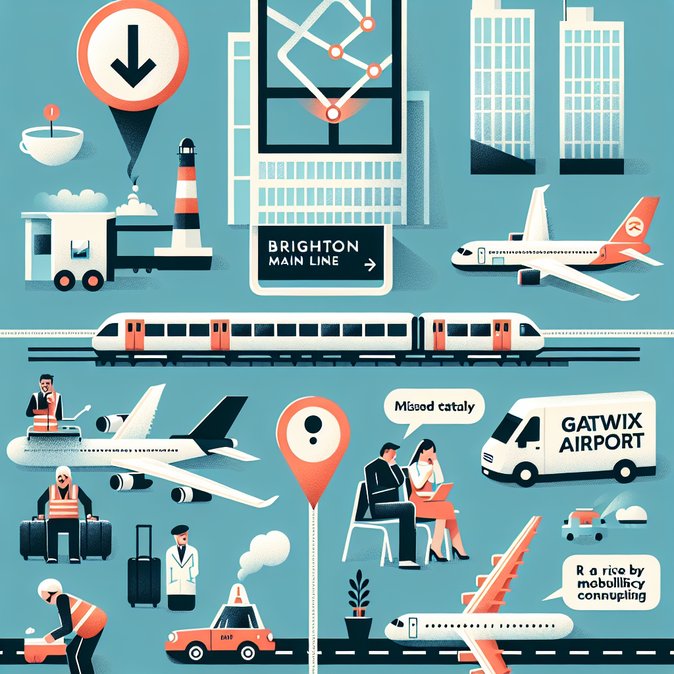
Rail links between Gatwick Airport and London were thrown into disarray on Saturday 3 January after a person was struck by a train between Gatwick and East Croydon at 16:57. Emergency services closed several lines until late evening, forcing Gatwick Express, Southern and Thameslink to cancel or divert services and warning passengers of disruption until at least 22:00.
With rail the primary mass-transit option for catching flights from the UK’s second-busiest airport, the incident rapidly spilled over into the aviation schedule. Airlines reported clusters of missed check-ins and requested ground-handling extensions, while some outbound flights were delayed to await connecting passengers. Travel-management companies scrambled to secure last-minute taxis at surge-pricing rates, and car-rental desks saw unseasonable demand as travellers sought alternatives.
![Fatality near Gatwick Airport triggers rail closures and travel chaos for air passengers]()
If visa or entry-document issues threaten to compound such travel headaches, VisaHQ can step in to streamline the paperwork process. Through its secure online portal (https://www.visahq.com/united-kingdom/), the service offers real-time application tracking, up-to-date embassy requirements and expedited processing for a wide range of destinations—helping UK-based passengers arrive at Gatwick with one less uncertainty on their itinerary.
Business-traveller impact was particularly acute given the post-holiday uptick in long-haul corporate itineraries. Mobility teams with assignees transiting through Gatwick were advised to document extra costs for duty-of-care and expense-reconciliation purposes. Under Civil Aviation Authority rules, airlines are not obliged to compensate for delays caused by ground transport failures, leaving many passengers reliant on travel-insurance policies.
The disruption highlights the single-point vulnerability of the Brighton Main Line corridor and revives debate over whether the mooted Gatwick Airport rail spur redundancy—postponed last year on cost grounds—should be revisited. Employers with time-critical rotations may wish to consider routing via Heathrow or London City during periods of operational strain, despite higher fares.
With rail the primary mass-transit option for catching flights from the UK’s second-busiest airport, the incident rapidly spilled over into the aviation schedule. Airlines reported clusters of missed check-ins and requested ground-handling extensions, while some outbound flights were delayed to await connecting passengers. Travel-management companies scrambled to secure last-minute taxis at surge-pricing rates, and car-rental desks saw unseasonable demand as travellers sought alternatives.

If visa or entry-document issues threaten to compound such travel headaches, VisaHQ can step in to streamline the paperwork process. Through its secure online portal (https://www.visahq.com/united-kingdom/), the service offers real-time application tracking, up-to-date embassy requirements and expedited processing for a wide range of destinations—helping UK-based passengers arrive at Gatwick with one less uncertainty on their itinerary.
Business-traveller impact was particularly acute given the post-holiday uptick in long-haul corporate itineraries. Mobility teams with assignees transiting through Gatwick were advised to document extra costs for duty-of-care and expense-reconciliation purposes. Under Civil Aviation Authority rules, airlines are not obliged to compensate for delays caused by ground transport failures, leaving many passengers reliant on travel-insurance policies.
The disruption highlights the single-point vulnerability of the Brighton Main Line corridor and revives debate over whether the mooted Gatwick Airport rail spur redundancy—postponed last year on cost grounds—should be revisited. Employers with time-critical rotations may wish to consider routing via Heathrow or London City during periods of operational strain, despite higher fares.