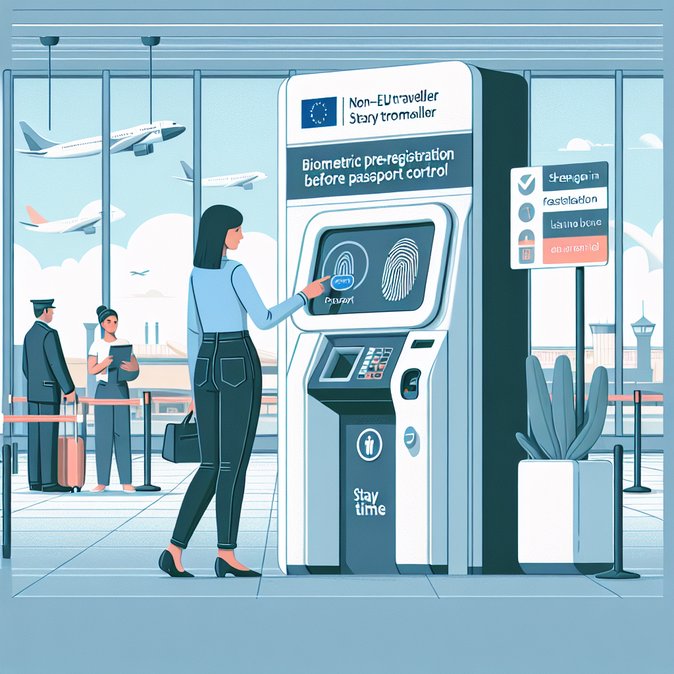
Berlin Brandenburg Airport (BER) has entered the live phase of the European Entry/Exit System (EES), installing automated kiosks that allow third-country nationals to pre-register their passport, fingerprints and facial image before proceeding to a border-control officer. The airport’s information page, updated on 4 January 2026, says the full German roll-out should finish by 10 April 2026.
EES replaces passport stamps with a centralised EU database recording each entry and exit, calculating remaining Schengen-area stay time and automatically flagging overstays. At BER, passengers now scan their travel document and capture biometrics in under two minutes, reducing time at the staffed booth. Travellers under 12 or without biometric passports still use manual lanes.
If travellers are unsure about their documentation or need help preparing for ETIAS or other German entry requirements, VisaHQ’s online platform can streamline the process. From biometric-ready passports to work and study permits, the service offers step-by-step guidance, deadline reminders and live support—all accessible at https://www.visahq.com/germany/ Corporations can even create a dashboard to track multiple employees’ applications, easing the administrative load as EES and future systems come online.
![Berlin Brandenburg rolls out self-service kiosks for EU Entry/Exit System]()
For business-travel programmes the change means new touch-points: road-warriors from the US, UK and other visa-free countries will need to factor in kiosk time and keep an eye on their 90/180-day allowance, which will be strictly enforced once data is centralised. Crew schedulers are advising rotating staff to carry old passports if they need historic entry stamps as proof for tax or social-security filings.
The Federal Police cautions that the first weeks may see queues as users familiarise themselves with the technology. Companies with frequent travellers are encouraged to circulate the airport’s kiosk-walk-through video and remind staff that accessories (caps, scarves) must be removed for the facial scan.
Looking ahead, the system is a precursor to ETIAS, the electronic travel authorisation scheduled for late 2026, which will add a paid pre-clearance step for visa-exempt visitors.
EES replaces passport stamps with a centralised EU database recording each entry and exit, calculating remaining Schengen-area stay time and automatically flagging overstays. At BER, passengers now scan their travel document and capture biometrics in under two minutes, reducing time at the staffed booth. Travellers under 12 or without biometric passports still use manual lanes.
If travellers are unsure about their documentation or need help preparing for ETIAS or other German entry requirements, VisaHQ’s online platform can streamline the process. From biometric-ready passports to work and study permits, the service offers step-by-step guidance, deadline reminders and live support—all accessible at https://www.visahq.com/germany/ Corporations can even create a dashboard to track multiple employees’ applications, easing the administrative load as EES and future systems come online.
For business-travel programmes the change means new touch-points: road-warriors from the US, UK and other visa-free countries will need to factor in kiosk time and keep an eye on their 90/180-day allowance, which will be strictly enforced once data is centralised. Crew schedulers are advising rotating staff to carry old passports if they need historic entry stamps as proof for tax or social-security filings.
The Federal Police cautions that the first weeks may see queues as users familiarise themselves with the technology. Companies with frequent travellers are encouraged to circulate the airport’s kiosk-walk-through video and remind staff that accessories (caps, scarves) must be removed for the facial scan.
Looking ahead, the system is a precursor to ETIAS, the electronic travel authorisation scheduled for late 2026, which will add a paid pre-clearance step for visa-exempt visitors.