An unseasonably sharp cold snap continued to disrupt Belgium’s main transport arteries on 3 January 2026, forcing airlines, rail operators and corporates to activate contingency plans just as holidaymakers and expatriates headed home. The Royal Meteorological Institute (KMI) issued a yellow ice warning that technically expired on New Year’s Eve but lingered as temperatures hovered around –4 °C, turning highways and runways into skating rinks.
At Brussels Airport (Zaventem) and Liège Cargo Airport, ground-handling crews reported de-icing cycles averaging 14 minutes per narrow-body aircraft—double the norm—which translated into departure delays of 30-45 minutes across the afternoon wave. Brussels Airlines urged passengers to arrive an extra hour early, while several U.S. carriers flagged potential mis-connections for transatlantic links. Cargo flights, vital to Wallonia’s life-sciences exporters, faced pallet backlogs as glycol rigs rotated between stands.
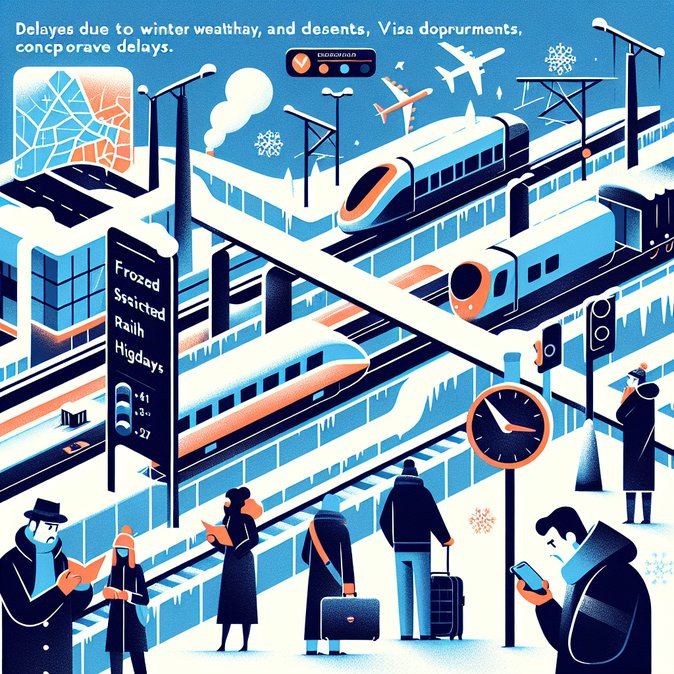
Rail infrastructure manager Infrabel imposed a 20 km/h speed cap on exposed tracks in the Ardennes, adding up to ten minutes to inter-city journeys and knocking Eurostar’s Brussels–London service further off its recovery schedule after last week’s Channel-Tunnel power failure. Highway operator Viapass logged dozens of minor accidents on the E40 near Namur, prompting corporate travel managers to green-light overnight hotel stays rather than risk last-mile drives.
![Ice & Snow Snarl Belgian Airports and Rail as Post-Holiday Rush Peaks]()
For overseas travellers suddenly needing to adjust itineraries, especially non-EU nationals who may have to re-enter Belgium via alternate hubs, VisaHQ’s online platform can fast-track multi-entry Schengen visa processing and provide real-time status updates. Their Belgium portal (https://www.visahq.com/belgium/) also lists entry requirements and can coordinate courier pickup even during adverse weather, easing one more worry while airports and rail lines clear the ice.
Business-travel programmes are feeling the pinch. Consulting firms scheduled to kick off projects on 4 January have pushed client meetings online, while two multinational chemical groups told staff to remain on remote-work status until road conditions improve. Logistics integrators in Liège activated “hot-shot” trucking to Paris-Charles-de-Gaulle to protect just-in-time vaccine shipments.
KMI expects slightly milder conditions on 5 January, but airport operator Aviapartner has positioned additional staff and mobile de-icing rigs overnight—a first real-world test of the winter-resilience protocol introduced after last January’s severe storm. Mobility managers are advised to monitor carrier apps, build flexible return-to-office policies and ensure non-EU travellers hold Schengen multi-entry visas in case rerouting via neighbouring hubs becomes necessary.
At Brussels Airport (Zaventem) and Liège Cargo Airport, ground-handling crews reported de-icing cycles averaging 14 minutes per narrow-body aircraft—double the norm—which translated into departure delays of 30-45 minutes across the afternoon wave. Brussels Airlines urged passengers to arrive an extra hour early, while several U.S. carriers flagged potential mis-connections for transatlantic links. Cargo flights, vital to Wallonia’s life-sciences exporters, faced pallet backlogs as glycol rigs rotated between stands.
Rail infrastructure manager Infrabel imposed a 20 km/h speed cap on exposed tracks in the Ardennes, adding up to ten minutes to inter-city journeys and knocking Eurostar’s Brussels–London service further off its recovery schedule after last week’s Channel-Tunnel power failure. Highway operator Viapass logged dozens of minor accidents on the E40 near Namur, prompting corporate travel managers to green-light overnight hotel stays rather than risk last-mile drives.

For overseas travellers suddenly needing to adjust itineraries, especially non-EU nationals who may have to re-enter Belgium via alternate hubs, VisaHQ’s online platform can fast-track multi-entry Schengen visa processing and provide real-time status updates. Their Belgium portal (https://www.visahq.com/belgium/) also lists entry requirements and can coordinate courier pickup even during adverse weather, easing one more worry while airports and rail lines clear the ice.
Business-travel programmes are feeling the pinch. Consulting firms scheduled to kick off projects on 4 January have pushed client meetings online, while two multinational chemical groups told staff to remain on remote-work status until road conditions improve. Logistics integrators in Liège activated “hot-shot” trucking to Paris-Charles-de-Gaulle to protect just-in-time vaccine shipments.
KMI expects slightly milder conditions on 5 January, but airport operator Aviapartner has positioned additional staff and mobile de-icing rigs overnight—a first real-world test of the winter-resilience protocol introduced after last January’s severe storm. Mobility managers are advised to monitor carrier apps, build flexible return-to-office policies and ensure non-EU travellers hold Schengen multi-entry visas in case rerouting via neighbouring hubs becomes necessary.