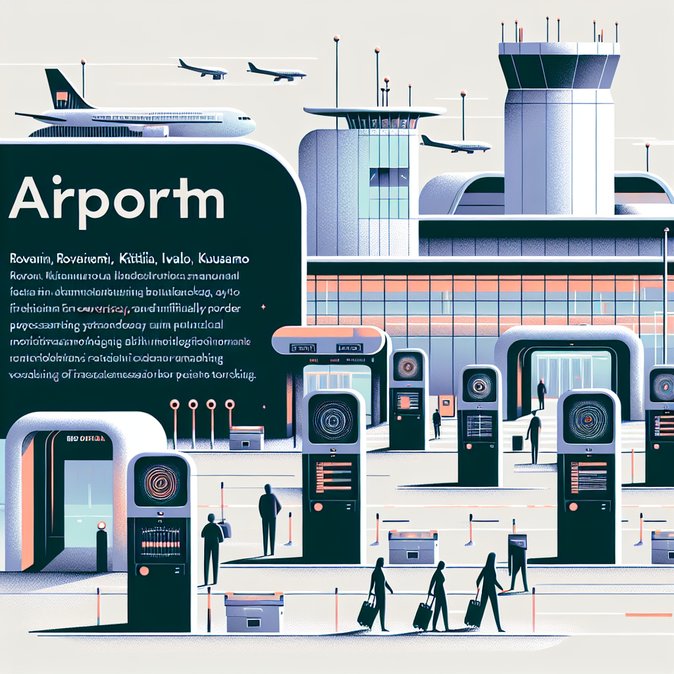
After a successful three-month pilot at Helsinki-Vantaa, the Finnish Border Guard has confirmed that the EU’s new biometric Entry/Exit System (EES) will be deployed at Lapland’s four busiest airports—Rovaniemi, Kittilä, Ivalo and Kuusamo—starting in February 2026. The announcement, issued late on New Year’s Eve, positions Finland as one of the first Schengen states to expand EES beyond capital-city hubs.
EES replaces manual passport stamps with an EU-wide database that records the exact time and place third-country nationals enter and leave the Schengen Area. At Helsinki, automated kiosks capture fingerprints and facial images in under 60 seconds and have cut average processing times by 25 percent while virtually eliminating overstays caused by passport-stamp errors. Border officers in Lapland expect similar efficiencies, crucial during the winter high season when charter arrivals triple passenger volumes at northern airports.
For travelers and corporate mobility teams navigating these new controls, VisaHQ’s Finland portal (https://www.visahq.com/finland/) offers quick visa requirement checks, Schengen-day calculators and end-to-end application support—services that can help ensure every passport holder stays compliant once EES goes live.
![Lapland Airports to Roll Out EU Biometric Entry/Exit System After Helsinki Pilot]()
From a compliance perspective, the system will give Finnish authorities real-time visibility into visa-free travellers’ stay limits and will automatically flag potential overstays to Migri. Businesses that rotate project staff or seasonal workers through Lapland should therefore review rotation schedules carefully; EES leaves little room for miscalculating Schengen days.
The Border Guard will run a two-week soft-launch in early February, during which manual lanes remain open alongside the kiosks. Airlines have been instructed to brief passengers on the new process and to remind them that the collection of biometrics is mandatory for everyone except EU/EEA citizens, accredited diplomats and children under 12.
Corporate travel managers should update traveller-briefing materials, prepare for slightly longer connection times during the transition period, and ensure that employees have no cuts or bandages on fingers that could hinder fingerprint capture. Frequent travellers may benefit from registering during off-peak hours or at Helsinki before connecting to Lapland to avoid queues.
EES replaces manual passport stamps with an EU-wide database that records the exact time and place third-country nationals enter and leave the Schengen Area. At Helsinki, automated kiosks capture fingerprints and facial images in under 60 seconds and have cut average processing times by 25 percent while virtually eliminating overstays caused by passport-stamp errors. Border officers in Lapland expect similar efficiencies, crucial during the winter high season when charter arrivals triple passenger volumes at northern airports.
For travelers and corporate mobility teams navigating these new controls, VisaHQ’s Finland portal (https://www.visahq.com/finland/) offers quick visa requirement checks, Schengen-day calculators and end-to-end application support—services that can help ensure every passport holder stays compliant once EES goes live.

From a compliance perspective, the system will give Finnish authorities real-time visibility into visa-free travellers’ stay limits and will automatically flag potential overstays to Migri. Businesses that rotate project staff or seasonal workers through Lapland should therefore review rotation schedules carefully; EES leaves little room for miscalculating Schengen days.
The Border Guard will run a two-week soft-launch in early February, during which manual lanes remain open alongside the kiosks. Airlines have been instructed to brief passengers on the new process and to remind them that the collection of biometrics is mandatory for everyone except EU/EEA citizens, accredited diplomats and children under 12.
Corporate travel managers should update traveller-briefing materials, prepare for slightly longer connection times during the transition period, and ensure that employees have no cuts or bandages on fingers that could hinder fingerprint capture. Frequent travellers may benefit from registering during off-peak hours or at Helsinki before connecting to Lapland to avoid queues.