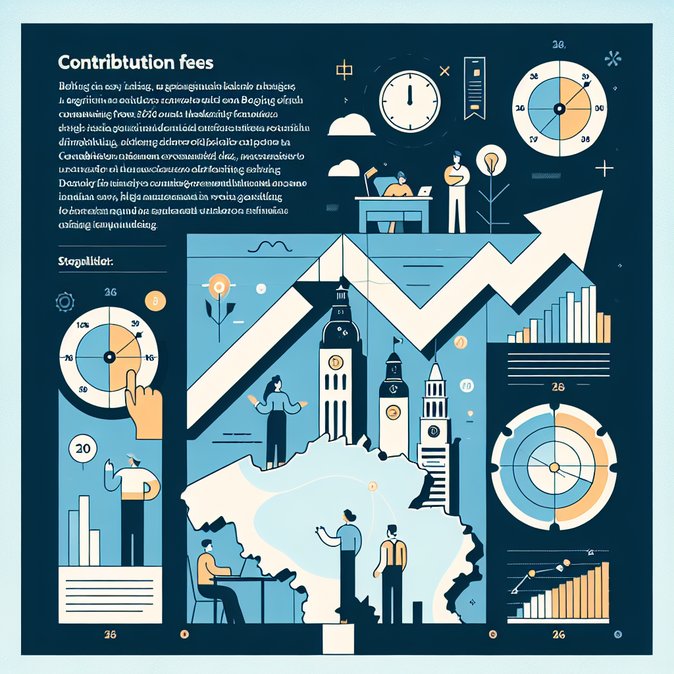
Belgium’s Immigration Office began 2026 by quietly raising the contribution fees that accompany almost every long-stay D-visa or status-change application. Published late on 31 December and effective 1 January 2026, the new tariff links the fees to last year’s consumer-price inflation. Highly-skilled employee, EU ICT and Blue-Card categories now cost €377 per file, up from €368. Family-reunification dossiers rise to €251, while other humanitarian, study and investor categories see similar €4–€11 uplifts.
Although modest in isolation, the change lands at the moment many multinationals batch-file dozens of permits for assignees starting in Q1. Immigration advisers warn that under-payment renders an application inadmissible; any employer who wired 2025-level fees before midnight on 31 December must top up if the file is resubmitted. Proof of payment must be uploaded before Belgium’s Single-Permit portal will accept a case.
For employers or individuals unsure how to keep pace with these shifting requirements, specialist services such as VisaHQ can streamline the entire process. Their Belgium hub (https://www.visahq.com/belgium/) tracks real-time government tariffs, auto-generates the correct payment references and offers end-to-end document handling, helping applicants avoid rejection due to incorrect or under-paid fees.
![Belgium Indexes Mandatory ‘Contribution Fees’ for Residence Applications]()
Corporate mobility budgets will feel the cumulative impact. A company filing 25 highly-skilled applications now faces an extra €225 in government charges—small, but enough to require purchase-order amendments and finance approval in tightly controlled cost-centres. Visa vendors are offering to pre-fund the fees in euros to avoid SEPA bank-holiday delays.
Long-term, the indexation mechanism means fees will automatically rise each January. HR departments may wish to front-load 2026 filings into December 2026 or explore cost-sharing models with assignees. Employers should also refresh employee communication packs, as outdated fee tables are a common source of confusion among transferees.
In the broader European context, Belgian fees remain below those of the Netherlands and France, but well above Germany’s. Observers believe the gradual upward drift will continue as digital-service investments have yet to offset administrative costs.
Although modest in isolation, the change lands at the moment many multinationals batch-file dozens of permits for assignees starting in Q1. Immigration advisers warn that under-payment renders an application inadmissible; any employer who wired 2025-level fees before midnight on 31 December must top up if the file is resubmitted. Proof of payment must be uploaded before Belgium’s Single-Permit portal will accept a case.
For employers or individuals unsure how to keep pace with these shifting requirements, specialist services such as VisaHQ can streamline the entire process. Their Belgium hub (https://www.visahq.com/belgium/) tracks real-time government tariffs, auto-generates the correct payment references and offers end-to-end document handling, helping applicants avoid rejection due to incorrect or under-paid fees.

Corporate mobility budgets will feel the cumulative impact. A company filing 25 highly-skilled applications now faces an extra €225 in government charges—small, but enough to require purchase-order amendments and finance approval in tightly controlled cost-centres. Visa vendors are offering to pre-fund the fees in euros to avoid SEPA bank-holiday delays.
Long-term, the indexation mechanism means fees will automatically rise each January. HR departments may wish to front-load 2026 filings into December 2026 or explore cost-sharing models with assignees. Employers should also refresh employee communication packs, as outdated fee tables are a common source of confusion among transferees.
In the broader European context, Belgian fees remain below those of the Netherlands and France, but well above Germany’s. Observers believe the gradual upward drift will continue as digital-service investments have yet to offset administrative costs.