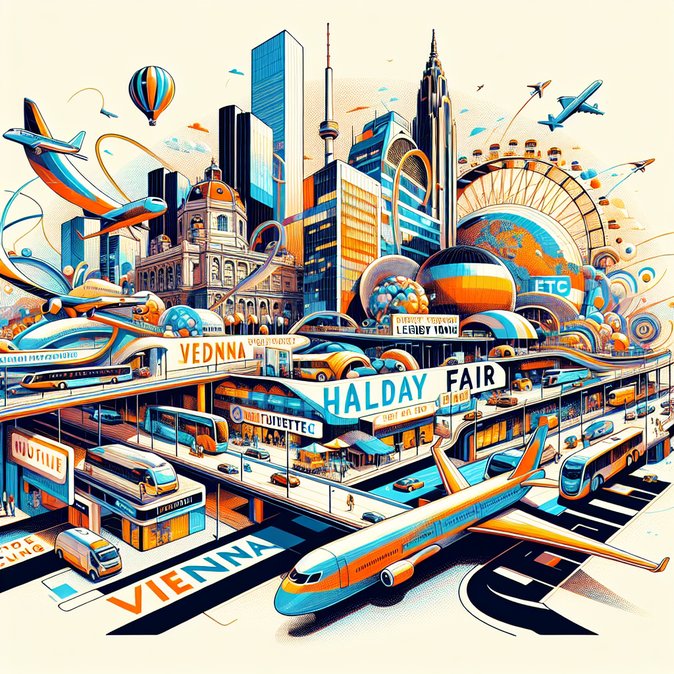
Vienna’s Messegelände opened its doors today for the 2026 edition of the Holiday Fair—Austria’s largest consumer travel show—welcoming 430 exhibitors from 70 countries and an expected 71,000 visitors over four days. This year’s partner nation is Sri Lanka, whose tea ceremonies and Kandyan-dance performances headline the cultural programme.
Beyond eye-catching destination booths, the fair doubles as a barometer for Austria’s outbound travel demand. According to the Federal Ministry of Labour and Economy, tourism contributes 7.6 % to GDP, and early-season booking data presented at the show point to a 9 % year-on-year rise in long-haul package sales—despite higher airfares. Reisebüro association ÖRV says family travel to Southeast Asia and the Caribbean is rebounding, though agents are closely monitoring the Venezuelan air-route disruption.
Business-travel stakeholders are equally present. Airline partners such as Austrian Airlines use the event to court SME corporate accounts with fare-bundling promotions, while hotel chains pitch extended-stay products for project-based assignees in Vienna and Linz. Mobility suppliers showcase relocation-friendly serviced apartments and multi-modal transport passes.
![Holiday Fair Vienna 2026 Kicks Off, Pairing Tourism Deals with Future Mobility Showcase]()
For travellers who leave the fair ready to book a trip, navigating visa paperwork can be the next big step. VisaHQ’s Austria portal (https://www.visahq.com/austria/) streamlines the process by letting users check destination entry rules, complete applications online, schedule embassy appointments and track approvals in real time. Whether planning a family holiday to Sri Lanka or a quick corporate visit to Singapore, Austrian residents can handle multiple passports and itineraries from a single dashboard—saving time and avoiding last-minute airport surprises.
A separate “Vienna Drive” pavilion focuses on future mobility. Forty car makers—from Tesla and BYD to Porsche—display the latest EVs, while ÖBB promotes a rail-plus-entry “Kombiticket” designed to shift fairgoers off the autobahn and onto low-carbon transport. For HR and global-mobility teams, the pavilion provides a glimpse into company-car electrification options and employee commuting benefits.
Organisers emphasise sustainability: exhibitors must meet eco-standards for stand materials, and visitors receive digital brochures via QR code rather than printed catalogues. With tourism ministers holding bilateral meetings on the sidelines, the fair serves as a platform for new air-service agreements and destination marketing partnerships that could shape Austrian travellers’ options in the coming years.
Beyond eye-catching destination booths, the fair doubles as a barometer for Austria’s outbound travel demand. According to the Federal Ministry of Labour and Economy, tourism contributes 7.6 % to GDP, and early-season booking data presented at the show point to a 9 % year-on-year rise in long-haul package sales—despite higher airfares. Reisebüro association ÖRV says family travel to Southeast Asia and the Caribbean is rebounding, though agents are closely monitoring the Venezuelan air-route disruption.
Business-travel stakeholders are equally present. Airline partners such as Austrian Airlines use the event to court SME corporate accounts with fare-bundling promotions, while hotel chains pitch extended-stay products for project-based assignees in Vienna and Linz. Mobility suppliers showcase relocation-friendly serviced apartments and multi-modal transport passes.
For travellers who leave the fair ready to book a trip, navigating visa paperwork can be the next big step. VisaHQ’s Austria portal (https://www.visahq.com/austria/) streamlines the process by letting users check destination entry rules, complete applications online, schedule embassy appointments and track approvals in real time. Whether planning a family holiday to Sri Lanka or a quick corporate visit to Singapore, Austrian residents can handle multiple passports and itineraries from a single dashboard—saving time and avoiding last-minute airport surprises.
A separate “Vienna Drive” pavilion focuses on future mobility. Forty car makers—from Tesla and BYD to Porsche—display the latest EVs, while ÖBB promotes a rail-plus-entry “Kombiticket” designed to shift fairgoers off the autobahn and onto low-carbon transport. For HR and global-mobility teams, the pavilion provides a glimpse into company-car electrification options and employee commuting benefits.
Organisers emphasise sustainability: exhibitors must meet eco-standards for stand materials, and visitors receive digital brochures via QR code rather than printed catalogues. With tourism ministers holding bilateral meetings on the sidelines, the fair serves as a platform for new air-service agreements and destination marketing partnerships that could shape Austrian travellers’ options in the coming years.