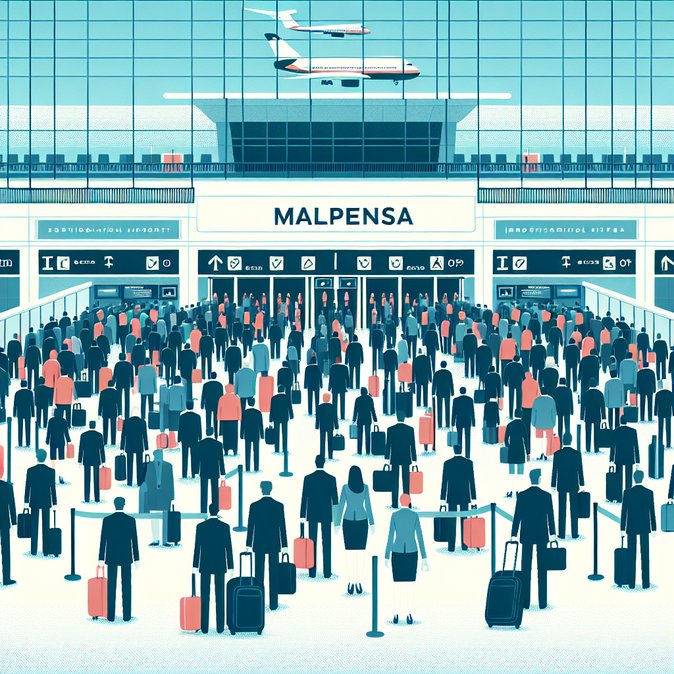
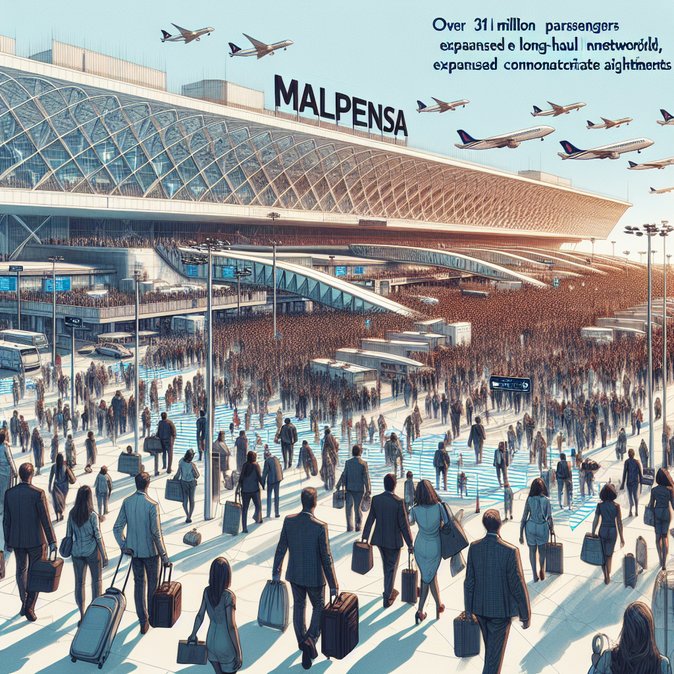
Milan’s Malpensa Airport closed 2025 with more than 31 million travellers, a nine-per-cent jump on the previous year and a new all-time record. The milestone, announced on 31 December, reflects a rapid rebuild of long-haul connectivity: Delta’s Boston service, American’s Philadelphia link and Vietnam Airlines’ new Hanoi route joined returning Asian carriers such as Thai, EVA, ANA and Cathay Pacific. International passengers now make up 80 % of the total, cementing Malpensa’s status as northern Italy’s global gateway.
For business travellers the surge brings both benefits and pain. Greater seat supply is driving fare competition on trans-Atlantic and Asia-Pacific sectors, but infrastructure is lagging; security- and immigration-queue times frequently top an hour at peaks. Airport operator SEA is lobbying Rome to accelerate terminal expansion, including additional Schengen gates that would ease morning outbound banks.
![Milan Malpensa Breaks 30-Million Passenger Mark, Underscoring Italy’s Aviation Rebound]()
Mobility managers are advised to build buffer time into itineraries and to brief assignees on the new €20 ETIAS fee that applies to visa-exempt visitors. For expatriate assignments, the wider intercontinental network makes Milan a more attractive regional HQ: recruiters report that direct flights to home markets rank high in quality-of-life surveys, influencing talent-deployment decisions.
Whether you need guidance on the upcoming ETIAS registration, assistance securing long-term work permits, or simply a streamlined way to manage multiple visa requests for assignees, VisaHQ can help. Its Italy portal (https://www.visahq.com/italy/) consolidates current entry rules, digital application forms and processing times, allowing mobility teams and travellers to track their paperwork from a single dashboard and receive real-time status alerts—an efficient complement to Malpensa’s expanding global reach.
Looking ahead, SEA forecasts a further five-per-cent traffic increase in 2026, driven by ITA Airways expansion and additional slots for Middle-Eastern carriers. Whether immigration facilities can keep pace will be the pivotal factor in maintaining Italy’s newfound competitive edge among European hubs.
For business travellers the surge brings both benefits and pain. Greater seat supply is driving fare competition on trans-Atlantic and Asia-Pacific sectors, but infrastructure is lagging; security- and immigration-queue times frequently top an hour at peaks. Airport operator SEA is lobbying Rome to accelerate terminal expansion, including additional Schengen gates that would ease morning outbound banks.
Mobility managers are advised to build buffer time into itineraries and to brief assignees on the new €20 ETIAS fee that applies to visa-exempt visitors. For expatriate assignments, the wider intercontinental network makes Milan a more attractive regional HQ: recruiters report that direct flights to home markets rank high in quality-of-life surveys, influencing talent-deployment decisions.
Whether you need guidance on the upcoming ETIAS registration, assistance securing long-term work permits, or simply a streamlined way to manage multiple visa requests for assignees, VisaHQ can help. Its Italy portal (https://www.visahq.com/italy/) consolidates current entry rules, digital application forms and processing times, allowing mobility teams and travellers to track their paperwork from a single dashboard and receive real-time status alerts—an efficient complement to Malpensa’s expanding global reach.
Looking ahead, SEA forecasts a further five-per-cent traffic increase in 2026, driven by ITA Airways expansion and additional slots for Middle-Eastern carriers. Whether immigration facilities can keep pace will be the pivotal factor in maintaining Italy’s newfound competitive edge among European hubs.