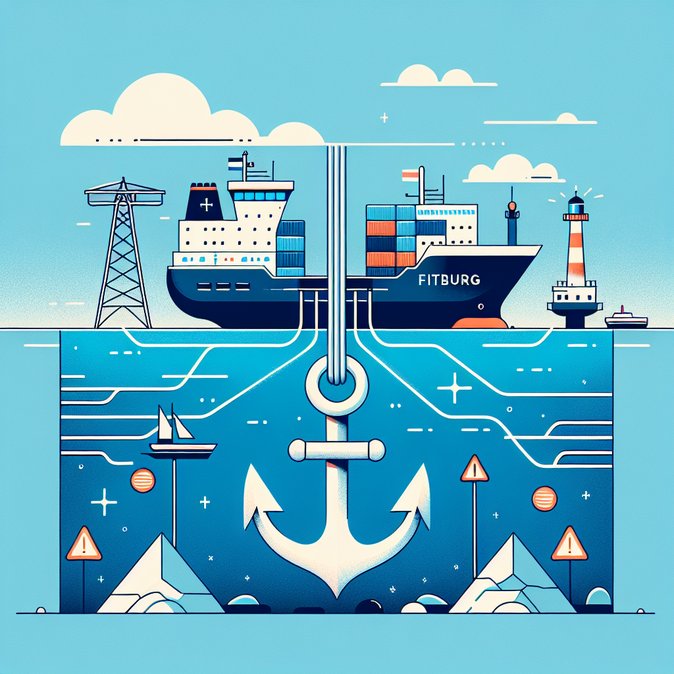
Finnish authorities spent New Year’s Eve in crisis-response mode after Elisa’s sea-floor fibre optic cable linking Helsinki and Tallinn went dark at 04:53 on 31 December. Automatic alarms pinpointed the break to a busy shipping lane in Finnish territorial waters. Within hours the Border Guard intercepted the 132-metre general-cargo vessel Fitburg, ordered it to Kirkkonummi’s Kantvik harbour and detained all 14 crew members for questioning. Preliminary evidence suggests the ship’s anchor was dragging when it crossed the cable track. Prosecutors have opened an investigation into aggravated interference with telecommunications and attempted aggravated criminal damage.
The incident is the most serious strike against Finland’s digital infrastructure since it joined NATO in 2023 and underscores how critical-but-fragile subsea assets have become a security flashpoint in the Baltic Sea. Elisa confirmed that redundancy routes limited customer impact, but a full repair will require specialised cable ships and could take weeks, depending on winter weather. Authorities also revealed the Fitburg’s hold contained Russian structural steel that is subject to EU sanctions—an additional offence that may strengthen the state’s case if intent to breach sanctions can be proven.
![Finland Detains Cargo-Ship Crew Over Suspected Sabotage of Helsinki–Tallinn Data Cable]()
For global mobility managers the case is more than a maritime whodunit. Data-centre operators, cross-border payment platforms and remote-working multinationals rely on the Finland-Estonia fibre corridor for low-latency links to Central Europe. Industry lobby Technology Finland warned that even short outages can trigger fail-over costs, while repeated incidents could deter foreign direct investment in the country’s fast-growing cloud and gaming sectors.
If the disruption forces urgent travel or crew changes, VisaHQ can help companies cut through paperwork quickly. Our Finland page (https://www.visahq.com/finland/) offers up-to-date guidance on Schengen and Estonian entry rules, expedited processing, and document concierge services, ensuring engineers, legal teams and project staff can be deployed on either side of the Gulf without delay.
The Border Guard has already stepped up Automatic Identification System (AIS) monitoring and plans to widen an exclusion zone around cable corridors. Shipping companies transiting the Gulf of Finland are advised to review anchor-handling procedures and track emerging notice-to-mariners (NOTAM) restrictions. Companies moving assignees or project staff between Helsinki and Tallinn should factor in the possibility of brief network slow-downs and additional passport checks as patrol assets are redeployed.
The incident is the most serious strike against Finland’s digital infrastructure since it joined NATO in 2023 and underscores how critical-but-fragile subsea assets have become a security flashpoint in the Baltic Sea. Elisa confirmed that redundancy routes limited customer impact, but a full repair will require specialised cable ships and could take weeks, depending on winter weather. Authorities also revealed the Fitburg’s hold contained Russian structural steel that is subject to EU sanctions—an additional offence that may strengthen the state’s case if intent to breach sanctions can be proven.

For global mobility managers the case is more than a maritime whodunit. Data-centre operators, cross-border payment platforms and remote-working multinationals rely on the Finland-Estonia fibre corridor for low-latency links to Central Europe. Industry lobby Technology Finland warned that even short outages can trigger fail-over costs, while repeated incidents could deter foreign direct investment in the country’s fast-growing cloud and gaming sectors.
If the disruption forces urgent travel or crew changes, VisaHQ can help companies cut through paperwork quickly. Our Finland page (https://www.visahq.com/finland/) offers up-to-date guidance on Schengen and Estonian entry rules, expedited processing, and document concierge services, ensuring engineers, legal teams and project staff can be deployed on either side of the Gulf without delay.
The Border Guard has already stepped up Automatic Identification System (AIS) monitoring and plans to widen an exclusion zone around cable corridors. Shipping companies transiting the Gulf of Finland are advised to review anchor-handling procedures and track emerging notice-to-mariners (NOTAM) restrictions. Companies moving assignees or project staff between Helsinki and Tallinn should factor in the possibility of brief network slow-downs and additional passport checks as patrol assets are redeployed.