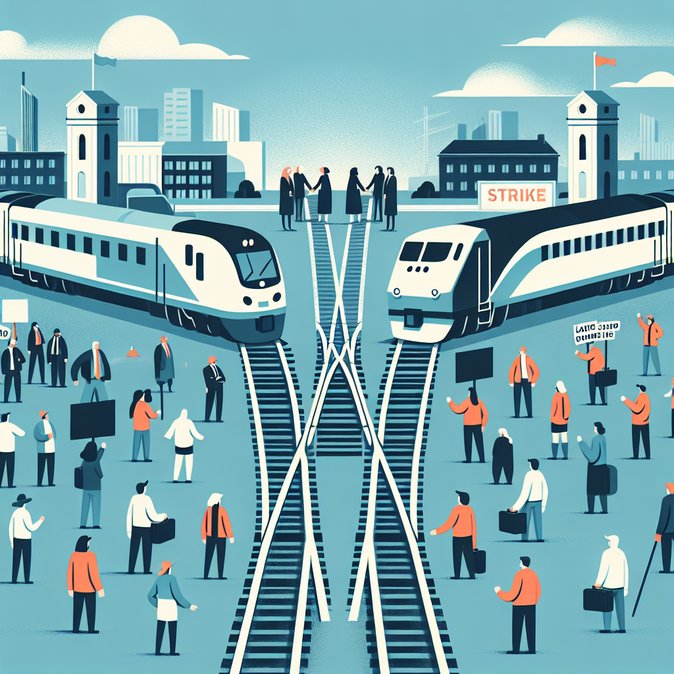
Belgium faces its first major labour showdown of 2026 after the CGSP-Cheminots/ACOD-Spoor and ACV-Transcom rail unions announced on 31 December a five-day strike that would paralyse the national network from Monday 26 to Friday 30 January. The formal strike notice will be filed in the week of 5 January, but unions say the decision is “irrevocable” unless the Federal Government scraps reforms approved in cabinet just before Christmas.
Central to the dispute is the plan to phase out civil-service status for new recruits at passenger operator SNCB/NMBS and infrastructure manager Infrabel from June 2026—a move unions claim will erode job security, pensions and bargaining power. They also oppose proposed changes allowing HR Rail to impose decisions if social-dialogue committees fail to reach a two-thirds majority, calling it an "anti-union bypass mechanism."
If the strike proceeds, it will coincide with parliamentary debates on a €675 million cut to railway funding and a broader public-sector pension reform that could raise the statutory retirement age to 67. Previous 24-hour rail stoppages in 2025 cut service levels to 25 % and cost employers an estimated €12 million per day in lost productivity.
![Belgian rail unions call week-long strike for 26–30 January 2026]()
For international travellers and multinational firms trying to reroute staff through neighbouring countries during the strike, fast-turnaround transit and Schengen visa assistance can be crucial. VisaHQ’s Belgium portal (https://www.visahq.com/belgium/) offers streamlined online applications, real-time status tracking and expert support, helping passengers secure the right documents quickly if flights or trains need to be rescheduled via France, Germany or the Netherlands.
For mobility managers, the looming action threatens commuter chaos in Brussels and Antwerp, and could derail supply chains that rely on rail freight links to Zeebrugge and the German Ruhr. Companies are activating contingency plans ranging from charter buses and rental-car pools to remote-work directives for critical staff.
The government says it remains open to dialogue but insists that ending tenure for new hires is essential to align the rail sector with EU liberalisation rules. Observers note that pressure will mount on both sides as the 26 January deadline approaches, especially if public opinion turns against prolonged disruptions.
Central to the dispute is the plan to phase out civil-service status for new recruits at passenger operator SNCB/NMBS and infrastructure manager Infrabel from June 2026—a move unions claim will erode job security, pensions and bargaining power. They also oppose proposed changes allowing HR Rail to impose decisions if social-dialogue committees fail to reach a two-thirds majority, calling it an "anti-union bypass mechanism."
If the strike proceeds, it will coincide with parliamentary debates on a €675 million cut to railway funding and a broader public-sector pension reform that could raise the statutory retirement age to 67. Previous 24-hour rail stoppages in 2025 cut service levels to 25 % and cost employers an estimated €12 million per day in lost productivity.

For international travellers and multinational firms trying to reroute staff through neighbouring countries during the strike, fast-turnaround transit and Schengen visa assistance can be crucial. VisaHQ’s Belgium portal (https://www.visahq.com/belgium/) offers streamlined online applications, real-time status tracking and expert support, helping passengers secure the right documents quickly if flights or trains need to be rescheduled via France, Germany or the Netherlands.
For mobility managers, the looming action threatens commuter chaos in Brussels and Antwerp, and could derail supply chains that rely on rail freight links to Zeebrugge and the German Ruhr. Companies are activating contingency plans ranging from charter buses and rental-car pools to remote-work directives for critical staff.
The government says it remains open to dialogue but insists that ending tenure for new hires is essential to align the rail sector with EU liberalisation rules. Observers note that pressure will mount on both sides as the 26 January deadline approaches, especially if public opinion turns against prolonged disruptions.