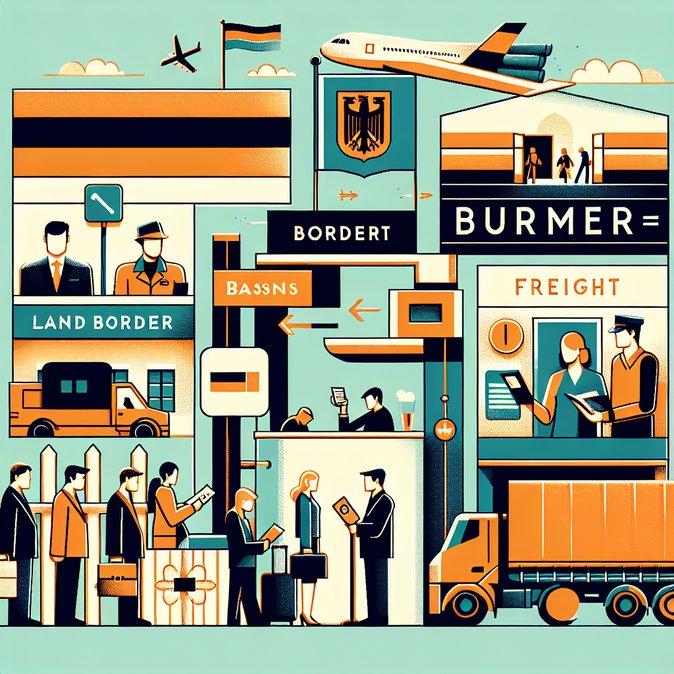
Companies that move talent or goods across the Czech–German frontier will face at least 14 more months of intermittent passport inspections after Berlin quietly prolonged its “temporary” internal‐Schengen controls. A notice published in Germany’s Federal Gazette on 29 December confirms that spot ID checks at all nine German land borders— including the 815-kilometre line with Czechia—will run until 15 March 2026, the maximum period allowed without fresh approval from the European Commission.
What began in mid-September 2025 as a response to rising irregular migration now covers cars, coaches and trains. Federal Police can pull vehicles into lay-bys, ask for passports, residence permits, hotel bookings or proof of funds, and refuse entry if documents are missing. Although the controls are nominally risk-based and mobile, corporate shuttle buses between Prague and Dresden report delays of 20–40 minutes during peak periods.
Whether you’re a Czech resident commuting to Bavaria or a logistics manager dispatching staff across the border, VisaHQ can simplify the paperwork. Their online platform (https://www.visahq.com/czech-republic/) tracks the latest entry rules, assists with securing visas or travel authorizations, and even offers courier services for passport renewals—handy safeguards while spot checks remain unpredictable.
![Germany Extends Border Checks at Czech Frontier Through March 2026]()
For Czech exporters, the extension comes at an awkward time. Germany remains Czechia’s largest trading partner, accounting for roughly a third of all goods exports. Cross-border commuters—estimated at 12,000 Czech residents working in Bavaria and Saxony—also face longer journey times, and rail operators warn that ad-hoc inspections can disrupt tight timetables for high-speed connections such as the Prague–Berlin EuroCity services.
Mobility managers should advise assignees to carry passports or national ID cards even on short business trips by car or train. Holders of Czech residence permits who are third-country nationals must keep the plastic residence card handy; digital copies on phones are not accepted. Logistics teams may need to pad delivery schedules, especially for just-in-time automotive components that transit the border several times a day.
Politically, the decision puts fresh pressure on the European Commission, which had hoped to phase out internal checks in favour of smarter, intelligence-led policing. Prague has so far refrained from reciprocal checks, but Interior Minister Vít Rakušan called the move “a reminder that Schengen benefits cannot be taken for granted,” hinting that Prague may seek EU compensation for any economic losses.
What began in mid-September 2025 as a response to rising irregular migration now covers cars, coaches and trains. Federal Police can pull vehicles into lay-bys, ask for passports, residence permits, hotel bookings or proof of funds, and refuse entry if documents are missing. Although the controls are nominally risk-based and mobile, corporate shuttle buses between Prague and Dresden report delays of 20–40 minutes during peak periods.
Whether you’re a Czech resident commuting to Bavaria or a logistics manager dispatching staff across the border, VisaHQ can simplify the paperwork. Their online platform (https://www.visahq.com/czech-republic/) tracks the latest entry rules, assists with securing visas or travel authorizations, and even offers courier services for passport renewals—handy safeguards while spot checks remain unpredictable.
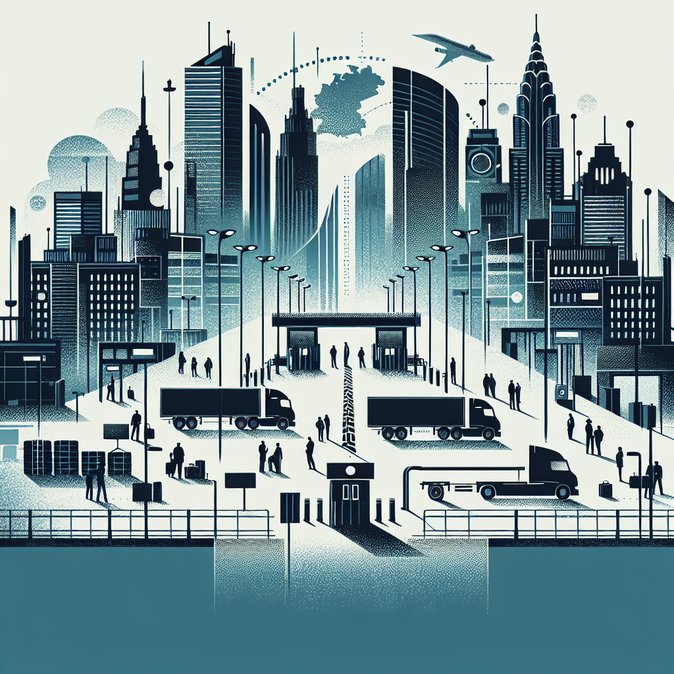
For Czech exporters, the extension comes at an awkward time. Germany remains Czechia’s largest trading partner, accounting for roughly a third of all goods exports. Cross-border commuters—estimated at 12,000 Czech residents working in Bavaria and Saxony—also face longer journey times, and rail operators warn that ad-hoc inspections can disrupt tight timetables for high-speed connections such as the Prague–Berlin EuroCity services.
Mobility managers should advise assignees to carry passports or national ID cards even on short business trips by car or train. Holders of Czech residence permits who are third-country nationals must keep the plastic residence card handy; digital copies on phones are not accepted. Logistics teams may need to pad delivery schedules, especially for just-in-time automotive components that transit the border several times a day.
Politically, the decision puts fresh pressure on the European Commission, which had hoped to phase out internal checks in favour of smarter, intelligence-led policing. Prague has so far refrained from reciprocal checks, but Interior Minister Vít Rakušan called the move “a reminder that Schengen benefits cannot be taken for granted,” hinting that Prague may seek EU compensation for any economic losses.