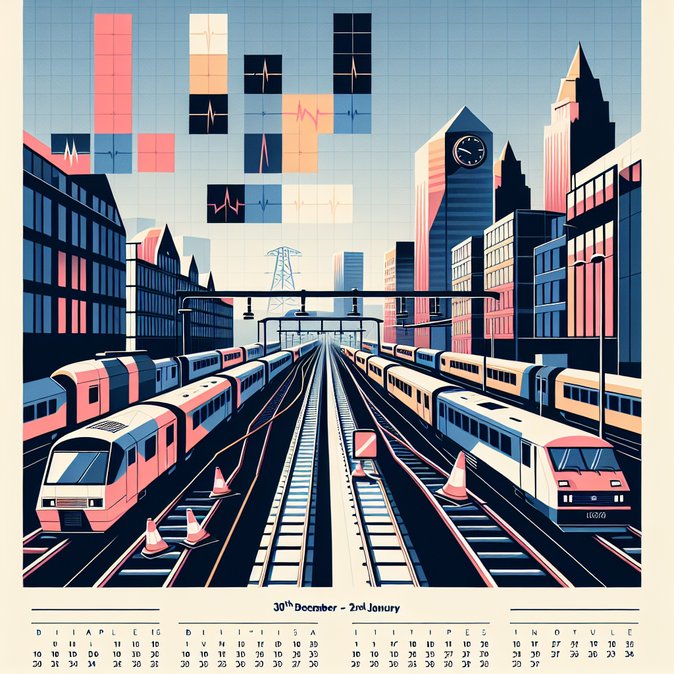
Eurostar and Getlink engineers worked through the night of 30–31 December after an overhead-power fault stranded four trains in the Channel Tunnel and forced operators to suspend all services for more than 10 hours. The failure—compounded by a subsequent signal outage on the UK side—hit the peak of the New-Year getaway and left some 8,500 passengers stuck on trains or in terminals in London, Brussels and Paris. One London-to-Lille service finally rolled in at 07:30 CET—11 hours late—with weary travellers reporting empty water tanks, minimal heating and overflowing toilets.
Although traffic formally resumed at 09:00 CET on 31 December, Eurostar warned of a “knock-on timetable cascade”: crews and trainsets were out of position and safety regulations cap crew duty hours, forcing the cancellation of two London–Paris rotations and lengthening dwell times at Brussels-Midi for the remainder of the day. Cargo operator Le Shuttle restored full capacity at midday, but logistics firms are flagging possible backlogs for just-in-time pharmaceutical and automotive consignments routed through Zeebrugge.
Corporate mobility managers are scrambling to reroute critical staff. Multinationals with offices in Brussels’ EU Quarter are underwriting last-minute air shuttles via London City Airport or encouraging virtual attendance at 2 January board meetings. Eurostar says affected customers may rebook within 60 days or claim cash refunds; EU Rail Consumer Regulation 2021/782 additionally allows compensation of 50 % for delays over 120 minutes.
![Eurostar Restarts After Channel Tunnel Power Failure, But Brussels–London Corridor Faces Rolling Disruptions]()
Amid the travel upheaval, passengers facing unexpected layovers or new cross-border itineraries can streamline any urgent visa needs through VisaHQ, which offers expedited Schengen and UK processing, digital document checks and real-time status alerts from its Brussels portal (https://www.visahq.com/belgium/). Delegating paperwork to the service lets stranded travellers focus on securing alternative seats instead of queuing at embassies.
The incident is the second major infrastructure outage this quarter and comes as new entrants—backed by Richard Branson and Trenitalia—prepare to challenge Eurostar’s monopoly by 2029. Belgian transport economists argue the disruption underscores the need for redundant power feeds and a Brussels-based contingency depot so rolling stock can be swapped without traversing the tunnel.
For now, travellers between the Belgian and UK capitals should budget at least three extra hours, carry physical tickets in case of gate-scanner failures, and monitor Eurostar’s live feed before heading to Midi. HR teams should alert employees that New-Year trains are operating under a “special measures” timetable until 2 January 2026.
Although traffic formally resumed at 09:00 CET on 31 December, Eurostar warned of a “knock-on timetable cascade”: crews and trainsets were out of position and safety regulations cap crew duty hours, forcing the cancellation of two London–Paris rotations and lengthening dwell times at Brussels-Midi for the remainder of the day. Cargo operator Le Shuttle restored full capacity at midday, but logistics firms are flagging possible backlogs for just-in-time pharmaceutical and automotive consignments routed through Zeebrugge.
Corporate mobility managers are scrambling to reroute critical staff. Multinationals with offices in Brussels’ EU Quarter are underwriting last-minute air shuttles via London City Airport or encouraging virtual attendance at 2 January board meetings. Eurostar says affected customers may rebook within 60 days or claim cash refunds; EU Rail Consumer Regulation 2021/782 additionally allows compensation of 50 % for delays over 120 minutes.
Amid the travel upheaval, passengers facing unexpected layovers or new cross-border itineraries can streamline any urgent visa needs through VisaHQ, which offers expedited Schengen and UK processing, digital document checks and real-time status alerts from its Brussels portal (https://www.visahq.com/belgium/). Delegating paperwork to the service lets stranded travellers focus on securing alternative seats instead of queuing at embassies.
The incident is the second major infrastructure outage this quarter and comes as new entrants—backed by Richard Branson and Trenitalia—prepare to challenge Eurostar’s monopoly by 2029. Belgian transport economists argue the disruption underscores the need for redundant power feeds and a Brussels-based contingency depot so rolling stock can be swapped without traversing the tunnel.
For now, travellers between the Belgian and UK capitals should budget at least three extra hours, carry physical tickets in case of gate-scanner failures, and monitor Eurostar’s live feed before heading to Midi. HR teams should alert employees that New-Year trains are operating under a “special measures” timetable until 2 January 2026.