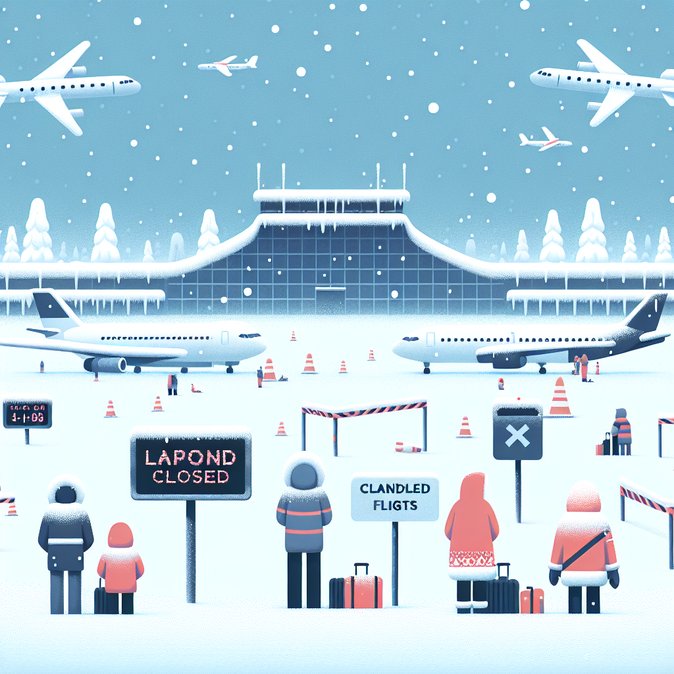
A severe winter storm barrelled across northern Finland over the weekend, grounding about 20 commercial flights and stranding an estimated 1,000 passengers at Rovaniemi, Kittilä and Ivalo airports just as the region’s lucrative year-end tourism and corporate-retreat season reaches its peak. Finavia, the state-owned airport operator, confirmed that services were suspended for several hours on 29 December after white-out conditions and cross-winds made runway operations unsafe. Flights resumed late Saturday, but cancellations and knock-on delays continued through Monday.
To ease congestion, Finavia reopened an out-of-service terminal wing at Rovaniemi to provide extra seating and deploy cots supplied by the Finnish Red Cross. Airlines were instructed to arrange hotel rooms or alternative transport, but options were limited: hotel capacity in Lapland is close to 100 % over the Christmas-New-Year week and spare aircraft are scarce at remote seasonal destinations.
The disruption hits not only holidaymakers visiting Santa-themed attractions but also corporate incentive groups and mining and tech-sector executives who schedule site visits in early January. Travel-risk teams are now advising staff to build 24-hour buffers into itineraries, monitor carrier re-booking portals and consider rail connections to Oulu or Helsinki as fallback routes.
![Winter storm paralyses Lapland airports, disrupting peak business-travel season]()
Travellers dealing with sudden cancellations—or simply planning ahead for a winter trip to Lapland—can eliminate one layer of uncertainty by processing their Finnish visa or transit permit through VisaHQ. The platform’s digital application, real-time tracking and customer support (https://www.visahq.com/finland/) help ensure documents are in order well before weather, rerouting or other disruptions put itineraries to the test.
For mobility managers the incident is a timely reminder that extreme weather, not just labour unrest, can upend Finnish travel plans in winter. Companies with time-critical projects in Lapland should ensure travellers have EU-level flight delay insurance, confirm that accommodation contracts include force-majeure clauses, and pre-book remote working facilities in case meetings must go virtual.
Finavia says it will review de-icing capacity and staffing rosters before the next expected peak on 9 January, when charter arrivals surge for the Russian Orthodox Christmas holidays.
To ease congestion, Finavia reopened an out-of-service terminal wing at Rovaniemi to provide extra seating and deploy cots supplied by the Finnish Red Cross. Airlines were instructed to arrange hotel rooms or alternative transport, but options were limited: hotel capacity in Lapland is close to 100 % over the Christmas-New-Year week and spare aircraft are scarce at remote seasonal destinations.
The disruption hits not only holidaymakers visiting Santa-themed attractions but also corporate incentive groups and mining and tech-sector executives who schedule site visits in early January. Travel-risk teams are now advising staff to build 24-hour buffers into itineraries, monitor carrier re-booking portals and consider rail connections to Oulu or Helsinki as fallback routes.

Travellers dealing with sudden cancellations—or simply planning ahead for a winter trip to Lapland—can eliminate one layer of uncertainty by processing their Finnish visa or transit permit through VisaHQ. The platform’s digital application, real-time tracking and customer support (https://www.visahq.com/finland/) help ensure documents are in order well before weather, rerouting or other disruptions put itineraries to the test.
For mobility managers the incident is a timely reminder that extreme weather, not just labour unrest, can upend Finnish travel plans in winter. Companies with time-critical projects in Lapland should ensure travellers have EU-level flight delay insurance, confirm that accommodation contracts include force-majeure clauses, and pre-book remote working facilities in case meetings must go virtual.
Finavia says it will review de-icing capacity and staffing rosters before the next expected peak on 9 January, when charter arrivals surge for the Russian Orthodox Christmas holidays.