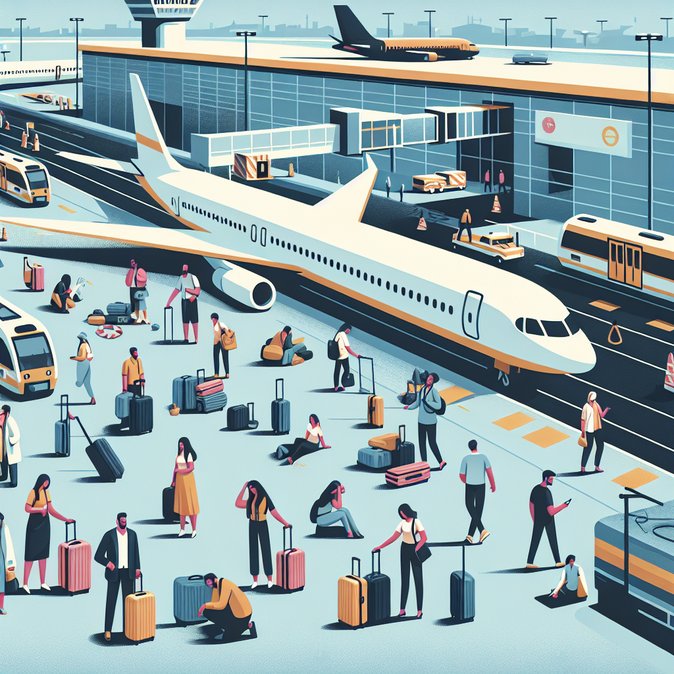
AirHelp’s live disruption tracker shows that by the afternoon of 29 December almost 2,000 flights had been delayed and 43 cancelled across major European hubs, including Frankfurt, Munich and Berlin. Lufthansa, Swiss Air and easyJet were among the hardest-hit carriers, with ripple effects felt as far away as Madrid, Amsterdam and London.
Although weather and air-traffic-control constraints elsewhere in Europe triggered many of the initial delays, capacity shortfalls caused by winter sickness absence among ground staff compounded the problems in Germany.
Amid such uncertainty, travellers who suddenly need emergency transit or short-stay visas—perhaps because they are rerouted through a non-Schengen hub—can tap VisaHQ’s Germany portal (https://www.visahq.com/germany/) for rapid assistance. The platform offers real-time entry requirements, streamlined online applications and courier handling, helping mobility teams remove one more headache during disruptive travel periods.
![Nearly 2,000 flights delayed or cancelled across Europe, hitting German travellers]()
Frankfurt Airport warned passengers to arrive early, while Deutsche Bahn reported higher-than-normal rail loads as travellers sought last-minute alternatives.
For corporate mobility managers the timing is awkward: end-of-year project wrap-ups and expatriate home-leave trips coincide with tight holiday staffing in travel departments. Companies are advising employees to check airline apps frequently, keep boarding passes for EU261 compensation claims and, where feasible, to use rail for journeys under four hours.
The disruption underscores the fragility of Europe’s high-density air network. Even modest schedule shocks can cascade across multiple carriers and countries during peak periods, and Germany’s central location means many transfer passengers are caught up in the delays.
Action points include pre-authorising higher-class rail tickets when flight reliability drops, reminding staff of duty-of-care hotlines and verifying that travel-insurance policies cover missed onward connections caused by upstream delays.
Although weather and air-traffic-control constraints elsewhere in Europe triggered many of the initial delays, capacity shortfalls caused by winter sickness absence among ground staff compounded the problems in Germany.
Amid such uncertainty, travellers who suddenly need emergency transit or short-stay visas—perhaps because they are rerouted through a non-Schengen hub—can tap VisaHQ’s Germany portal (https://www.visahq.com/germany/) for rapid assistance. The platform offers real-time entry requirements, streamlined online applications and courier handling, helping mobility teams remove one more headache during disruptive travel periods.

Frankfurt Airport warned passengers to arrive early, while Deutsche Bahn reported higher-than-normal rail loads as travellers sought last-minute alternatives.
For corporate mobility managers the timing is awkward: end-of-year project wrap-ups and expatriate home-leave trips coincide with tight holiday staffing in travel departments. Companies are advising employees to check airline apps frequently, keep boarding passes for EU261 compensation claims and, where feasible, to use rail for journeys under four hours.
The disruption underscores the fragility of Europe’s high-density air network. Even modest schedule shocks can cascade across multiple carriers and countries during peak periods, and Germany’s central location means many transfer passengers are caught up in the delays.
Action points include pre-authorising higher-class rail tickets when flight reliability drops, reminding staff of duty-of-care hotlines and verifying that travel-insurance policies cover missed onward connections caused by upstream delays.