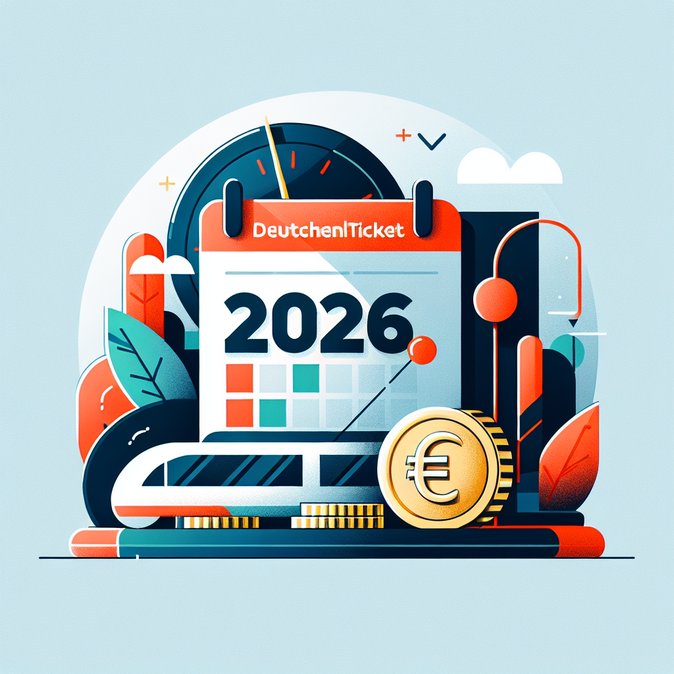
Germany’s flat-rate Deutschlandticket, which gives unlimited travel on regional trains, trams and buses nationwide, will cost €63 per month from New Year’s Day – up from €58. The €5 hike forms part of the 2026 federal-state mobility package, which also raises the commuter-tax allowance to €0.38 per kilometre and increases the statutory minimum wage.
Roughly 14 million people subscribe to the pass, many of them employees who combine it with long-distance rail or corporate-car schemes. For companies that reimburse the ticket as a tax-free benefit under §3 Nr. 15 EStG, payroll ceilings must be updated immediately. Fixed mobility stipends may need topping up to preserve purchasing power, especially for staff based outside big cities whose monthly spend often exceeds the ticket price once first-/last-mile costs are factored in.
The pass remains cost-competitive versus single regional fares, but the second consecutive annual increase is spurring debate about long-term funding. Transport ministers blame higher energy and wage costs, while employer groups warn that predictable pricing is essential for attracting talent to secondary locations where a company car is no longer automatic.
![Deutschlandticket price to rise to €63 per month on 1 January – HR budgets affected]()
Organizations coordinating employee mobility to Germany may also need to ensure immigration paperwork keeps pace with travel changes. VisaHQ’s dedicated Germany portal (https://www.visahq.com/germany/) streamlines visa applications, residence permits and appointment scheduling, giving HR teams a single dashboard to track status while employees focus on navigating new transport options. The service can complement updated travel stipends by removing administrative hurdles and shortening lead-times for cross-border hires.
Global mobility teams should refresh cost-of-living forecasts for 2026, adjust relocation budgets and remind staff that receipts dated after 1 January will reflect the €63 rate. International hires who plan to rely on regional rail should be briefed on the pass’s scope (it excludes high-speed ICE/IC services) and on how to buy or cancel monthly digital subscriptions.
The government hopes the higher commuter allowance will offset part of the increase for taxpayers, but further rises are possible if rail operators face additional CO₂-related costs. Companies should therefore keep a watching brief on subsequent adjustments due mid-2026.
Roughly 14 million people subscribe to the pass, many of them employees who combine it with long-distance rail or corporate-car schemes. For companies that reimburse the ticket as a tax-free benefit under §3 Nr. 15 EStG, payroll ceilings must be updated immediately. Fixed mobility stipends may need topping up to preserve purchasing power, especially for staff based outside big cities whose monthly spend often exceeds the ticket price once first-/last-mile costs are factored in.
The pass remains cost-competitive versus single regional fares, but the second consecutive annual increase is spurring debate about long-term funding. Transport ministers blame higher energy and wage costs, while employer groups warn that predictable pricing is essential for attracting talent to secondary locations where a company car is no longer automatic.
Organizations coordinating employee mobility to Germany may also need to ensure immigration paperwork keeps pace with travel changes. VisaHQ’s dedicated Germany portal (https://www.visahq.com/germany/) streamlines visa applications, residence permits and appointment scheduling, giving HR teams a single dashboard to track status while employees focus on navigating new transport options. The service can complement updated travel stipends by removing administrative hurdles and shortening lead-times for cross-border hires.
Global mobility teams should refresh cost-of-living forecasts for 2026, adjust relocation budgets and remind staff that receipts dated after 1 January will reflect the €63 rate. International hires who plan to rely on regional rail should be briefed on the pass’s scope (it excludes high-speed ICE/IC services) and on how to buy or cancel monthly digital subscriptions.
The government hopes the higher commuter allowance will offset part of the increase for taxpayers, but further rises are possible if rail operators face additional CO₂-related costs. Companies should therefore keep a watching brief on subsequent adjustments due mid-2026.